
Electric toothbrushes have become a staple in modern oral care routines, offering advanced features, better plaque removal, and improved gum protection compared to manual brushes. However, even the smartest device won’t last without proper care. Whether you’re using a premium model like BrushO or another brand, knowing how to maintain your electric toothbrush is essential for maximizing its lifespan, preserving performance, and saving money in the long run. From storage and cleaning to charging habits and brush head replacement, this guide explores everything you need to keep your brush working at its best. You’ll also learn how BrushO’s innovative features—like real-time pressure alerts, smart reminders, and free replacement brush heads—make long-term maintenance easier than ever. Don’t let a neglected toothbrush cost you your smile. Follow these practical tips to get the most value out of your oral health investment.
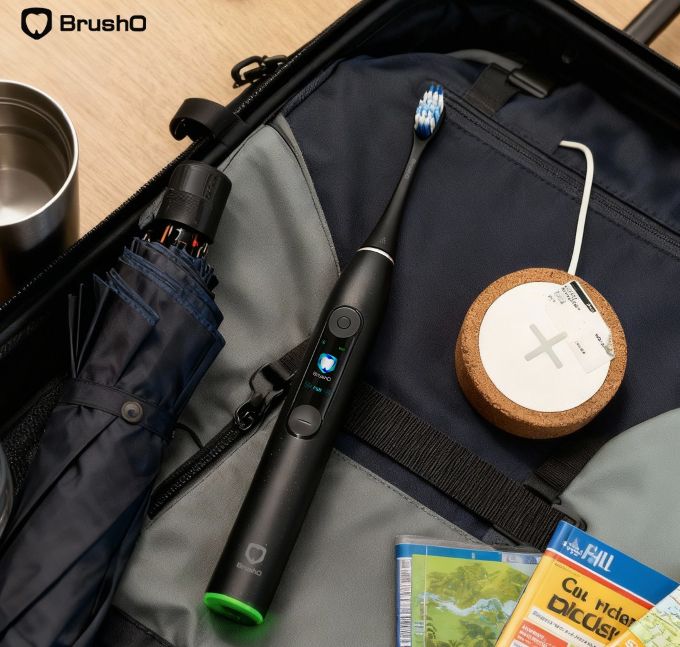
Avoid airtight containers. After brushing, rinse the brush head and let it air dry in an upright position. Moisture trapped in enclosed spaces can promote bacterial growth and degrade materials.
Keep it away from water exposure. While many electric toothbrushes like BrushO are waterproof, prolonged exposure to water, especially around the charging port, can reduce battery life over time.
Worn bristles not only clean less effectively but can also cause gum irritation. Most dental professionals recommend replacing brush heads every 3 months, or sooner if the bristles are frayed.
With BrushO, users can redeem free replacement heads through the Brush & Earn program. This makes regular replacement both affordable and easy—no excuse to skip it.
Over time, toothpaste and grime can build up on the handle, under the brush head, or around the charging base. Use a damp cloth and mild soap to gently wipe these areas once a week.
For BrushO users: the sleek, waterproof design makes cleaning easy, and the base is designed to resist corrosion—but regular care still keeps it looking and functioning like new.
To extend battery lifespan:
• Avoid constantly leaving the brush on the charger.
• Let the battery run down every 1–2 months before recharging fully.
• Use original chargers only—BrushO supports QI wireless charging, making it convenient and safer.
BrushO’s 6-hour fast charge and 45-day battery life already outperform many brands, but smart charging habits can push it even further.
Excessive pressure damages both your gums and your toothbrush. BrushO’s pressure-sensitive LED ring alerts you if you’re brushing too hard, protecting both your mouth and the motor.
Over time, aggressive brushing can wear out internal mechanisms, shorten battery life, and lead to early device failure. Let the brush do the work—gentle guidance is more effective.
When traveling:
• Use a protective case (if available) or a padded pouch.
• Lock or disconnect the brush head to prevent accidental activation.
• Don’t pack near liquids unless sealed.
Although BrushO is designed for durability, travel mishandling is a common cause of early failure for all electronic devices.
The BrushO app not only tracks brushing habits but can also remind users when it’s time to:
• Replace brush heads
• Recharge the battery
• Check for firmware updates (if applicable)
These proactive reminders help maintain peak performance over the long run.
Your electric toothbrush is a daily health tool—and like any precision device, it needs care. By storing it properly, replacing heads on time, cleaning it regularly, and managing battery usage, you can extend its life significantly. Smart tools like BrushO make it even easier with built-in protection features, free replacement programs, and app-guided maintenance.
Take care of your toothbrush, and it will take care of your smile for years to come.
BrushO is a next-generation smart oral care brand combining AI-powered brushing technology, real-time feedback, and a reward-based ecosystem. With over 100 customizable modes, FSB (Fully Smart Brushing) technology, and a commitment to sustainability, BrushO empowers users to brush better and smarter—every single day.
Nov 12
Nov 12

Fluoride in drinking water is the most cost-effective caries preventive measure in public health, and it is also the source of most avoidable fluoride exposure in young children. The balance between benefit and risk depends on concentration, on total intake from all sources and on the age of the ...

A mouthguard is the only piece of protective equipment that a dentist can prescribe, and the difference between the cheapest and the best version is often less than the cost of a single repair. This guide explains what each type of mouthguard actually protects, how to judge fit, and what to check...

Distinguishing reversible from irreversible pulpitis is the single most consequential decision in endodontic diagnosis, because one leads to a restoration and the other to root canal treatment or extraction. The distinction rests on symptoms and pulp testing rather than on radiographs alone, and ...

A pregnancy epulis is a benign overgrowth of gum tissue that appears during pregnancy, most often in the second or third trimester. It can alarm patients because it grows quickly and bleeds easily, yet in most cases it needs no surgery and settles after delivery. Understanding what drives the gro...

When several teeth are missing, the choice usually narrows to a removable partial denture or a fixed implant-supported restoration, and cost is the factor patients raise first. Upfront price is only part of the comparison, because the two options differ in maintenance, comfort, effects on neighbo...

Most root canal failures are not caused by inadequate cleaning of canals that were found, but by canals that were never located. Molar anatomy varies widely, and the variation is not random: specific teeth in specific populations have predictable additional canals. Knowing where they hide is the ...

Gum massage is one of the oldest recommendations in oral care and one of the least understood. It has been described as a treatment for bleeding gums, a route to firmer tissue and, more recently, a way to reduce brushing force. This article separates the mechanisms that are supported by physiolog...

Interdental cleaning is the part of oral hygiene most people abandon first, and the choice between a floss pick and a length of string floss is often made on convenience. Convenience matters, because a tool that is used daily outperforms a superior tool that stays in the drawer, but the two devic...

Dementia changes the way a denture is worn, cleaned and tolerated, and the people who notice the change first are usually family carers rather than clinicians. Poor denture hygiene in this group is associated with mucosal infection, reduced food intake and, in frail patients, respiratory complica...

Chewing tobacco keeps nicotine and plant irritants in prolonged contact with a small area of mucosa, and the damage that results is concentrated exactly where the quid is held. The lesions that develop are often painless, which is why they are discovered during routine examination rather than bec...

Bauen Sie schnell und kostengünstig ein Netzwerk für Zahngesundheitsdaten auf, das jeder nutzen kann.
Bauen Sie schnell und kostengünstig ein Netzwerk für Zahngesundheitsdaten auf, das jeder nutzen kann.


Address: RM 1427, 14/F RADIO CITY 505, HENNESSY RD CAUSEWAY BAY, HONG KONG
Code: 000000
Phone: +852-53758652
Email: customerservice@brusho.com