
Your upcoming dental appointment is more than just a cleaning—it’s an opportunity to show your dentist the results of your daily oral care. But how do you know you’re truly ready? This article offers a comprehensive oral health checklist to follow before your next dental visit, ensuring that you walk in with clean teeth, healthy gums, and confidence. From checking plaque levels and gum health to brushing with AI-powered feedback from tools like BrushO, every tip is grounded in science and designed to elevate your oral hygiene game.
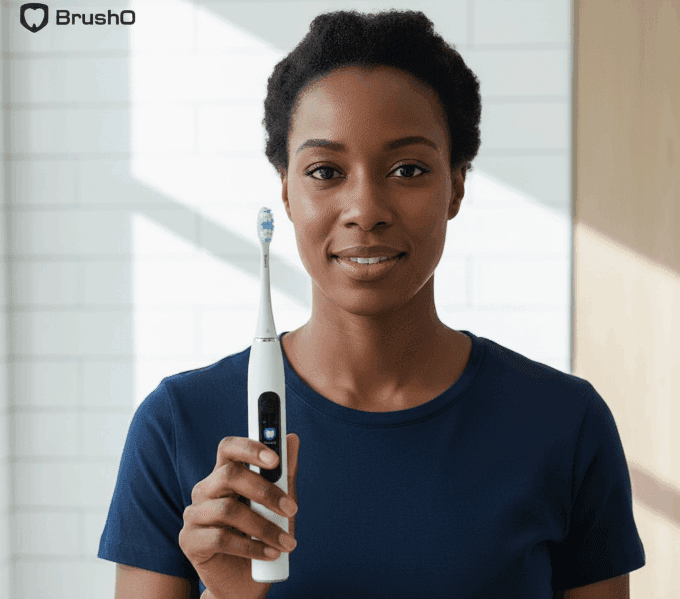
Many people treat dental appointments as passive check-ins. But preparation can greatly improve your outcomes. Dentists can better assess your baseline oral health, spot improvements, and recommend personalized care plans if your oral hygiene is already in good shape. Using a smart toothbrush like BrushO in the days and weeks leading up to your appointment can help ensure your brushing habits are precise, gentle, and comprehensive.
Before your dental visit, ask yourself:
• Are you brushing for 2 full minutes?
• Are you hitting all tooth surfaces?
• Are you brushing the gumline and back molars?
• Are you applying the correct pressure?
Most people unknowingly miss 20–30% of their mouth. Smart toothbrushes like BrushO help eliminate guesswork by:
• Mapping 6 zones and 16 tooth surfaces
• Giving real-time feedback on missed areas
• Warning you about excessive pressure that could damage enamel or gums
Gum disease is one of the most common issues spotted during dental visits. In the days before your appointment:
• Look for redness, swelling, or bleeding when brushing
• Use BrushO’s app report to identify areas with consistent overpressure
• Switch to BrushO’s “Gum Care” mode if needed
If you’re experiencing gum tenderness, catching it early could help your dentist provide preventive care rather than reactive treatment.
Flossing should be part of your daily routine—not something you cram in the night before your appointment.
Tips:
• Use string floss or water flossers consistently
• Focus on the areas between molars and around dental work
• Let your BrushO brushing report guide you to where plaque is most likely to linger
Certain foods can stain teeth or irritate gums right before your visit:
• Avoid coffee, tea, red wine, or dark berries
• Skip crunchy or overly acidic foods that may inflame gums
• Rinse with water after every meal
BrushO’s app also reminds you when to brush and rinse for optimal post-meal hygiene.
One of the best ways to prepare is by reviewing your recent BrushO brushing reports:
• Identify weak brushing zones
• Spot any trends like underbrushing or overpressure
• Share your brushing score with your dentist
These insights help your dentist tailor their recommendations and even adjust your cleaning procedure accordingly.
Before heading to your dentist, prepare:
• A list of any oral discomfort or sensitivity
• Products you currently use (toothpaste, brush type)
• Your BrushO usage data (can be exported from the app)
This gives your provider a complete picture of your oral habits.
Brushing your teeth within an hour before your appointment removes surface debris and gives your dentist a clearer view of your actual gum and tooth health. Use BrushO in “Clean” or “Polish” mode for a confident, fresh-mouth feeling right before your check-up.
BrushO combines cutting-edge features that support ideal pre-visit habits:
• AI zone tracking: Never miss critical areas
• Pressure feedback: Prevent gum damage
• Brush & Earn: Reward consistency before your visit
• Daily reports: Visualize your progress
These features turn your pre-appointment prep into a gamified wellness ritual—helping you walk into the clinic knowing your oral hygiene is on point.
Preparing for your dental visit doesn’t need to be complicated. With this checklist and the help of AI tools like BrushO, you can elevate your oral health, impress your dentist, and avoid surprise findings during your check-up. Take control of your oral care. Start with smarter brushing.
Jan 29
Jan 29

Fluoride in drinking water is the most cost-effective caries preventive measure in public health, and it is also the source of most avoidable fluoride exposure in young children. The balance between benefit and risk depends on concentration, on total intake from all sources and on the age of the ...

A mouthguard is the only piece of protective equipment that a dentist can prescribe, and the difference between the cheapest and the best version is often less than the cost of a single repair. This guide explains what each type of mouthguard actually protects, how to judge fit, and what to check...

Distinguishing reversible from irreversible pulpitis is the single most consequential decision in endodontic diagnosis, because one leads to a restoration and the other to root canal treatment or extraction. The distinction rests on symptoms and pulp testing rather than on radiographs alone, and ...

A pregnancy epulis is a benign overgrowth of gum tissue that appears during pregnancy, most often in the second or third trimester. It can alarm patients because it grows quickly and bleeds easily, yet in most cases it needs no surgery and settles after delivery. Understanding what drives the gro...

When several teeth are missing, the choice usually narrows to a removable partial denture or a fixed implant-supported restoration, and cost is the factor patients raise first. Upfront price is only part of the comparison, because the two options differ in maintenance, comfort, effects on neighbo...

Most root canal failures are not caused by inadequate cleaning of canals that were found, but by canals that were never located. Molar anatomy varies widely, and the variation is not random: specific teeth in specific populations have predictable additional canals. Knowing where they hide is the ...

Gum massage is one of the oldest recommendations in oral care and one of the least understood. It has been described as a treatment for bleeding gums, a route to firmer tissue and, more recently, a way to reduce brushing force. This article separates the mechanisms that are supported by physiolog...

Interdental cleaning is the part of oral hygiene most people abandon first, and the choice between a floss pick and a length of string floss is often made on convenience. Convenience matters, because a tool that is used daily outperforms a superior tool that stays in the drawer, but the two devic...

Dementia changes the way a denture is worn, cleaned and tolerated, and the people who notice the change first are usually family carers rather than clinicians. Poor denture hygiene in this group is associated with mucosal infection, reduced food intake and, in frail patients, respiratory complica...

Chewing tobacco keeps nicotine and plant irritants in prolonged contact with a small area of mucosa, and the damage that results is concentrated exactly where the quid is held. The lesions that develop are often painless, which is why they are discovered during routine examination rather than bec...

Bauen Sie schnell und kostengünstig ein Netzwerk für Zahngesundheitsdaten auf, das jeder nutzen kann.
Bauen Sie schnell und kostengünstig ein Netzwerk für Zahngesundheitsdaten auf, das jeder nutzen kann.


Address: RM 1427, 14/F RADIO CITY 505, HENNESSY RD CAUSEWAY BAY, HONG KONG
Code: 000000
Phone: +852-53758652
Email: customerservice@brusho.com