
You might think your toothbrush is just for cleaning your teeth—but a smart toothbrush knows a lot more about your daily habits than you might expect. With built-in sensors, app integration, and AI analysis, devices like BrushO monitor how long you brush, how much pressure you apply, which areas you miss, and whether your oral care is improving over time. This article explores exactly what your smart toothbrush knows about you, and why that information matters for your long-term dental health.
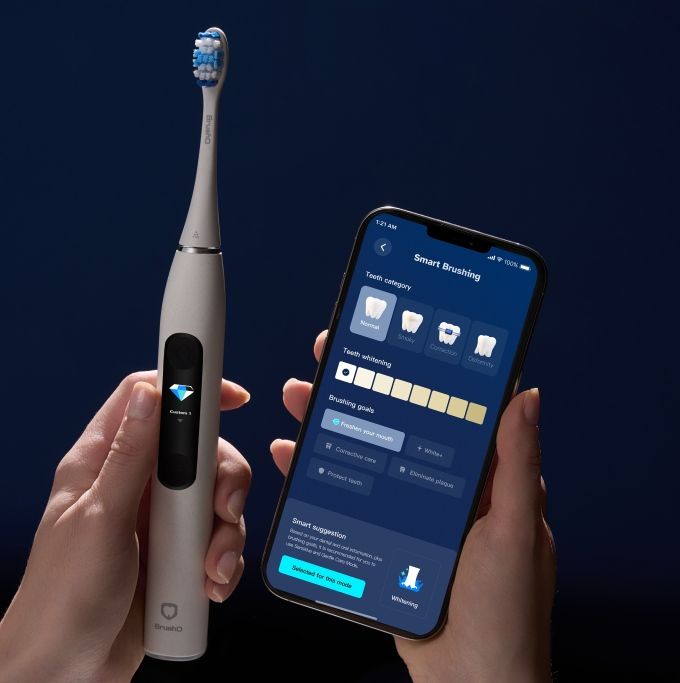
Modern electric toothbrushes do more than vibrate—they collect real-time information about your brushing behavior to provide personalized insights and prevent oral health issues. The goal is not just to make brushing smarter, but also to make it more effective, consistent, and preventative.
• Are you brushing for the full two minutes?
• Do you apply too much pressure to your gums?
• Are certain areas being missed every day?
• Are your brushing habits improving over time?
These insights allow you to go beyond guesswork and build routines that actually improve oral wellness.
Smart toothbrushes log:
• How many times you brush each day
• Whether you reach the recommended 2-minute duration
• If you’re skipping days or brushing less on weekends
Why it matters: Consistency is one of the strongest predictors of oral health. If you’re skipping evening sessions or rushing in the mornings, your smart toothbrush knows—and reminds you.
Thanks to pressure sensors, your smart toothbrush detects when you’re brushing too hard or too softly.
• Too hard = Gum recession, enamel wear, bleeding
• Too soft = Incomplete plaque removal
BrushO uses FSB (Fully Smart Brushing) tech to guide you in real time and protect both enamel and gums.
Many smart toothbrushes divide the mouth into zones (e.g., six zones or 16 surfaces). Your device knows:
• Which zones you frequently miss
• Where you brush too quickly
• Whether you brush all sides—front, back, and chewing surfaces
Coverage tracking helps you correct blind spots, ensuring plaque isn’t building up in neglected areas.
Through built-in accelerometers and gyroscopes, your smart brush tracks:
• Stroke direction
• Brushing motion (linear vs. circular)
• Orientation of the brush head
This ensures you’re angling the brush correctly—especially important for reaching gumlines and back molars.
Smart toothbrush apps like the BrushO App aggregate all data to show:
• Weekly or monthly brushing scores
• Areas improving vs. areas needing more attention
• Habit streaks and reward progress (e.g., earning $BRUSH tokens)
These insights gamify oral care, turning it into a measurable, trackable wellness routine.
While smart toothbrushes collect a lot of data, brands like BrushO prioritize user privacy and data security. Your brushing stats are used to improve your habits—not shared for advertising or third-party profiling.
If you’re using app-based features, always:
• Read the privacy policy
• Adjust permission settings
• Use encrypted devices or trusted platforms
Understanding what your toothbrush knows about you isn’t just cool—it’s clinically useful:
• It helps your dentist get a clearer picture of your routine
• It helps prevent future dental issues
• It promotes long-term behavioral change
• It offers customized care recommendations
With smart brushing, you shift from reactive dental visits to proactive prevention—protecting both your teeth and your wallet.
Your smart toothbrush is more than a gadget—it’s a personal oral health coach. By tracking pressure, time, coverage, and technique, it knows your brushing patterns better than you might realize. And with tools like BrushO, you can turn those insights into real improvements: fewer cavities, healthier gums, and a brighter smile.
Jan 21
Jan 20

Back teeth can be awkward to reach when brushing triggers gagging. Try a smaller, calmer approach and ask for help if it keeps interrupting your routine.

Similar handles and crowded cups can make mornings confusing. A few clear identifiers and a little space can make everyone’s own brush easier to find.

A little leftover paste can dry around the opening. Clean the outside, close the cap properly, and avoid turning a small mess into a toothpaste experiment.

Your toothpaste does not have to taste strongly of mint. Look for a comfortable flavor while keeping the fluoride and age guidance that matter.

Feeling better does not automatically mean throwing away your toothbrush. Check its condition, keep it to yourself, and know when to ask for personal advice.

No time to let your toothbrush dry before checkout? Protect it for the journey, then unpack it promptly at your next stop.

First check what touched the floor and whether anything broke. A fresh brush or replacement head is the simplest cautious choice when bristles are contaminated.

The tube is empty and the shops are closed. Keep brushing, understand what is missing, and restock fluoride toothpaste as soon as you can.

A flat battery does not have to cancel brushing. Here is how to choose a sensible backup without treating every powered brush like a manual one.

At a hotel without your toothbrush? Try these temporary steps, find a simple replacement, and get back to your usual routine.

Bauen Sie schnell und kostengünstig ein Netzwerk für Zahngesundheitsdaten auf, das jeder nutzen kann.
Bauen Sie schnell und kostengünstig ein Netzwerk für Zahngesundheitsdaten auf, das jeder nutzen kann.


Address: RM 1427, 14/F RADIO CITY 505, HENNESSY RD CAUSEWAY BAY, HONG KONG
Code: 000000
Phone: +852-53758652
Email: customerservice@brusho.com