
Modern oral health research increasingly recognizes sleep as a biological regulator of tissue repair and immune response — including within the gums. Inconsistent sleep schedules disrupt circadian rhythms that govern inflammation control, saliva flow, and cellular regeneration. Over time, this disruption can impair gum healing, increase periodontal vulnerability, and amplify plaque-induced irritation. Understanding the connection between sleep patterns and gingival recovery reveals why oral care must extend beyond brushing technique alone — and how data-guided brushing routines can help mitigate lifestyle-driven risk factors.
Gums are living tissue constantly exposed to bacterial stress and micro-injury from chewing and brushing. Recovery depends on:
• Immune regulation
• Collagen regeneration
• Inflammatory signaling balance
• Tissue oxygenation
• Salivary antimicrobial activity
These processes follow circadian cycles regulated by consistent sleep timing. When sleep schedules fluctuate, biological repair windows become misaligned, resulting in:
• Slower gingival cell turnover
• Prolonged inflammatory response
• Reduced resilience against plaque bacteria
• Increased susceptibility to gingivitis
Sleep inconsistency doesn’t directly cause gum disease — but it weakens the body’s ability to recover from everyday microbial stress.
The immune system operates on predictable timing signals. Studies in chronobiology show irregular sleep patterns can alter cytokine activity and inflammatory thresholds.
Impacts on oral tissue include:
• Elevated inflammatory markers in the gingival tissue
• Reduced neutrophil defense against oral bacteria
• Increased plaque biofilm persistence
• Greater bleeding or sensitivity risk
This explains why individuals with rotating shifts, jet lag, or erratic sleep often experience:
• Persistent gum irritation
• Delayed recovery after brushing trauma
• Higher periodontal risk despite regular hygiene
Oral health is therefore partially governed by systemic rhythm stability.
Saliva is essential for gum protection. It:
• Neutralizes acids
• Washes bacteria
• Supplies minerals
• Supports tissue healing
Inconsistent sleep timing alters salivary gland signaling, which can lead to:
• Reduced overnight saliva output
• Extended dry-mouth periods
• Elevated bacterial concentration
• Slower gum recovery
Chronic circadian disruption effectively compresses the body’s natural repair cycle.
Irregular sleep patterns rarely act alone — they influence behavior:
• Skipped nighttime brushing
• Rushed morning routines
• Increased late-night snacking
• Reduced brushing awareness
These secondary factors compound periodontal stress and create conditions where plaque accumulates faster than tissue recovery can compensate. This behavioral cascade is a major contributor to lifestyle-linked gum inflammation.
While sleep stability is foundational, precision oral hygiene can offset lifestyle disruption.
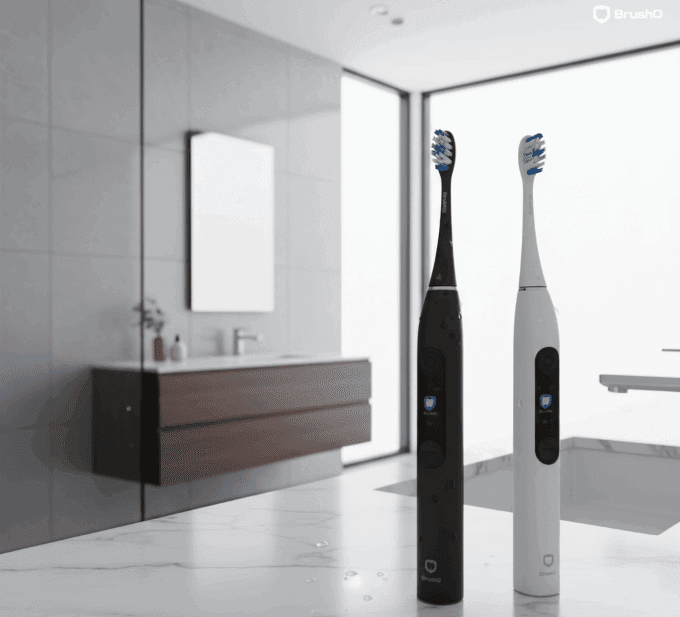
AI-guided brushing systems such as BrushO contribute by:
• Monitoring pressure to prevent gingival abrasion
• Ensuring full gumline coverage across all zones
• Identifying missed inflammation-prone areas
• Reinforcing consistent routines through feedback
• Supporting long-term behavioral correction
Consistent plaque removal reduces microbial burden, allowing compromised recovery cycles to function more effectively. Data-driven brushing therefore acts as a stabilizing countermeasure when biological rhythms fluctuate.
• Maintain consistent brushing timing even if sleep shifts
• Prioritize nighttime plaque removal
• Hydrate before sleep to support saliva function
• Limit nocturnal sugar intake
• Use guided brushing tools for coverage precision
• Monitor gum sensitivity trends
Lifestyle irregularity cannot always be eliminated — but periodontal resilience can be supported through structured hygiene.
Gum recovery is not solely determined by brushing frequency. It is shaped by systemic biological rhythms that regulate immune response, cellular repair, and saliva protection. Inconsistent sleep schedules disrupt these mechanisms, leaving gingival tissue more vulnerable to inflammation and slower healing. Integrating stable oral hygiene routines, supported by intelligent brushing feedback and behavioral reinforcement, helps maintain gum resilience even when circadian patterns are imperfect. Oral health ultimately reflects the intersection of lifestyle regulation, biological timing, and precision daily care.
Feb 6
Feb 6

The uncontrolled hypertension is the condition that the dental practice meets in the patient who presents with the elevated pressure that the guideline does not permit for the elective treatment, and the management of this patient requires the deferral of the dental procedure and the referral to ...

The closure of the extraction space in the orthodontic treatment is the phase that demands the careful selection of the mechanics and the monitoring of the force that the appliance delivers. The sliding mechanics that rely on the continuous archwire and the power chain that connects the brackets ...

The transverse discrepancy of the maxilla is the problem that the crowding and the posterior crossbite often hide, and the maxillary expansion is the treatment that addresses the width of the arch rather than the position of the individual tooth. The clinician who diagnoses the constriction early...

The local anaesthesia is the daily procedure that the modern dentistry treats as the routine, and the complications that follow it range from the transient and the trivial to the permanent and the serious. The clinician who injects by the habit without the anatomy in the mind is the clinician who...

The hypertension is the condition that the dental practice meets in the every day, and the patient who carries the elevated pressure without the symptoms is the patient who presents the risk that the chair-side measurement reveals. The dental team occupies the position that no other profession ho...

The glass-ceramic crown has become the default restoration for the anterior and the many posterior teeth, and the material selection within the family is the decision that determines the strength, the aesthetics, and the longevity of the result. The lithium disilicate, the leucite, and the zircon...

The dental phobia is the extreme form of the dental fear that prevents the patient from attending the treatment that the oral health requires, and the management of the phobia demands the skill that extends beyond the routine behaviour guidance. The systematic desensitization, the exposure therap...

The dental fear of the child is the condition that shapes the attitude for the lifetime, and the clinician who manages the first visits with the skill builds the patient who attends the recall without the dread. The fear that the child develops follows the many sources, and the practice that reco...

The patient with controlled hypertension is the patient who requires the dental care that the oral health demands and the treatment that the blood pressure permits, and the clinician who manages the controlled case safely follows the guideline that the evidence supports. The controlled hypertensi...

The ceramic veneer is the restoration that the aesthetic dentistry depends on, and the bond that retains the veneer on the enamel is the critical link that determines whether the restoration survives the function or fractures and debonds. The clinical technique from the preparation to the cementa...

Bauen Sie schnell und kostengünstig ein Netzwerk für Zahngesundheitsdaten auf, das jeder nutzen kann.
Bauen Sie schnell und kostengünstig ein Netzwerk für Zahngesundheitsdaten auf, das jeder nutzen kann.


Address: RM 1427, 14/F RADIO CITY 505, HENNESSY RD CAUSEWAY BAY, HONG KONG
Code: 000000
Phone: +852-53758652
Email: customerservice@brusho.com