
Plaque accumulation does not occur evenly across the mouth. Some teeth are far more vulnerable due to their position, surface structure, and exposure to saliva and chewing forces. Understanding where and why plaque forms fastest allows individuals to adopt targeted cleaning strategies that reduce cavities, gum disease, and long-term dental damage. This article explains the biological and mechanical reasons behind uneven plaque buildup and outlines science-backed brushing approaches — including AI-guided smart brushing — that ensure comprehensive coverage and improved oral health outcomes.
Dental plaque is a sticky biofilm made of bacteria, proteins, and food residues that constantly develops on tooth surfaces. While plaque formation is natural, accumulation rates vary based on anatomy and environment.
Certain teeth provide more favorable conditions for bacterial colonization due to:
• Limited mechanical cleaning from chewing
• Reduced saliva exposure
• Complex surface grooves
• Difficult accessibility during brushing
These factors create localized zones where bacteria multiply faster, and biofilm matures more rapidly.
Molars are among the most plaque-prone teeth because of their:
• Deep pits and fissures
• Larger chewing surfaces
• Distance from direct brushing visibility
Food particles often remain trapped in these grooves, giving bacteria an ideal growth environment.
Plaque frequently accumulates behind the lower incisors due to:
• Proximity to salivary ducts
• Mineral-rich saliva accelerates tartar formation
• Neglect during routine brushing
This area is one of the most common sites for hardened plaque deposits.
The junction between teeth and gums is especially vulnerable because:
• Plaque accumulates where brushing angles are incorrect
• Biofilm thrives in moist protected margins
• Inflammation can begin unnoticed
Failure to clean this area consistently increases the risk of gingivitis and periodontal disease.
Saliva protects teeth by neutralizing acids and washing away debris. Teeth with reduced saliva exposure accumulate plaque faster.
Misaligned teeth create sheltered niches where toothbrush bristles struggle to reach.
Roughened or eroded enamel allows bacteria to adhere more easily compared to smooth surfaces.
Frequent sugar or starch exposure promotes bacterial metabolism and localized plaque growth.
Brushing twice daily is essential — but coverage quality determines effectiveness.
Common technique issues include:
• Overlooking back teeth
• Inadequate gumline angling
• Uneven brushing duration per zone
• Excessive pressure reducing cleaning precision
Traditional brushes provide no feedback, leaving these errors unnoticed.
AI-driven toothbrush systems address uneven plaque removal through real-time monitoring.
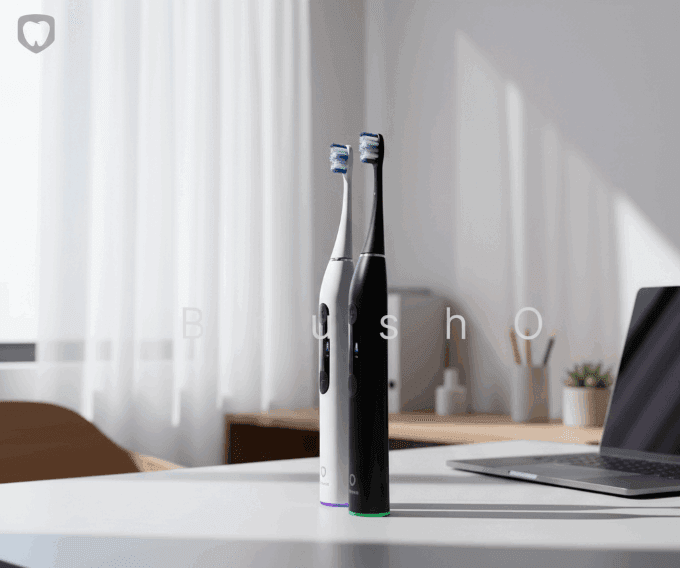
BrushO supports plaque prevention by:
• Tracking 6 oral zones and 16 surfaces
• Detecting skipped areas
• Monitoring pressure levels
• Providing post-session coverage reports
• Reinforcing habit consistency through reward-based engagement
This data-driven approach transforms brushing from guesswork into targeted plaque management.
Dentist-backed preventive actions include:
• Angling bristles 45° toward the gumline
• Spending equal time per mouth zone
• Cleaning molar grooves carefully
• Flossing daily
• Monitoring brushing performance
Personalized brushing feedback significantly improves compliance and long-term oral outcomes.
Plaque buildup is not random — it reflects the interplay of tooth anatomy, saliva flow, brushing behavior, and lifestyle factors. Certain teeth accumulate plaque faster due to structural and accessibility challenges, increasing their vulnerability to decay and gum disease. Understanding these patterns allows individuals to clean strategically rather than uniformly. AI-guided brushing tools like BrushO further enhance plaque control by identifying neglected zones and optimizing technique in real time, promoting healthier teeth and gums through precision-driven oral care.
Feb 11
Feb 6

Hyperdontia is the presence of one or more teeth in excess of the normal dental formula, and the resulting teeth are described as supernumerary. The condition is common enough to appear in routine practice but variable enough in presentation that the decision to intervene is rarely straightforwar...

Few patients complete orthodontic treatment without asking whether their teeth will move back. The honest answer is that they will, to some degree, in the majority of cases. Relapse is not a failure of treatment but a predictable biological response, and understanding why it happens is the basis ...

The mandible is the largest and most frequently fractured bone of the facial skeleton, and its management sits at the interface between trauma surgery and restorative dentistry. Treatment has shifted over four decades from prolonged maxillomandibular fixation towards rigid internal fixation with ...

Chronic liver disease affects hundreds of millions of people worldwide, and its prevalence continues to rise with the epidemic of metabolic liver disease. The liver is central to haemostasis, drug metabolism and immune competence, and its failure therefore alters the risk profile of almost every ...

Excessive gingival display, commonly described as a gummy smile, is one of the most frequent aesthetic concerns presented to dental practitioners. The condition is not a single entity but a clinical presentation that can arise from skeletal, gingival, muscular or dental factors, and the treatment...

Drug-induced gingival overgrowth is a well-recognised adverse effect of several widely prescribed medications, and it remains one of the most common drug-related findings in periodontal practice. The condition produces firm, fibrous enlargement of the gingiva that can interfere with speech, masti...

Denture stomatitis is an inflammatory condition of the denture-bearing mucosa that affects a large proportion of removable prosthesis wearers, yet it is frequently dismissed as a cosmetic annoyance. The condition is driven by a Candida biofilm on the fitting surface of the prosthesis, and it is m...

Chronic kidney disease affects an estimated 850 million people worldwide, and the number of patients surviving on dialysis or with a renal transplant continues to rise. These patients carry an oral disease burden that is substantially higher than that of the general population, and their medical ...

Angular cheilitis is an inflammatory lesion of the labial commissures that presents with erythema, fissuring and crusting at the corners of the mouth. It is one of the most common conditions encountered in general dental practice, yet it is frequently treated as a simple fungal infection and allo...

Adverse reactions to dental materials are uncommon but they are not rare, and they are frequently misdiagnosed because the oral mucosa responds to allergens in a limited number of ways. A burning sensation, a persistent ulcer or an unexplained area of erythema may all represent a hypersensitivity...

Bauen Sie schnell und kostengünstig ein Netzwerk für Zahngesundheitsdaten auf, das jeder nutzen kann.
Bauen Sie schnell und kostengünstig ein Netzwerk für Zahngesundheitsdaten auf, das jeder nutzen kann.


Address: RM 1427, 14/F RADIO CITY 505, HENNESSY RD CAUSEWAY BAY, HONG KONG
Code: 000000
Phone: +852-53758652
Email: customerservice@brusho.com