
Everyone experiences bad breath occasionally, but if it becomes persistent, it may be more than just a case of garlic or morning breath. Chronic halitosis can indicate underlying health issues ranging from gum infections to systemic diseases. In this article, we’ll explore what your bad breath might be trying to tell you, the deeper health conditions linked to it, and how smart toothbrushes like BrushO can help you detect and address early signs before they escalate.
Halitosis is the medical term for chronic bad breath. While occasional odor is normal, persistent bad breath should not be ignored—it can point to oral health issues or even deeper systemic problems.
Leftover food particles and bacteria in the mouth can break down and release foul-smelling compounds.
Bleeding gums and infection beneath the gumline can create a strong, unpleasant odor that doesn’t go away with brushing.
Saliva naturally cleanses the mouth. A lack of saliva (due to medication, dehydration, or mouth breathing) allows bacteria to thrive.
Uncontrolled diabetes can lead to a fruity or acetone-like breath smell, often indicating diabetic ketoacidosis—a dangerous condition that needs immediate care.
Conditions like acid reflux, ulcers, or H. pylori infections can push odor-causing gases up through the digestive tract and into the mouth.
Toxins that are not properly filtered by the liver or kidneys may lead to breath that smells like ammonia or fish.
Chronic sinus infections or postnasal drip can cause bacteria to build up at the back of the throat, leading to persistent odor.
• It doesn’t improve after brushing or flossing
• You notice bleeding gums or a bad taste in the mouth
• You experience dry mouth frequently
• Others comment on your breath despite good hygiene
• Symptoms like fatigue, digestive upset, or increased thirst accompany it
If any of these apply, it’s time to dig deeper.
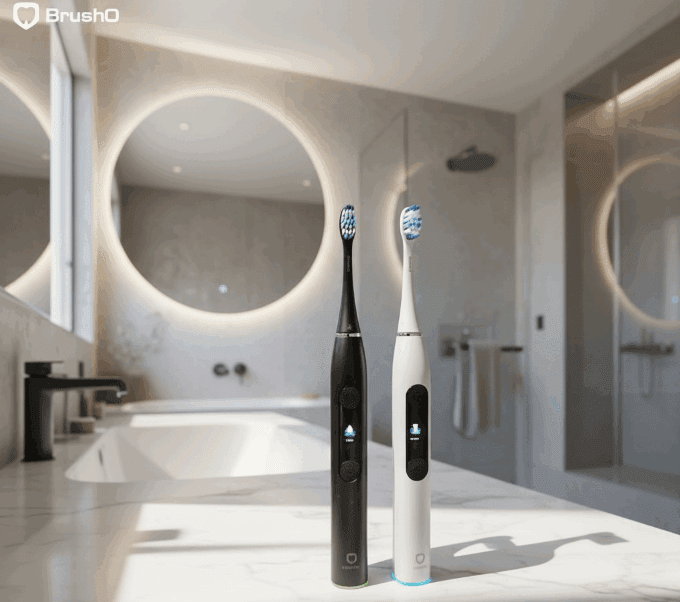
A smarter brushing routine is your first line of defense against chronic halitosis. BrushO’s AI-powered technology supports early detection and better prevention by offering:
• 16-surface coverage tracking – Ensures you don’t miss critical zones where odor-causing bacteria thrive
• Real-time feedback – Alerts you if you’re brushing too fast, too hard, or skipping zones
• Gum health scoring – Helps detect early signs of inflammation or gingivitis before it leads to odor
• Daily reports and progress monitoring – So you can stay on top of your oral health and catch trends before they worsen
If smart brushing, flossing, and hydration don’t resolve the issue, consult a dentist or doctor. They may:
• Check for gum disease or cavities
• Order blood or saliva tests
• Refer you to a specialist (e.g., ENT, gastroenterologist, or endocrinologist)
• Brush Twice Daily – Use a smart toothbrush like BrushO for optimal coverage
• Floss Daily – Don’t let debris linger between teeth
• Clean Your Tongue – Bacteria love the back of the tongue
• Stay Hydrated – Drink water to boost saliva
• Avoid Smoking and Excessive Alcohol – Both dry out the mouth and worsen odor
• Watch Your Diet – Garlic, onions, and high-sugar foods can make it worse
• Schedule Regular Dental Cleanings – At least twice a year
Bad breath isn’t just embarrassing—it can be your body’s way of signaling something serious. Don’t ignore the signs. Pair smart brushing tools like BrushO with regular checkups and good hygiene to stay ahead of deeper health issues and keep your breath fresh—and your body healthy.

Fluoride in drinking water is the most cost-effective caries preventive measure in public health, and it is also the source of most avoidable fluoride exposure in young children. The balance between benefit and risk depends on concentration, on total intake from all sources and on the age of the ...

A mouthguard is the only piece of protective equipment that a dentist can prescribe, and the difference between the cheapest and the best version is often less than the cost of a single repair. This guide explains what each type of mouthguard actually protects, how to judge fit, and what to check...

Distinguishing reversible from irreversible pulpitis is the single most consequential decision in endodontic diagnosis, because one leads to a restoration and the other to root canal treatment or extraction. The distinction rests on symptoms and pulp testing rather than on radiographs alone, and ...

A pregnancy epulis is a benign overgrowth of gum tissue that appears during pregnancy, most often in the second or third trimester. It can alarm patients because it grows quickly and bleeds easily, yet in most cases it needs no surgery and settles after delivery. Understanding what drives the gro...

When several teeth are missing, the choice usually narrows to a removable partial denture or a fixed implant-supported restoration, and cost is the factor patients raise first. Upfront price is only part of the comparison, because the two options differ in maintenance, comfort, effects on neighbo...

Most root canal failures are not caused by inadequate cleaning of canals that were found, but by canals that were never located. Molar anatomy varies widely, and the variation is not random: specific teeth in specific populations have predictable additional canals. Knowing where they hide is the ...

Gum massage is one of the oldest recommendations in oral care and one of the least understood. It has been described as a treatment for bleeding gums, a route to firmer tissue and, more recently, a way to reduce brushing force. This article separates the mechanisms that are supported by physiolog...

Interdental cleaning is the part of oral hygiene most people abandon first, and the choice between a floss pick and a length of string floss is often made on convenience. Convenience matters, because a tool that is used daily outperforms a superior tool that stays in the drawer, but the two devic...

Dementia changes the way a denture is worn, cleaned and tolerated, and the people who notice the change first are usually family carers rather than clinicians. Poor denture hygiene in this group is associated with mucosal infection, reduced food intake and, in frail patients, respiratory complica...

Chewing tobacco keeps nicotine and plant irritants in prolonged contact with a small area of mucosa, and the damage that results is concentrated exactly where the quid is held. The lesions that develop are often painless, which is why they are discovered during routine examination rather than bec...

Build an oral health data network quickly and at low cost in a way that everyone can build.


Address: RM 1427, 14/F RADIO CITY 505, HENNESSY RD CAUSEWAY BAY, HONG KONG
Code: 000000
Phone: +852-53758652
Email: customerservice@brusho.com