
Mouthwash has become a daily essential for many people seeking fresh breath and a clean-feeling mouth. However, mistaking it for a substitute for brushing can harm your oral health in the long run. While mouthwash offers benefits like antibacterial action and fluoride, it cannot replace the mechanical plaque removal that brushing and flossing provide. In this article, we’ll break down why mouthwash should always be a supplement—not a replacement—and how to build a balanced oral care routine that ensures lasting dental health. With tools like BrushO’s smart toothbrush technology, effective brushing becomes easier, smarter, and more consistent than ever.
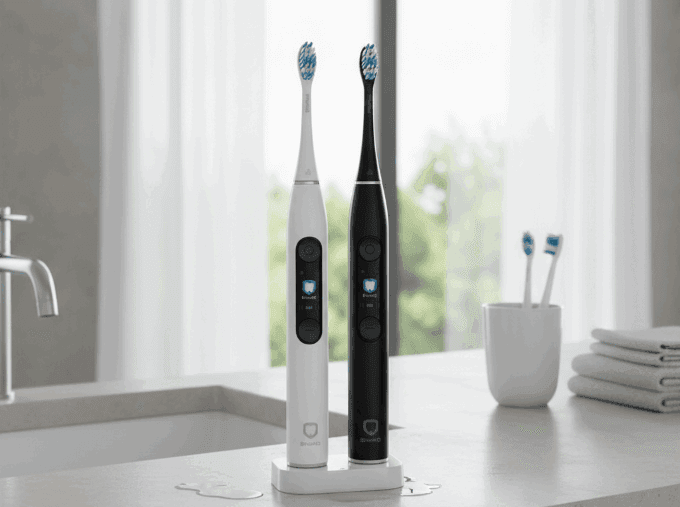
Brushing physically scrubs away plaque, the sticky biofilm made of bacteria and food debris that forms on your teeth every day. Mouthwash may reduce bacteria momentarily, but it does not eliminate plaque, especially in crevices and along the gumline.
• Plaque hardens into tartar, which only a dentist can remove.
• Tartar buildup leads to gum disease, cavities, and bad breath.
• Even high-strength antiseptic rinses lack the mechanical power of brushing.
💡 BrushO uses AI zone tracking to ensure complete plaque removal across 6 zones and 16 surfaces.
It’s easy to mistake minty freshness for cleanliness. But odor masking is not the same as bacteria removal. Mouthwash only neutralizes odor temporarily without addressing plaque or tongue bacteria.
• Brush your tongue—a major source of bad breath.
• Floss daily to remove trapped particles.
• Use mouthwash after brushing, never as a standalone solution.
Teeth are full of grooves, pits, and tight spaces where bacteria thrive. Mouthwash simply rinses over surfaces and lacks the penetration of bristles or floss.
• Back molars and gum margins
• Interdental spaces between teeth
• Areas prone to decay and gum inflammation
💡 BrushO’s smart sensors guide users to brush every corner, even hard-to-reach zones.
When used properly, mouthwash adds value to an oral hygiene routine. Its benefits include:
• Reducing surface-level bacteria and plaque
• Offering fluoride to strengthen enamel
• Calming gum inflammation with herbal/medicated rinses
• Refreshing breath after meals or in between brushing
1. Brush thoroughly to remove debris.
2. Floss to clean between teeth.
3. Rinse with mouthwash to finish and protect.
Avoid using mouthwash as the first step or only step—it may give a false sense of cleanliness.
Over-reliance on mouthwash while skipping brushing can lead to serious consequences:
• Increased risk of cavities and gingivitis
• Persistent bad breath from leftover bacteria
• Tartar buildup that brushing could have prevented
• Weak enamel due to missed fluoride contact
No rinse—no matter how expensive or potent—can physically dislodge plaque or polish the teeth.
Mouthwash is a powerful tool—but not a substitute. Think of it as the final polish, not the core cleaning method. The foundation of oral health is still brushing and flossing, performed consistently and correctly. With smart tools like BrushO, users can improve their brushing effectiveness with real-time pressure feedback, personalized coverage reports, and habit reinforcement through its “Brush & Earn” rewards system. When brushing is guided and consistent, mouthwash becomes the perfect supporting actor—not the lead role.
Feb 4
Jan 30

An in-depth exploration of periodontal disease pathogenesis, the 2017 World Workshop classification system, and the principles of non-surgical periodontal therapy including scaling, root planing, and adjunctive antimicrobials.

An evidence-based comparison of clear aligner therapy versus conventional fixed orthodontic appliances, covering treatment efficacy, duration, patient compliance, comfort, and aesthetic outcomes based on systematic reviews and clinical trials.

A practical guide to third molar assessment and management, including indications for extraction versus retention, surgical techniques for impacted teeth, and prevention and management of common postoperative complications.

A comprehensive review of contemporary root canal treatment protocols, including rotary instrumentation, advanced irrigation systems, and obturation techniques. Examines evidence-based success rates and prognostic factors affecting endodontic outcomes.

A review of modern resin composite technologies including nanofilled, bulk-fill, and bioactive composites. Covers polymerization shrinkage management, bonding protocols, and clinical longevity data for anterior and posterior restorations.

A comprehensive guide to pediatric dental behavior management techniques, including tell-show-do, positive reinforcement, protective stabilization, and pharmacological approaches, along with early interceptive orthodontic intervention strategies.

A comprehensive guide to caries management by risk assessment (CAMBRA), covering risk factor identification, caries detection methods, non-surgical management with fluoride and sealants, and minimally invasive restorative techniques.

A practical overview of contemporary digital dentistry workflows, including intraoral scanning technology, CAD/CAM systems for chairside and laboratory restorations, 3D printing applications, and digital implant planning.

An evidence-based review of traumatic dental injuries based on the Andreasen classification, covering crown fractures, luxation injuries, avulsion, and alveolar fractures, with step-by-step emergency management protocols.

An in-depth review of the dentist's role in managing obstructive sleep apnea, covering mandibular advancement devices, tongue-retaining devices, patient selection criteria, polysomnography interpretation, and collaborative care with sleep physicians.

Build an oral health data network quickly and at low cost in a way that everyone can build.


Address: RM 1427, 14/F RADIO CITY 505, HENNESSY RD CAUSEWAY BAY, HONG KONG
Code: 000000
Phone: +852-53758652
Email: customerservice@brusho.com