
Coffee and tea are beloved worldwide for their flavor and health benefits—but they also pose risks to your oral health. From stubborn surface stains to enamel erosion and bad breath, your daily cup may be quietly damaging your smile. In this article, we’ll explain how coffee and tea affect your teeth, share expert-recommended oral care tips for reducing the harm, and show how smart brushing devices like BrushO can help you enjoy your beverages while keeping your teeth white, strong, and fresh.
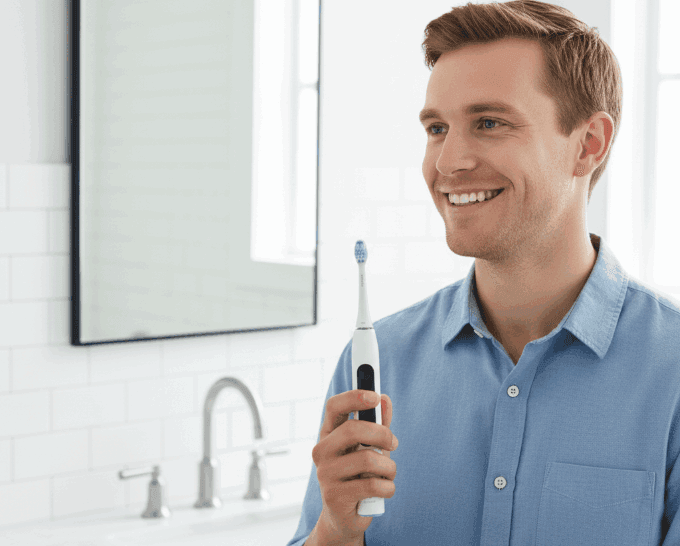
Both coffee and tea are acidic and contain tannins, which are natural plant compounds that cling to tooth enamel. Over time, they can:
• Cause yellow or brown stains
• Weaken enamel through acid erosion
• Contribute to bad breath
• Increase risk of plaque buildup
Even herbal teas and green tea, though often seen as “healthier,” can contribute to enamel wear and discoloration.
Swishing water after your drink helps neutralize acids and wash away staining particles. It’s a simple but powerful habit to protect enamel.
Brushing immediately after drinking acidic beverages can damage softened enamel. Give your teeth time to recover before brushing.
BrushO’s AI-based pressure detection and zone-specific feedback help you clean effectively without overbrushing, preserving enamel and reducing stains. The Whitening Mode is ideal for tea and coffee drinkers.
These extras feed cavity-causing bacteria and increase acidity. Try drinking your beverages plain or with low-acid plant-based alternatives.
For iced coffee or tea, use a straw to reduce direct contact with your front teeth—where stains are most noticeable.
This stimulates saliva flow, which naturally neutralizes acids and helps protect enamel.
Use toothpaste and mouthwash that are low-abrasive but effective against staining. Pair these with BrushO’s gentle Whitening Mode for daily stain control.
BrushO’s smart brushing system helps coffee and tea lovers stay proactive:
✅ Whitening Mode: Gently targets surface stains without enamel abrasion
✅ Pressure Alerts: Warn you when you brush too hard after acidic exposure
✅ Zone Tracking: Ensures you’re cleaning stain-prone areas properly
✅ Smart Reports: Monitor staining areas and track your brushing over time via the BrushO app
With BrushO, you don’t need to quit your morning coffee—just brush smarter.
| Tip | Reason |
| Use fluoride toothpaste | Strengthens enamel against acidic drinks |
| Avoid brushing right after tea | Enamel is temporarily weakened |
| Switch to green or white tea | Less staining than black tea |
| Limit sipping time | Constant sipping increases acid exposure |
| Professional cleanings every 6 months | Essential for stain removal and enamel assessment |
You don’t have to give up your favorite beverage to keep your smile healthy. By adopting the right habits and using smart brushing technology like BrushO, you can protect your enamel, reduce stains, and maintain fresh breath—all while enjoying your daily brew.
Jan 30
Jan 30

PPM describes concentration, not the amount to put on the brush. Learn how to read fluoride information while keeping regional guidance and individual advice in view.

That forgotten tube deserves a label check. Learn what toothpaste shelf-life information refers to, why storage matters, and how to avoid guessing from appearance.

Clear gel or opaque paste? Texture is only one feature. Learn which label details matter when comparing toothpastes for your brushing routine.

Minty toothpaste can create a cooling sensation without being chilled. Explore what menthol does and why a fresh feeling is different from complete cleaning.

The sound of a powered brush comes with its moving mechanism. Learn how normal operating noise differs from alerts or an unexpected change that needs checking.

Toothpaste on the mirror? Check when you switch the brush on and off, how you position it, and how to pause without rushing your routine.

A whitening brushing program and a bleaching treatment are different things. Learn how to interpret mode names, surface-stain claims, and realistic expectations.

A tiny cluster of bristles serves a different purpose from a full-size head. Learn where a single-tuft brush may fit into an individually recommended cleaning routine.

Angled tufts, different bristle heights, and the angle of your hand are separate design questions. Learn how to read a toothbrush-head description clearly.

A larger head is not an automatic shortcut to cleaner teeth. Learn how head size affects access, positioning, and the fit of your daily brushing routine.

Build an oral health data network quickly and at low cost in a way that everyone can build.


Address: RM 1427, 14/F RADIO CITY 505, HENNESSY RD CAUSEWAY BAY, HONG KONG
Code: 000000
Phone: +852-53758652
Email: customerservice@brusho.com