
Many people brush their teeth daily without knowing whether they’re doing it right. Common mistakes—like brushing too hard, missing certain areas, or not brushing long enough—can go unnoticed for years. This is where real-time feedback from smart toothbrushes comes in. With tools like BrushO’s AI-powered brushing guidance, users gain instant insights into their technique, pressure, and coverage. Over time, this data-driven guidance fosters better brushing habits, improves gum health, reduces plaque buildup, and creates consistency in oral hygiene routines. In this article, we explore how real-time feedback transforms everyday brushing behavior and leads to healthier teeth and gums.
Even people who brush twice a day often develop poor brushing techniques. Some of the most common issues include:
• Brushing too quickly
• Applying too much pressure
• Missing hard-to-reach zones
• Inconsistent daily habits
Without feedback, it’s hard to know whether your brushing routine is actually effective. This often leads to plaque buildup, gum inflammation, or enamel erosion over time.
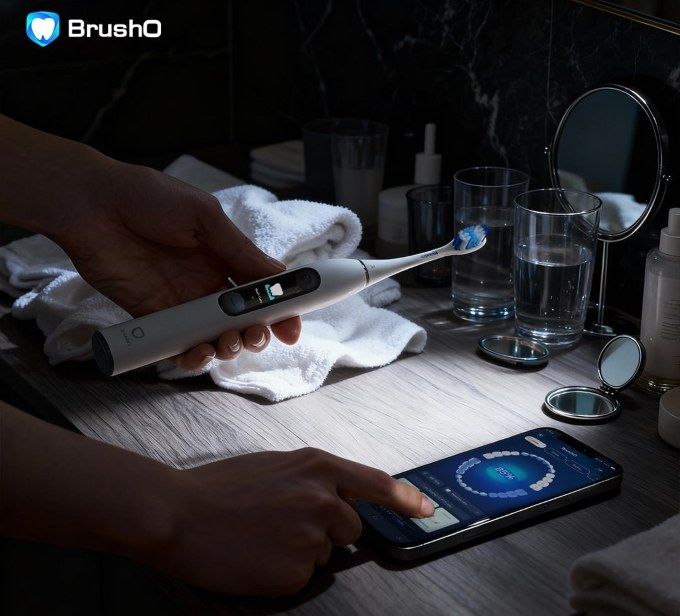
Real-time feedback refers to the instant data and corrections provided by smart toothbrushes during brushing sessions. This feedback is typically powered by sensors that detect:
• Brushing pressure
• Duration and timing
• Coverage by zone
• Angle of brush movement
Connected via Bluetooth to a mobile app, the brush syncs this data and provides on-screen coaching, alerts, and progress reports.
Real-time feedback ensures users apply just the right amount of pressure—avoiding both under-brushing and enamel-damaging force.
✅ With BrushO’s FSB (Fully Smart Brushing) technology, users receive instant alerts if they’re brushing too hard or skipping surfaces.
Most people habitually miss the same spots—especially molars or inner surfaces. Real-time zone detection helps users:
• Identify neglected areas
• Adjust brushing angle or speed
• Build awareness of problem zones
Feedback systems like BrushO’s brushing score, streaks, and $BRUSH token rewards encourage users to build brushing into a daily wellness ritual.
Better daily habits reduce the need for frequent dental treatments. Over time, consistent brushing with feedback lowers the risks of:
• Gingivitis
• Tartar accumulation
• Cavities and tooth decay
BrushO is an AI-powered smart toothbrush that personalizes feedback using a combination of:
• 6-zone, 16-surface analysis for full coverage
• Live brushing map showing missed or over-brushed areas
• Custom brushing modes tailored to user needs (sensitive, deep clean, whitening)
• App-integrated brushing scores and habit streak tracking
• Reward system that lets users earn $BRUSH tokens to redeem for free brush heads
The more consistently and correctly users brush, the higher their score—and the better their oral health outcomes.
| Behavior | Before Feedback | After Feedback |
| Pressure | Inconsistent | Balanced, gentle |
| Timing | Often rushed | Meets 2-min standard |
| Coverage | Skips zones | 100% coverage goals |
| Motivation | Low engagement | High due to rewards |
| Results | Plaque buildup | Healthier gums & enamel |
Brushing isn’t just a mechanical task—it’s a daily wellness ritual. Real-time feedback transforms a passive habit into an intentional self-care routine. As users see data-driven results, they:
• Stay motivated
• Become more aware of technique
• Develop lifelong habits that protect their oral health
Real-time brushing feedback changes the way people care for their teeth. With tools like BrushO’s AI technology, users are no longer brushing in the dark—they’re brushing with purpose, guidance, and results. Whether you’re aiming for fewer dentist visits, healthier gums, or simply better technique, real-time insights can be the game-changer your oral health needs.

PPM describes concentration, not the amount to put on the brush. Learn how to read fluoride information while keeping regional guidance and individual advice in view.

That forgotten tube deserves a label check. Learn what toothpaste shelf-life information refers to, why storage matters, and how to avoid guessing from appearance.

Clear gel or opaque paste? Texture is only one feature. Learn which label details matter when comparing toothpastes for your brushing routine.

Minty toothpaste can create a cooling sensation without being chilled. Explore what menthol does and why a fresh feeling is different from complete cleaning.

The sound of a powered brush comes with its moving mechanism. Learn how normal operating noise differs from alerts or an unexpected change that needs checking.

Toothpaste on the mirror? Check when you switch the brush on and off, how you position it, and how to pause without rushing your routine.

A whitening brushing program and a bleaching treatment are different things. Learn how to interpret mode names, surface-stain claims, and realistic expectations.

A tiny cluster of bristles serves a different purpose from a full-size head. Learn where a single-tuft brush may fit into an individually recommended cleaning routine.

Angled tufts, different bristle heights, and the angle of your hand are separate design questions. Learn how to read a toothbrush-head description clearly.

A larger head is not an automatic shortcut to cleaner teeth. Learn how head size affects access, positioning, and the fit of your daily brushing routine.

Construir rápidamente y a bajo costo una red de datos sobre salud bucal de una manera que todos puedan construir.
Construir rápidamente y a bajo costo una red de datos sobre salud bucal de una manera que todos puedan construir.


Address: RM 1427, 14/F RADIO CITY 505, HENNESSY RD CAUSEWAY BAY, HONG KONG
Code: 000000
Phone: +852-53758652
Email: customerservice@brusho.com