
Many people take vitamins daily, but few realize these supplements can silently damage their teeth if brushing is done at the wrong time. Chewable, gummy, and acidic vitamins create an environment that weakens enamel and feeds oral bacteria. Brushing too soon can worsen enamel erosion, while brushing too late allows plaque-forming sugars and acids to linger. This article explains the science behind vitamin acidity, saliva response, and brushing timing — and how BrushO’s AI-guided brushing protects your enamel, gumline, and long-term oral health.
Vitamins — especially vitamin C, multivitamins, iron, B-complex, and gummy supplements — are often:
• Acidic
• Sugary
• Sticky
• Enamel-softening
Once they dissolve in your mouth, they:
• Lower oral pH
• Soften enamel
• Feed bacteria
• Increase plaque formation
This creates a temporary high-risk zone for tooth erosion and cavities.
After taking vitamins:
• Your enamel becomes softened by acid
• Brushing immediately scrapes away weakened enamel
• This accelerates tooth erosion, sensitivity, and yellowing
But if you wait too long:
• Sugars and acids remain
• Bacteria produce decay-causing acids
• Gumline plaque increases
Timing matters more than most people realize.
The best answer: Brush BEFORE taking vitamins.
Here’s why:
• Removes plaque before acid exposure
• Creates a clean surface
• Allows fluoride to strengthen enamel
• Prevents vitamins from sticking to bacteria-coated teeth
After taking vitamins:
• Rinse with water
• Wait 30–60 minutes
• Then brush again if needed
This protects enamel while still removing residue.
These are the worst for teeth:
• Vitamin C gummies
• Multivitamin gummies
• Iron syrups
• Effervescent tablets
They:
• Stick to teeth
• Pool around the gumline
• Feed plaque bacteria
• Erode enamel faster than soda
Without proper brushing timing, these supplements dramatically increase cavity risk.
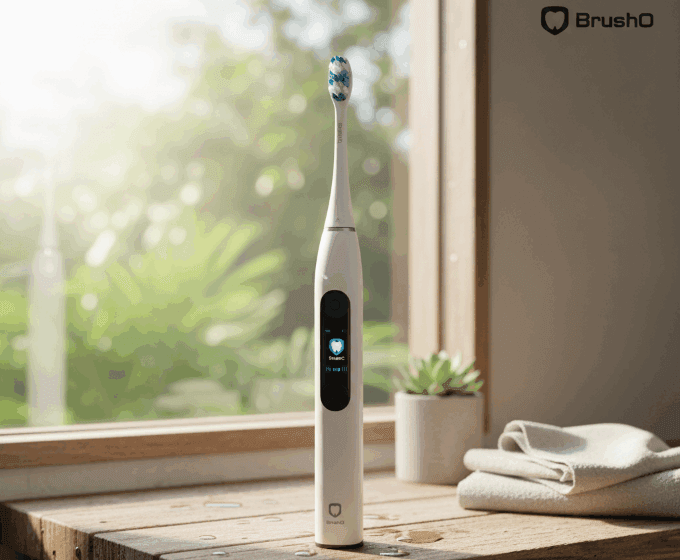
BrushO is designed for situations where timing and technique matter most.
BrushO helps by:
• Tracking gumline coverage where vitamin acids collect
• Monitoring pressure so softened enamel isn’t over-scrubbed
• Providing brushing reminders for safe timing
• Guiding zone-by-zone cleaning to remove vitamin residue
• Using AI to prevent enamel wear
This makes BrushO ideal for anyone taking daily supplements.
Do this:
1. Rinse with water
2. Chew sugar-free gum to boost saliva
3. Wait 30–60 minutes
4. Brush gently with BrushO
Never brush immediately after acidic supplements.
You are at higher risk if you take:
• Vitamin C
• Iron
• Prenatal vitamins
• Gummy supplements
• Sports or immunity boosters
These users benefit most from AI-guided brushing.
Vitamins support your health — but if taken without smart brushing timing, they quietly destroy enamel. Brushing before supplements and using BrushO’s AI-guided system ensures your teeth stay protected while your body gets the nutrients it needs. Your supplements should help you — not harm your smile.
Feb 4
Feb 4

The uncontrolled hypertension is the condition that the dental practice meets in the patient who presents with the elevated pressure that the guideline does not permit for the elective treatment, and the management of this patient requires the deferral of the dental procedure and the referral to ...

The closure of the extraction space in the orthodontic treatment is the phase that demands the careful selection of the mechanics and the monitoring of the force that the appliance delivers. The sliding mechanics that rely on the continuous archwire and the power chain that connects the brackets ...

The transverse discrepancy of the maxilla is the problem that the crowding and the posterior crossbite often hide, and the maxillary expansion is the treatment that addresses the width of the arch rather than the position of the individual tooth. The clinician who diagnoses the constriction early...

The local anaesthesia is the daily procedure that the modern dentistry treats as the routine, and the complications that follow it range from the transient and the trivial to the permanent and the serious. The clinician who injects by the habit without the anatomy in the mind is the clinician who...

The hypertension is the condition that the dental practice meets in the every day, and the patient who carries the elevated pressure without the symptoms is the patient who presents the risk that the chair-side measurement reveals. The dental team occupies the position that no other profession ho...

The glass-ceramic crown has become the default restoration for the anterior and the many posterior teeth, and the material selection within the family is the decision that determines the strength, the aesthetics, and the longevity of the result. The lithium disilicate, the leucite, and the zircon...

The dental phobia is the extreme form of the dental fear that prevents the patient from attending the treatment that the oral health requires, and the management of the phobia demands the skill that extends beyond the routine behaviour guidance. The systematic desensitization, the exposure therap...

The dental fear of the child is the condition that shapes the attitude for the lifetime, and the clinician who manages the first visits with the skill builds the patient who attends the recall without the dread. The fear that the child develops follows the many sources, and the practice that reco...

The patient with controlled hypertension is the patient who requires the dental care that the oral health demands and the treatment that the blood pressure permits, and the clinician who manages the controlled case safely follows the guideline that the evidence supports. The controlled hypertensi...

The ceramic veneer is the restoration that the aesthetic dentistry depends on, and the bond that retains the veneer on the enamel is the critical link that determines whether the restoration survives the function or fractures and debonds. The clinical technique from the preparation to the cementa...

Construir rápidamente y a bajo costo una red de datos sobre salud bucal de una manera que todos puedan construir.
Construir rápidamente y a bajo costo una red de datos sobre salud bucal de una manera que todos puedan construir.


Address: RM 1427, 14/F RADIO CITY 505, HENNESSY RD CAUSEWAY BAY, HONG KONG
Code: 000000
Phone: +852-53758652
Email: customerservice@brusho.com