
In the ever-evolving intersection of health, technology, and innovation, BrushO emerges as a game-changer in oral health. It integrates AI, Web3, DePIN (Decentralized Physical Infrastructure Networks), and DESCI (Decentralized Science) to transform brushing into an interactive, data-driven, and health-enhancing activity. Let’s explore the science behind BrushO’s smart brushing technology and what sets it apart.
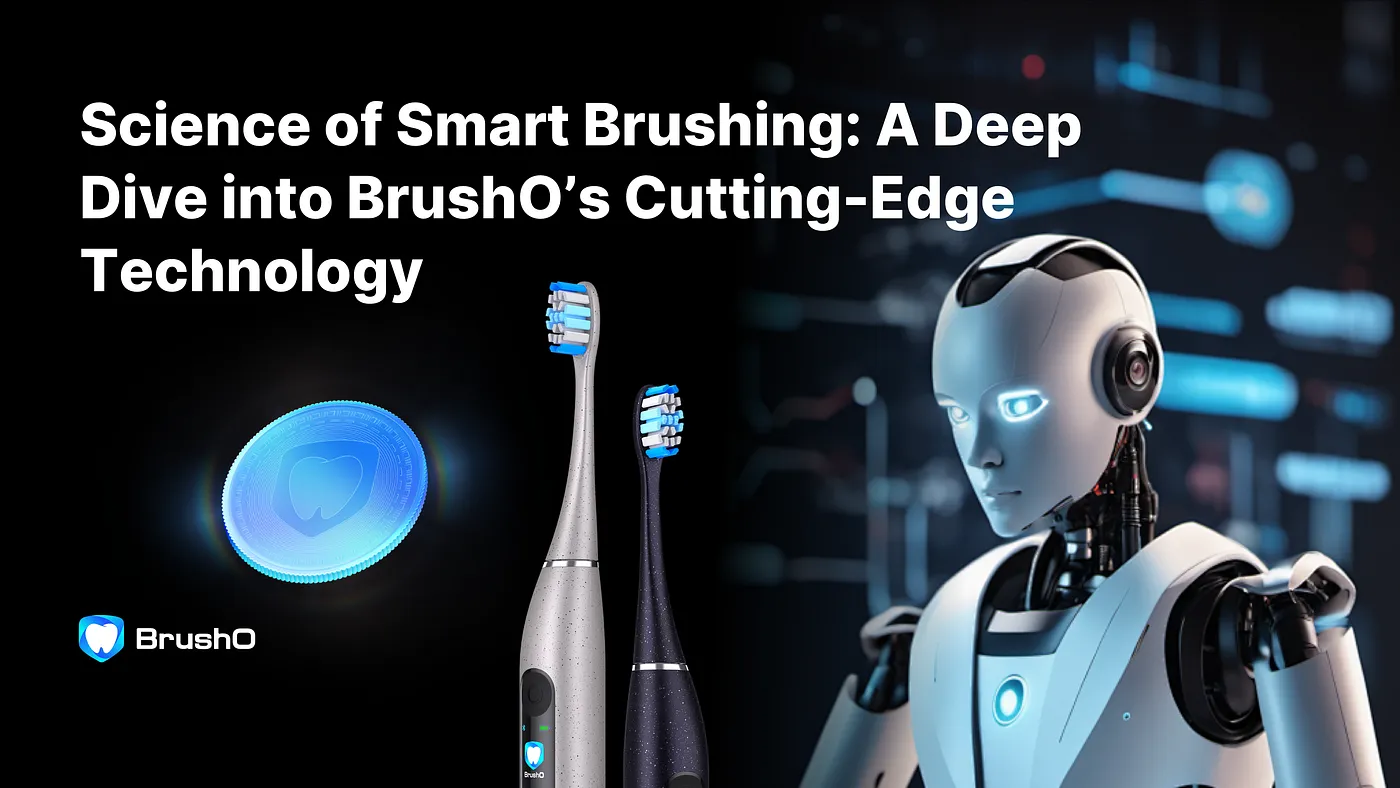
BrushO uses advanced AI algorithms that evaluate and optimize real-time brushing. The gadget monitors in detail by using sensors affixed to the toothbrush the following:
The AI-powered Personal Oral Assistant delivers personalized feedback that helps improve habits and leads to a healthier smile.
BrushO combines Web3 technology into the platform so users can get full control of their information regarding oral health. Among blockchain-backed platforms, consumers can:
Revolutionary Hardware Design
The hardware of BrushO has been engineered to maximize efficiency and user comfort as follows:
The firmware of the device is constantly updated to include all the latest technological advancements in order to make sure the users always have cutting-edge features.
BrushO implements DESCI to help with global oral health research. By engaging in this initiative, users can be part in:
To motivate users, BrushO incorporates gamified elements such as:
BrushO is committed to sustainability through:
With its official launch in January, BrushO has set the dental healthcare space into a storm. Right from AI-driven insights to blockchain-enabled data security, BrushO stands for the future of smart health devices. Catch the wave with BrushO as it takes the oral health care space further than thought possible.
With its upgraded features, BrushO isn’t just any toothbrush: it is the lifestyle evolution. Join today’s revolutionary smart brushing trend and begin reaping the rewards.
Dec 20
Jan 3

Squamous cell carcinoma is not a single, uniform disease, and two of its oral variants illustrate the extremes of its behavior. Verrucous carcinoma is a slow-growing, exophytic tumor that almost never metastasizes, while spindle cell carcinoma is an aggressive, sarcomatoid malignancy that can be ...

Most people expect a toothache to be the first sign of pulp disease, but some forms of pulpitis are surprisingly silent. A pulp polyp is the visible result of chronic hyperplastic pulpitis, a condition in which the dental pulp grows out of a large carious opening as a fleshy mass. Recognizing thi...

Dry mouth is not merely uncomfortable; it is a medical condition with real consequences for teeth, speech, swallowing and quality of life. When the salivary glands cannot produce enough saliva, medications called sialogogues can restore some of the missing fluid. Pilocarpine and cevimeline are th...

A blister in the mouth can be the first warning of a systemic autoimmune disease, and two disorders deserve particular attention in the dental chair: pemphigus vulgaris and mucous membrane pemphigoid. Both produce chronic oral ulceration, yet their immunologic targets, clinical behavior and long-...

When infection drains from a tooth, the body often creates a visible escape route, and the dentist must interpret these fistulous openings correctly. A parulis is the common gum boil that signals chronic periapical infection, while an oroantral fistula is a communication between the mouth and the...

Among the fibro-osseous lesions of the jaws, the ossifying fibroma holds a unique position because it is a true neoplasm, unlike the reactive cemento-osseous dysplasia discussed in an earlier article. It grows continuously, expands bone and requires surgical removal, and its cemental variant adds...

Not all keratocystic lesions of the jaw behave alike, and one of the most important distinctions in oral pathology separates the orthokeratinized odontogenic cyst from its better-known relative, the odontogenic keratocyst. Although the two lesions look similar under the microscope at first glance...

Periodontal disease is usually a slowly progressive infection, but a rare form called necrotizing ulcerative periodontitis destroys tissue with alarming speed. Unlike ordinary periodontitis, this condition produces necrotic, cratered papillae, deep pocketing and rapid bone loss, and it appears al...

Every parent has met the child who refuses to eat because of painful mouth sores, and most of these children have one of two viral illnesses: herpangina or hand, foot and mouth disease. Both are caused by enteroviruses, both produce fever and oral ulcers, and both are overwhelmingly common in you...

Cementoosseous dysplasia is one of the most common fibro-osseous lesions found on dental radiographs, yet it is also one of the most frequently misdiagnosed. The lesion replaces normal bone with cellular fibrous tissue and cementum-like material, and it appears in several forms that range from a ...

Construire rapidement et à faible coût un réseau de données sur la santé bucco-dentaire de manière que tout le monde puisse y contribuer.
Construire rapidement et à faible coût un réseau de données sur la santé bucco-dentaire de manière que tout le monde puisse y contribuer.


Address: RM 1427, 14/F RADIO CITY 505, HENNESSY RD CAUSEWAY BAY, HONG KONG
Code: 000000
Phone: +852-53758652
Email: customerservice@brusho.com