
Oral hygiene is no longer just about brushing twice a day—it’s entering a new era of smart, personalized, and data-driven care. With AI-powered tools like BrushO, users are now empowered to track, improve, and optimize their daily oral routines in ways never before possible. This article explores how technology is redefining oral health for the modern world. Oral care has remained relatively unchanged for decades. The advice has always been simple: brush twice a day, floss daily, visit the dentist twice a year. But today, with the rise of AI, data analytics, and personalized health technology, a transformation is underway. We’re entering a new era of oral hygiene—where smart tools guide us, our brushing habits are analyzed, and prevention becomes proactive. At the heart of this shift is the AI-powered smart toothbrush, and leading the charge is BrushO.
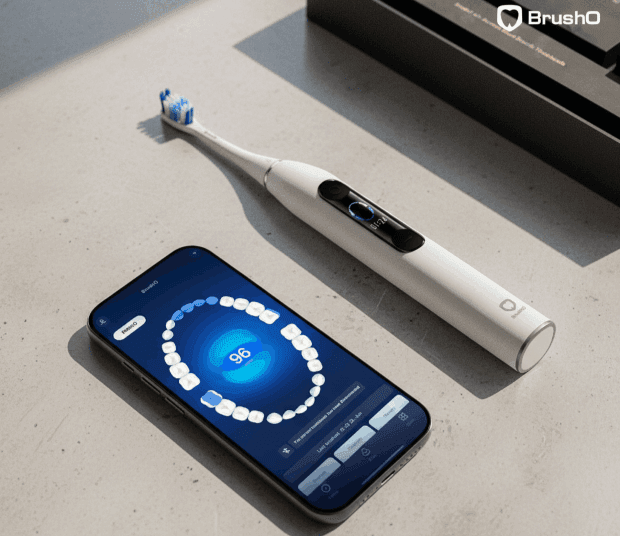
Most people brush the same way every day—with no idea if they’re doing it correctly. Studies show that over 80% of users miss at least one zone during brushing. Traditional toothbrushes can’t tell you:
• If you’re brushing too hard
• If you’ve missed areas
• If your routine is improving
Smart toothbrushes with sensors and AI change that. They track coverage, monitor pressure, and generate brushing reports—turning a mindless routine into an intelligent, interactive experience.
With advanced sensors, machine learning, and mobile apps, smart toothbrushes are now central to modern oral hygiene. Here’s how they’re transforming the game:
BrushO provides live feedback during brushing sessions. If you’re pressing too hard, skipping a zone, or brushing too fast, you’ll know instantly.
After each session, users receive a detailed brushing report—highlighting missed zones, pressure levels, and brushing duration. This data helps build better long-term habits.
Unlike ordinary brushes, BrushO tracks progress over time. It even rewards users with tokens for consistent, proper brushing—transforming oral care into a rewarding wellness practice.
BrushO isn’t just another electric toothbrush—it’s an AI-powered wellness device. It features:
• FSB Technology (Fully Smart Brushing): Real-time zone detection, surface tracking, and pressure monitoring
• 6 Zones × 16 Surfaces Coverage: No surface is left behind
• Smart App Sync: Personalized brushing insights delivered directly to your phone
• “Brush & Earn” Rewards System: Good habits earn real value
Whether you’re brushing for health, beauty, or both—BrushO makes every session smarter, safer, and more satisfying.
Poor brushing technique contributes to:
• Gum disease
• Tooth decay
• Enamel erosion
• Early tooth loss
Traditional brushing offers no feedback. In contrast, smart brushing prevents problems before they develop, giving users real-time data to take control of their oral health. This shift from reactive to proactive care is what defines this new era.
Just like fitness trackers changed the way we exercise, smart toothbrushes are revolutionizing the way we care for our teeth. With AI, data, and intelligent design, oral hygiene is no longer a guessing game—it’s a science-backed, user-empowered daily ritual. We are witnessing a paradigm shift in oral health. From manual brushing to guided precision, the new era of oral hygiene is all about smart care, self-awareness, and sustained wellness. With BrushO, you’re not just brushing your teeth—you’re investing in your long-term health, smile, and confidence.

The uncontrolled hypertension is the condition that the dental practice meets in the patient who presents with the elevated pressure that the guideline does not permit for the elective treatment, and the management of this patient requires the deferral of the dental procedure and the referral to ...

The closure of the extraction space in the orthodontic treatment is the phase that demands the careful selection of the mechanics and the monitoring of the force that the appliance delivers. The sliding mechanics that rely on the continuous archwire and the power chain that connects the brackets ...

The transverse discrepancy of the maxilla is the problem that the crowding and the posterior crossbite often hide, and the maxillary expansion is the treatment that addresses the width of the arch rather than the position of the individual tooth. The clinician who diagnoses the constriction early...

The local anaesthesia is the daily procedure that the modern dentistry treats as the routine, and the complications that follow it range from the transient and the trivial to the permanent and the serious. The clinician who injects by the habit without the anatomy in the mind is the clinician who...

The hypertension is the condition that the dental practice meets in the every day, and the patient who carries the elevated pressure without the symptoms is the patient who presents the risk that the chair-side measurement reveals. The dental team occupies the position that no other profession ho...

The glass-ceramic crown has become the default restoration for the anterior and the many posterior teeth, and the material selection within the family is the decision that determines the strength, the aesthetics, and the longevity of the result. The lithium disilicate, the leucite, and the zircon...

The dental phobia is the extreme form of the dental fear that prevents the patient from attending the treatment that the oral health requires, and the management of the phobia demands the skill that extends beyond the routine behaviour guidance. The systematic desensitization, the exposure therap...

The dental fear of the child is the condition that shapes the attitude for the lifetime, and the clinician who manages the first visits with the skill builds the patient who attends the recall without the dread. The fear that the child develops follows the many sources, and the practice that reco...

The patient with controlled hypertension is the patient who requires the dental care that the oral health demands and the treatment that the blood pressure permits, and the clinician who manages the controlled case safely follows the guideline that the evidence supports. The controlled hypertensi...

The ceramic veneer is the restoration that the aesthetic dentistry depends on, and the bond that retains the veneer on the enamel is the critical link that determines whether the restoration survives the function or fractures and debonds. The clinical technique from the preparation to the cementa...

Construire rapidement et à faible coût un réseau de données sur la santé bucco-dentaire de manière que tout le monde puisse y contribuer.
Construire rapidement et à faible coût un réseau de données sur la santé bucco-dentaire de manière que tout le monde puisse y contribuer.


Address: RM 1427, 14/F RADIO CITY 505, HENNESSY RD CAUSEWAY BAY, HONG KONG
Code: 000000
Phone: +852-53758652
Email: customerservice@brusho.com