
Most people think of brushing their teeth as just a cosmetic or hygiene habit—but research now shows that poor oral hygiene can have deeper impacts on your daily energy and mental focus. Chronic inflammation, gum disease, and bacterial overgrowth in the mouth are silently linked to fatigue, brain fog, and even reduced cognitive performance. In this article, we delve into the science behind how poor oral hygiene impacts your energy levels, why it matters more than you think, and how smart toothbrushes like BrushO can help protect your body and brain.
The mouth is more than just a gateway for food—it’s a key part of your systemic health. When you neglect oral care:
• Bacteria thrive, producing inflammatory toxins
• Your immune system becomes overactive, wasting energy
• Inflammation spreads beyond the gums via the bloodstream
• Your brain receives lower oxygen and nutrient delivery
These biological reactions may lead to:
• Brain fog and reduced attention span
• Daytime fatigue and low motivation
• Increased risk of neurodegenerative conditions (e.g., Alzheimer’s disease)
• Lower productivity and task performance
Studies have found that people with periodontal (gum) disease perform worse on memory and attention tasks. The link between chronic inflammation and cognitive decline is now well established in the fields of neurology and immunology.
Do you experience these symptoms?
| Symptom | Possible Cause |
| Constant low energy | Ongoing inflammation from gum disease |
| Trouble focusing | Bacterial toxins affecting brain pathways |
| Frequent headaches | Oral infection and jaw tension |
| Poor sleep quality | Gum inflammation and nighttime mouth breathing |
If you’re brushing irregularly or using an outdated toothbrush, your symptoms might be linked to oral issues you’ve overlooked.
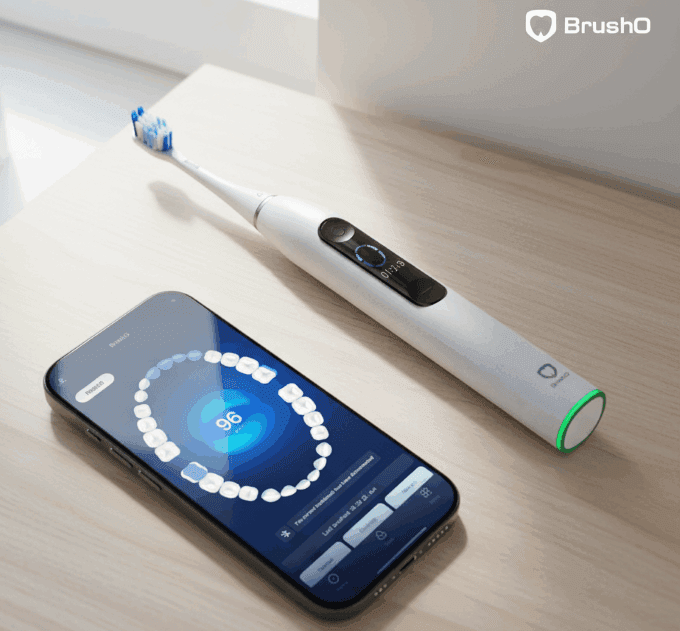
Inconsistent brushing allows harmful bacteria to multiply. Use a smart toothbrush like BrushO to guide you through a complete 2-minute, 6-zone routine.
Flossing isn’t just about removing food—it removes bacteria trapped in gum pockets that trigger immune responses.
BrushO offers zone tracking, pressure monitoring, and post-brushing feedback to ensure complete cleaning without harming gums or enamel.
Dehydration and sugary foods feed bad bacteria. Water and a balanced diet improve both oral and brain health.
Track your brushing habits and how you feel throughout the day. You may notice that focus and energy improve as oral hygiene becomes consistent.
BrushO helps maintain not only a healthier mouth, but also:
🧠 Less inflammation = sharper thinking
⚡️ Energy conservation = better physical stamina
📈 Habit tracking = improved consistency
😁 Whiter smile = more confidence and positivity
The mouth-body-brain connection is real—and your toothbrush can play a surprising role in your overall well-being.
When we overlook oral care, we invite systemic problems that stretch far beyond cavities and breath. Science now confirms that oral inflammation contributes to fatigue and poor cognitive performance. Take control of your mouth to reclaim your energy, clarity, and productivity.

The posterior maxilla is the most demanding site in implant dentistry, because the pneumatized maxillary sinus frequently leaves the clinician with less bone than the implant requires. Maxillary sinus augmentation, the surgical procedure that raises the sinus floor to create vertical bone, has be...

The rubber dam is the oldest and still the most effective isolation device in restorative dentistry, and its reputation as an inconvenient extra step survives among practitioners who have never measured the time it actually saves. The dam isolates the field from the saliva, the tongue, and the ch...

The margin is the most vulnerable line in fixed prosthodontics, because it is the only boundary between the prepared tooth, the restoration, and the oral environment that the clinician cannot fully seal by effort alone. A restoration that fits seamlessly at the margin resists leakage, caries, and...

The masticatory system is built for function, yet much of its damage comes from habits that serve no purpose. Parafunctional habits, the clenching, the grinding, and the tongue pressing performed outside of normal function, sit behind much of the tooth wear, the temporomandibular pain, and the my...

Chronic mouth breathing in the growing child is seldom a dental problem in origin and almost always a facial one in consequence. The child who sleeps with the mouth open bypasses the physiologic benefits of nasal respiration, and the posture that the airway forces upon the tongue, the mandible, a...

The immediate denture is the prosthesis placed on the day the teeth are extracted, sparing the patient the edentulous interval the conventional denture imposes and preserving the occlusal vertical dimension, the facial support, and the appearance through the transition. The clinical literature ha...

The Class III malocclusion in the growing child carries a special urgency, because the maxillary deficiency that marks the pattern does not correct itself and the window for the growth-modifying treatment closes with the skeletal maturity. Elastic protraction, the orthopedic therapy that pulls th...

The denture is the only prosthetic device in medicine that its owner is expected to wear daily and to clean personally, yet it is also the device most commonly neglected until the signs of disease appear. A biofilm that forms on the acrylic base within hours is a reservoir of candida and bacteria...

The complete denture stands or falls on the impression, because the impression determines how well the base follows the mucous membrane and how evenly the occlusal load is distributed across the basal seat. For a century the profession has argued about whether the impression should record the muc...

The all-ceramic crown has moved from a niche product to the default restoration for the anterior single tooth in a single clinical generation, driven by patient demand for metal-free appearance and by materials that now survive functional loading as reliably as their metal-ceramic predecessors. A...

Construire rapidement et à faible coût un réseau de données sur la santé bucco-dentaire de manière que tout le monde puisse y contribuer.
Construire rapidement et à faible coût un réseau de données sur la santé bucco-dentaire de manière que tout le monde puisse y contribuer.


Address: RM 1427, 14/F RADIO CITY 505, HENNESSY RD CAUSEWAY BAY, HONG KONG
Code: 000000
Phone: +852-53758652
Email: customerservice@brusho.com