How to Control Brushing Pressure with a Smart Toothbrush
Jan 21

Jan 21
Brushing your teeth too hard can lead to gum recession and enamel damage, which makes controlling brushing pressure essential for long-term oral health. While regular toothbrushes provide no feedback, smart toothbrushes are equipped with advanced pressure sensors to monitor and adjust pressure in real time. These sensors offer guidance that helps users maintain the ideal brushing force for better oral care. In this article, we explore how smart toothbrushes can help control brushing pressure and protect your gums, teeth, and overall oral health. Learn how AI and sensor technology make it easier than ever to brush correctly and avoid harmful habits.


How to Control Brushing Pressure with a Smart Toothbrush

1. The Importance of Brushing Pressure for Oral Health

Brushing pressure plays a significant role in oral health. While brushing too softly can result in ineffective plaque removal, brushing too hard can cause more harm than good. Over time, excessive pressure can lead to gum recession, enamel erosion, and increased tooth sensitivity.
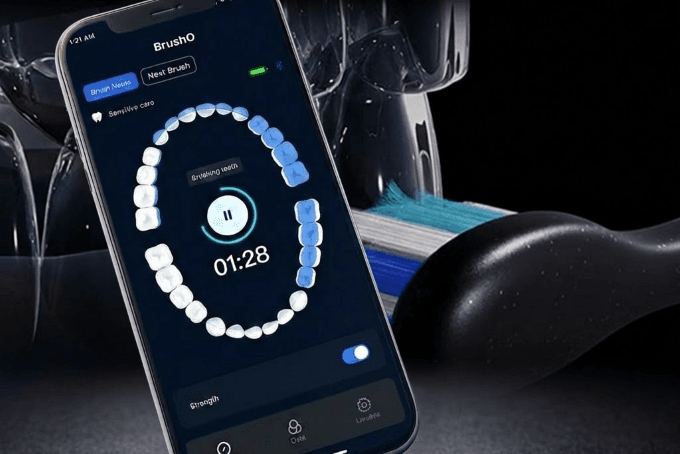
Smart toothbrushes are designed to help users find the right balance. They use advanced pressure sensors to monitor the force applied during brushing, providing real-time feedback to guide users toward a more optimal brushing experience. By alerting the user when pressure is too high, smart toothbrushes can prevent damage and ensure thorough yet gentle cleaning.

2. How Smart Toothbrushes Use Pressure Sensors to Improve Brushing Habits

Pressure sensors in smart toothbrushes detect how hard you’re pressing against your gums and teeth. When the applied pressure exceeds a safe threshold, the toothbrush provides immediate feedback, usually through a combination of visual indicators (like LED lights) or vibrations. This real-time response helps users adjust their brushing technique and reduce excessive force.
These sensors are calibrated to monitor the ideal pressure range for each user, ensuring that brushing is effective but not damaging. The feedback can be continuous or intermittent, depending on the model, but the goal remains the same: promoting healthy, consistent brushing habits.

3. The Benefits of Pressure Control for Gum and Enamel Health

One of the primary benefits of controlling brushing pressure is the protection of your gums and enamel. Excessive brushing force can lead to gum recession, where the gum tissue pulls away from the tooth, exposing the sensitive roots underneath. This can result in increased tooth sensitivity and higher susceptibility to cavities.
Additionally, too much pressure can wear down enamel, the tooth’s protective outer layer. Once enamel is gone, it doesn’t regenerate, leaving the teeth more vulnerable to decay. Smart toothbrushes with pressure control help reduce these risks by promoting gentle brushing and helping maintain the integrity of both gums and enamel.

4. Real-Time Feedback and Personalized Pressure Settings

Advanced smart toothbrushes allow users to set personalized pressure preferences based on their oral health needs. Some models come with multiple pressure modes that can be customized for different users in the household. For example, users with sensitive gums can select a softer brushing mode, while those focused on plaque removal can opt for a stronger setting.
By providing personalized settings, smart toothbrushes can address individual needs, making brushing safer and more effective for everyone, from children to adults with specific oral health concerns.

5. How AI and Technology Optimize Pressure Control Over Time

Many smart toothbrushes are equipped with AI-powered algorithms that track brushing pressure over time. By analyzing your brushing habits, these algorithms can detect patterns and make real-time adjustments to the feedback provided. For example, if a user consistently applies too much pressure in a particular area of the mouth, the toothbrush can provide additional warnings or adjust the brushing mode accordingly.
These intelligent adjustments help users improve their brushing technique over time. AI-backed pressure control optimizes the experience and ensures that users aren’t just brushing more efficiently but also more safely.

6. Habit Formation: Learning the Right Pressure with Smart Toothbrushes

Consistently brushing with the right amount of pressure can be challenging for many people. While smart toothbrushes provide immediate feedback, they also play a key role in long-term habit formation. Over time, users become more aware of the correct pressure and develop muscle memory for proper brushing technique.
By incorporating a smart toothbrush into your routine, you’re not only improving your immediate brushing experience but also building better, healthier oral care habits for the future. The pressure control feature is just one of the many tools that can help you develop a more effective and sustainable brushing habit.

7. The Future of Pressure Control in Oral Care

As smart toothbrushes continue to evolve, the technology behind pressure control will become even more advanced. Future models may offer even more precise pressure feedback, incorporating more sensors for more detailed analysis of brushing technique. Additionally, as AI becomes more sophisticated, smart toothbrushes may offer deeper insights into brushing patterns, further personalizing the brushing experience for optimal gum and enamel protection.
With the continued integration of technology, smart toothbrushes will not only improve the brushing process but also contribute to the overall advancement of oral health technology.
 

Final Thoughts: A Smarter Approach to Brushing Pressure

Brushing pressure is a critical factor in maintaining healthy gums and enamel. By using a smart toothbrush with pressure sensors, users can control their brushing force, ensuring a more effective yet gentle cleaning experience. With real-time feedback, personalized settings, and AI-powered insights, smart toothbrushes help users maintain optimal pressure, leading to healthier teeth and gums in the long run.
By incorporating smart toothbrush technology into your daily routine, you’re taking a proactive step toward better oral health, and ultimately, a brighter, healthier smile.

Derniers articles

Saliva as a Diagnostic Fluid in Dentistry

Saliva as a Diagnostic Fluid in Dentistry

Saliva has moved from the byproduct of the examination to the fluid that the modern practice can read, and the diagnostics that the salivary sample supports now reach from the caries risk to the periodontal inflammation and beyond. The fluid is easy to collect, safe to handle, and rich in the pro...

Ridge Split Technique for Narrow Alveolar Ridges

Ridge Split Technique for Narrow Alveolar Ridges

The narrow alveolar ridge is the common obstacle that the implant plan meets in the healed posterior site, and the ridge split technique is the approach that widens the crest without the block graft and the second surgical site. The technique uses the viscoelastic property of the bone, and the co...

Resin-Bonded Bridges: Indications, Design, and Survival

Resin-Bonded Bridges: Indications, Design, and Survival

The resin-bonded bridge is the conservative alternative to the conventional fixed prosthesis, and its place in the modern practice has widened as the adhesive dentistry matured. The prosthesis replaces the missing tooth with the minimal removal of the enamel from the abutment, and the retention i...

Systemic Antibiotics as an Adjunct in Periodontitis

Systemic Antibiotics as an Adjunct in Periodontitis

The systemic antibiotic has a defined and a narrow place in the periodontal therapy, and the clinician who respects its limits uses it well while the clinician who reaches for it routinely erodes both the result and the antibiotic stewardship. The mechanical debridement remains the foundation of ...

Bond Failure in Fixed Orthodontic Treatment

Bond Failure in Fixed Orthodontic Treatment

The bond failure of the bracket is the interruption that the fixed orthodontic treatment can tolerate in the small number but not in the pattern, and the clinician who understands the cause reduces the frequency that the repeated rebonding records. The failure that recurs on the single tooth poin...

Medication-Related Oral Side Effects: Recognition in Practice

Medication-Related Oral Side Effects: Recognition in Practice

The prescription pad is one of the most common sources of the oral complaint that the patient brings to the dental office, and the clinician who does not think of the medication may spend the appointment treating the symptom that the drug created. The list of the agents that affect the mouth grow...

Intraoral Scanners Versus Conventional Impressions

Intraoral Scanners Versus Conventional Impressions

The intraoral scanner has moved from the novelty of the early adopters to the standard equipment of the modern prosthodontic practice, and the comparison with the conventional impression has become a daily question rather than an academic one. The scanner captures the surface of the teeth and the...

Endodontic Retreatment: Indications and Technical Considerations

Endodontic Retreatment: Indications and Technical Considerations

The endodontic retreatment is the second chance that the tooth receives when the initial treatment fails to resolve the infection or the symptoms, and the procedure is both more demanding and more rewarding than the primary treatment. The clinician who retreats the tooth encounters the filling ma...

Endodontic Access Preparation: Principles and Common Mistakes

Endodontic Access Preparation: Principles and Common Mistakes

The access preparation is the gateway of every root canal treatment, and it is the step at which the outcome of the case is most often decided, for good or for ill. A well-designed access straightens the canal system, removes the coronal obstruction, and allows the instruments and the irrigants t...

Dentist-Laboratory Communication in Prosthodontics

Dentist-Laboratory Communication in Prosthodontics

The restoration that the laboratory returns is only as good as the information that the clinician sends, and the communication between the dentist and the technician is the step that determines whether the crown, the veneer, or the bridge meets the expectation of the patient. The shade, the form,...
