
Instilling good oral hygiene habits in children is one of the most important health lessons a parent can teach. But getting kids to brush and floss properly—and consistently—is often a challenge. From timing issues to technique to motivation, this article breaks down age-appropriate strategies to make brushing and flossing both educational and enjoyable. We also explore how smart tools like BrushO empower parents and kids to build consistent, rewarding habits that last a lifetime.
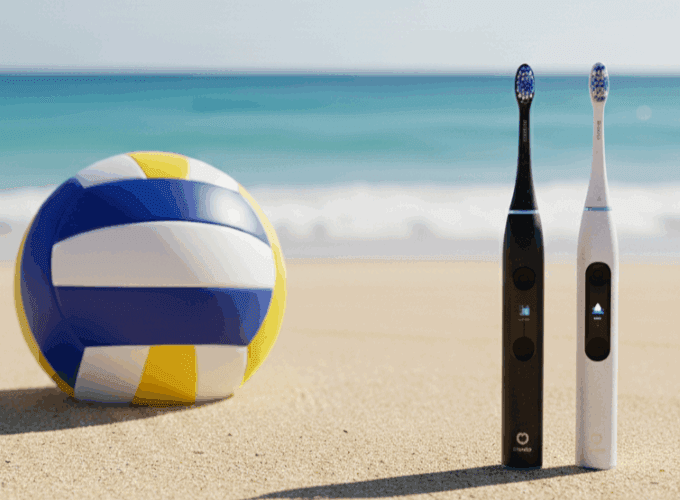
Forming healthy habits in early childhood sets the foundation for long-term oral wellness. According to the American Academy of Pediatric Dentistry, children should begin brushing as soon as their first tooth erupts, and start flossing once two teeth touch.
• Reduces risk of cavities and gum disease
• Builds lifelong confidence in personal hygiene
• Minimizes dental anxiety in adulthood
• Helps children understand the value of preventive care
• Focus: Gentle brushing with a soft brush and water or baby-safe toothpaste.
• Tips: Make it playful. Use songs, colorful brushes, or a parent-led demonstration. Don’t expect perfection—consistency is key.
• Focus: Brushing with a pea-sized amount of fluoride toothpaste, twice a day. Begin introducing flossing as the teeth touch.
• Tips: Use sticker charts, hourglasses, or apps that guide brushing time. Let them pick their own toothbrush for autonomy.
• Focus: Reinforce proper technique—angle, pressure, time spent per area. Flossing should become routine.
• Tips: Involve them in learning. Watch educational videos together, and show before/after brushing with disclosing tablets.
Kids are more engaged when brushing feels interactive. That’s where BrushO comes in:
• BrushO uses AI-powered feedback to guide kids through 6 brushing zones and 16 surfaces, ensuring complete coverage.
• The BrushO app lets parents view brushing history and reports, so you know if they’re really brushing well—even when you’re not watching.
• BrushO’s Reward System motivates children by turning good brushing into a game—offering points that can be redeemed for free brush heads or small prizes.
• Keeps kids brushing for the full two minutes with music, lights, or visual progress bars.
• Show how to angle the brush at 45 degrees to the gumline.
• Use gentle, circular motions rather than horizontal scrubbing.
• Stress brushing all surfaces: outer, inner, and chewing sides.
• Supervise brushing until at least age 7–8.
• Use floss picks or colorful flossers for easier handling.
• Floss once daily, ideally before brushing.
• Demonstrate with a mirror—let your child watch you floss.
• Reward consistency (not perfection) to build the habit.
• Don’t rely solely on mouthwash—it doesn’t replace brushing or flossing.
• Avoid punishment-based motivation; focus on positive reinforcement.
• Don’t rush—give your child time to learn and practice at their own pace.
Teaching kids how to brush and floss properly doesn’t have to be a daily battle. With age-appropriate tools, positive reinforcement, and smart devices like BrushO, you can turn oral hygiene into a fun, empowering experience. Instilling these habits early helps kids grow up with strong, healthy teeth—and the confidence that comes with a great smile.

Saliva has moved from the byproduct of the examination to the fluid that the modern practice can read, and the diagnostics that the salivary sample supports now reach from the caries risk to the periodontal inflammation and beyond. The fluid is easy to collect, safe to handle, and rich in the pro...

The narrow alveolar ridge is the common obstacle that the implant plan meets in the healed posterior site, and the ridge split technique is the approach that widens the crest without the block graft and the second surgical site. The technique uses the viscoelastic property of the bone, and the co...

The resin-bonded bridge is the conservative alternative to the conventional fixed prosthesis, and its place in the modern practice has widened as the adhesive dentistry matured. The prosthesis replaces the missing tooth with the minimal removal of the enamel from the abutment, and the retention i...

The systemic antibiotic has a defined and a narrow place in the periodontal therapy, and the clinician who respects its limits uses it well while the clinician who reaches for it routinely erodes both the result and the antibiotic stewardship. The mechanical debridement remains the foundation of ...

The bond failure of the bracket is the interruption that the fixed orthodontic treatment can tolerate in the small number but not in the pattern, and the clinician who understands the cause reduces the frequency that the repeated rebonding records. The failure that recurs on the single tooth poin...

The prescription pad is one of the most common sources of the oral complaint that the patient brings to the dental office, and the clinician who does not think of the medication may spend the appointment treating the symptom that the drug created. The list of the agents that affect the mouth grow...

The intraoral scanner has moved from the novelty of the early adopters to the standard equipment of the modern prosthodontic practice, and the comparison with the conventional impression has become a daily question rather than an academic one. The scanner captures the surface of the teeth and the...

The endodontic retreatment is the second chance that the tooth receives when the initial treatment fails to resolve the infection or the symptoms, and the procedure is both more demanding and more rewarding than the primary treatment. The clinician who retreats the tooth encounters the filling ma...

The access preparation is the gateway of every root canal treatment, and it is the step at which the outcome of the case is most often decided, for good or for ill. A well-designed access straightens the canal system, removes the coronal obstruction, and allows the instruments and the irrigants t...

The restoration that the laboratory returns is only as good as the information that the clinician sends, and the communication between the dentist and the technician is the step that determines whether the crown, the veneer, or the bridge meets the expectation of the patient. The shade, the form,...

Construire rapidement et à faible coût un réseau de données sur la santé bucco-dentaire de manière que tout le monde puisse y contribuer.
Construire rapidement et à faible coût un réseau de données sur la santé bucco-dentaire de manière que tout le monde puisse y contribuer.


Address: RM 1427, 14/F RADIO CITY 505, HENNESSY RD CAUSEWAY BAY, HONG KONG
Code: 000000
Phone: +852-53758652
Email: customerservice@brusho.com