
Pacifiers can be lifesavers for fussy babies, helping them sleep better and self-soothe. But prolonged or improper use of pacifiers may have long-term effects on your child’s oral development. From misaligned teeth to altered jaw structure, it’s important to understand the dental risks associated with pacifier use—and how to avoid them. This article explores how to protect your baby’s future smile while still using pacifiers safely and mindfully.
Pacifiers mimic the sucking reflex, which is natural and comforting for infants. However, extended use—especially beyond the age of 2—can interfere with natural oral and facial development in ways such as:
• Open bite: A gap between upper and lower teeth, even when the mouth is closed
• Overbite: Upper teeth pushing far beyond the lower teeth
• Crossbite: Misalignment where the upper teeth fit inside the lower teeth
• Changes in palate shape: Narrowing of the upper jaw or high-arched palate
These changes may require orthodontic intervention later if not managed early.
• 0–6 months: Safe and beneficial. Reduces risk of SIDS (Sudden Infant Death Syndrome).
• 6–18 months: Still generally safe, but should start limiting usage to sleep time.
• 18 months–3 years: Risk of dental misalignment increases. Monitor closely.
• After age 3: Strongly advised to wean off. Dental complications become more likely.
Look out for these early red flags:
• Teeth not coming in straight
• Mouth always slightly open, even at rest
• Trouble chewing or speaking sounds clearly
• Receding gums or visible bite issues
Early detection allows for preventive action. Pediatric dentists can evaluate alignment and growth even before all baby teeth erupt.
✅ How to Use Pacifiers Without Harming Dental Development
• Choose orthodontic pacifiers: Designed to minimize pressure on gums and teeth
• Never dip in sweet substances: This can cause early childhood cavities
• Sterilize and replace regularly: Avoid bacterial buildup and material degradation
• Limit usage to bedtime: Avoid “all-day” reliance
• Wean off by age 2–3: Use gradual reduction methods like shortening usage time or offering a comforting toy instead
Although brushing starts later, early oral care routines lay the foundation for a healthy smile. Here’s how:
• Wipe baby’s gums with a soft cloth after feedings to reduce bacterial buildup
• Start brushing when the first tooth appears, using a baby toothbrush
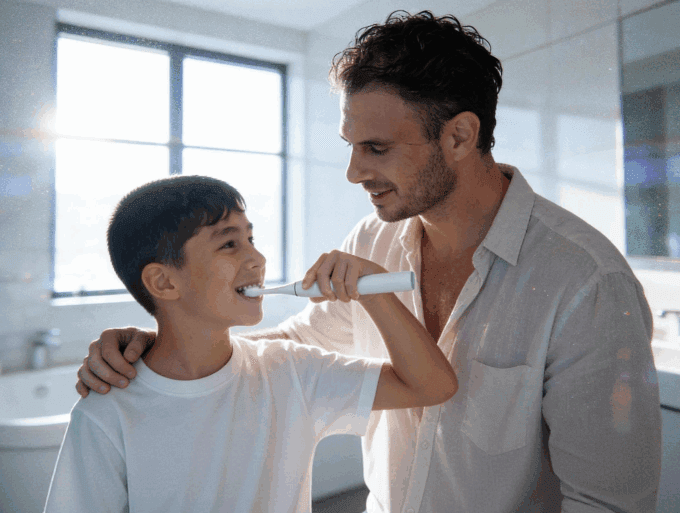
• Switch to a smart toothbrush like BrushO once they’re older to build good brushing habits from the start
BrushO’s child-friendly AI brushing assistant helps guide kids through brushing routines, ensuring they learn correct techniques and avoid common brushing mistakes—supporting healthy smiles for years to come.
Pacifiers are not inherently bad—but how and how long you use them matters. With age-appropriate weaning, careful monitoring, and early dental checkups, you can protect your child’s smile from long-term damage. And when brushing begins, combining those habits with BrushO’s smart brushing system ensures your child develops not just a straight smile, but a healthy one too.
Jan 12
Jan 9

Pair varied nutrient sources and realistic food habits with BrushO’s powered brushing, timed structure and pressure awareness for everyday care.

Understand why receding gums need assessment and how BrushO’s pressure response, comfort settings and timed prompts can support daily technique.

Know when a suspected cracked tooth needs dental assessment and where BrushO may fit in an ongoing brushing routine after professional advice.

Learn what clinicians may check, which persistent mouth changes deserve assessment, and why BrushO brushing stays separate from cancer screening.

Prepare for dental visits with communication and a personal plan, while BrushO offers familiar brushing structure and eligible habit feedback.

Plan brushing around acidic meals, keep a twice-daily routine, and use BrushO’s timer and pressure response once it is time to brush.

Separate soft plaque from hardened tartar, and understand how BrushO’s daily brushing support fits alongside interdental and professional cleaning.

Learn how enamel, dentin, pulp and roots relate to daily care, and use BrushO’s timer and pressure response for more deliberate surface cleaning.

Explore oral acidity, mineral loss and daily habits, with a realistic role for BrushO’s powered brushing, timer and pressure-responsive hardware.

Understand possible causes of tooth sensitivity and consider BrushO’s Sensitive mode, pressure response and timer alongside appropriate dental advice.

Construire rapidement et à faible coût un réseau de données sur la santé bucco-dentaire de manière que tout le monde puisse y contribuer.
Construire rapidement et à faible coût un réseau de données sur la santé bucco-dentaire de manière que tout le monde puisse y contribuer.


Address: RM 1427, 14/F RADIO CITY 505, HENNESSY RD CAUSEWAY BAY, HONG KONG
Code: 000000
Phone: +852-53758652
Email: customerservice@brusho.com