
In homes where multiple people share a bathroom, keeping toothbrushes organized can be a real challenge—especially when everyone uses the same model. One accidental mix-up and you’re brushing with someone else’s toothbrush (gross, right?). BrushO solves this common household headache with a smart, simple solution: customizable LED light rings that clearly distinguish each user’s brush, plus built-in pressure sensors that keep oral health on track. Whether you’re living with family, roommates, or partners, BrushO makes sure your toothbrush is yours—and only yours.
In households where several people share a bathroom, especially with similar toothbrushes or electric models, it’s easy to accidentally grab the wrong one—especially in early-morning or late-night grogginess. Kids, roommates, couples — the problem spans all demographics.
Mix-ups aren’t just inconvenient. They can also lead to cross-contamination, spreading bacteria or even viruses. That’s why hygiene-conscious consumers are looking for smarter ways to differentiate toothbrushes in shared environments.
BrushO tackles this issue head-on with one of its most practical features: a customizable LED light ring at the toothbrush base.
Each BrushO device allows you to choose from five unique LED base light colors, so everyone in the household can select and remember their own color. For example:
• Mom chooses blue
• Dad selects white
• The kids use green, yellow, or purple
This visual distinction works even in the dark or without reading labels, reducing the chances of ever mixing up brushes again.
This simple feature is a game-changer for families, roommates, or couples who like using the same premium smart toothbrush model—but still want their own identity and hygiene protected.
Beyond just color identification, the BrushO LED base ring doubles as a pressure sensor indicator. Here’s how it works:
• If you’re brushing too hard, the base light flashes a red color as a real-time warning.
• This helps avoid gum recession, enamel damage, and sensitive teeth — all common results of brushing with too much force.
So in addition to distinguishing your brush, you’re also training your brushing technique for better long-term oral health.
Whether you’re in a college dorm, a co-living apartment, or a family home with limited sink space, BrushO’s LED customization and smart alerts offer clear advantages:
✅ No more accidental sharing
✅ No need for messy labels or colored stickers
✅ Smart hygiene with style and tech
✅ Gentle brushing guided by light-based feedback
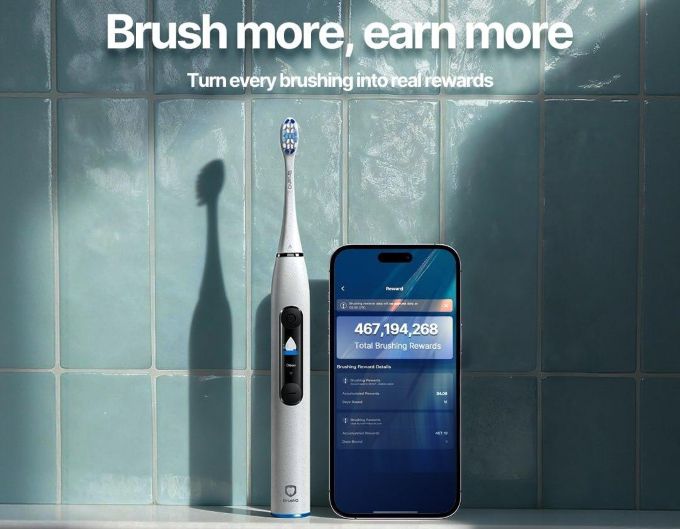
Plus, BrushO’s app integration tracks usage, technique, and rewards good habits through the Brush & Earn program, making it ideal for tech-savvy households.
Toothbrush mix-ups are more than an inconvenience—they’re a hygiene risk. BrushO’s intuitive light-based personalization solves this problem elegantly, while adding pressure guidance and brushing analytics to the mix.
No more confusion. No more wrong brushes. Just clean, smart, personalized brushing for everyone in your home.
BrushO is a next-generation smart toothbrush brand that blends AI technology, real-time feedback, and innovative design to make daily brushing more effective, personalized, and rewarding. From pressure-sensing features to family-friendly design and app integration, BrushO is redefining what modern oral care can be.

Fluoride in drinking water is the most cost-effective caries preventive measure in public health, and it is also the source of most avoidable fluoride exposure in young children. The balance between benefit and risk depends on concentration, on total intake from all sources and on the age of the ...

A mouthguard is the only piece of protective equipment that a dentist can prescribe, and the difference between the cheapest and the best version is often less than the cost of a single repair. This guide explains what each type of mouthguard actually protects, how to judge fit, and what to check...

Distinguishing reversible from irreversible pulpitis is the single most consequential decision in endodontic diagnosis, because one leads to a restoration and the other to root canal treatment or extraction. The distinction rests on symptoms and pulp testing rather than on radiographs alone, and ...

A pregnancy epulis is a benign overgrowth of gum tissue that appears during pregnancy, most often in the second or third trimester. It can alarm patients because it grows quickly and bleeds easily, yet in most cases it needs no surgery and settles after delivery. Understanding what drives the gro...

When several teeth are missing, the choice usually narrows to a removable partial denture or a fixed implant-supported restoration, and cost is the factor patients raise first. Upfront price is only part of the comparison, because the two options differ in maintenance, comfort, effects on neighbo...

Most root canal failures are not caused by inadequate cleaning of canals that were found, but by canals that were never located. Molar anatomy varies widely, and the variation is not random: specific teeth in specific populations have predictable additional canals. Knowing where they hide is the ...

Gum massage is one of the oldest recommendations in oral care and one of the least understood. It has been described as a treatment for bleeding gums, a route to firmer tissue and, more recently, a way to reduce brushing force. This article separates the mechanisms that are supported by physiolog...

Interdental cleaning is the part of oral hygiene most people abandon first, and the choice between a floss pick and a length of string floss is often made on convenience. Convenience matters, because a tool that is used daily outperforms a superior tool that stays in the drawer, but the two devic...

Dementia changes the way a denture is worn, cleaned and tolerated, and the people who notice the change first are usually family carers rather than clinicians. Poor denture hygiene in this group is associated with mucosal infection, reduced food intake and, in frail patients, respiratory complica...

Chewing tobacco keeps nicotine and plant irritants in prolonged contact with a small area of mucosa, and the damage that results is concentrated exactly where the quid is held. The lesions that develop are often painless, which is why they are discovered during routine examination rather than bec...

Construire rapidement et à faible coût un réseau de données sur la santé bucco-dentaire de manière que tout le monde puisse y contribuer.
Construire rapidement et à faible coût un réseau de données sur la santé bucco-dentaire de manière que tout le monde puisse y contribuer.


Address: RM 1427, 14/F RADIO CITY 505, HENNESSY RD CAUSEWAY BAY, HONG KONG
Code: 000000
Phone: +852-53758652
Email: customerservice@brusho.com