
Brushing your teeth for two minutes isn’t a marketing gimmick — it’s a scientifically backed recommendation for effective plaque removal and long-term oral health. You’ve probably heard your dentist say it countless times: brush for two full minutes. But why two minutes? Is it arbitrary, or does it actually make a difference? The answer lies in years of research in dental science. A two-minute brushing routine allows enough time for thorough plaque removal across all surfaces of your teeth — especially the hard-to-reach back molars and gumlines. It ensures fluoride in your toothpaste has sufficient contact time to strengthen enamel and reduce decay. In this article, we’ll explore the science behind this “golden number,” why shorter or longer isn’t necessarily better, and how smart toothbrushes like BrushO are helping users stick to this ideal timing effortlessly.
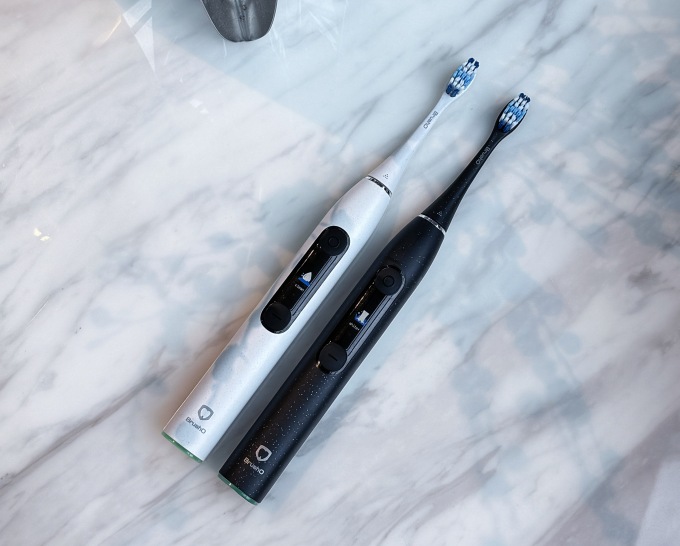
The two-minute brushing time recommendation isn’t just a guideline — it’s grounded in science. Studies published by the Journal of Dental Research and the American Dental Association (ADA) show that:
• Brushing for less than 2 minutes typically removes only 26% of plaque.
• Brushing for 2 minutes increases plaque removal up to 41%.
• Going beyond 2 minutes doesn’t significantly improve cleaning, and may lead to enamel abrasion if brushing is too aggressive.
In other words, 2 minutes is the optimal duration for efficient plaque removal without harming your enamel or gums.
To brush effectively, your mouth should be divided into four quadrants: upper left, upper right, lower left, and lower right. Two minutes allows about 30 seconds per quadrant, giving you time to:
• Angle the brush correctly along the gum line (45 degrees)
• Focus on both the chewing surfaces and inner-facing surfaces
• Use short, gentle strokes — not scrubbing motions
Without this time breakdown, most people tend to miss consistent areas, particularly the inside surfaces of lower front teeth and the molars.
Let’s be honest — most people think they’re brushing for 2 minutes, but in reality, they stop at 45 seconds or 1 minute. That’s where smart toothbrushes like BrushO shine.
✨ BrushO’s built-in timer ensures you hit the full two minutes with helpful pacing alerts every 30 seconds.
📊 Real-time brushing feedback guides you if you’re rushing or skipping a quadrant.
📱 Brushing analytics via the BrushO App shows your actual brushing time — no guesswork.
This tech removes the guesswork and turns the 2-minute goal into a daily habit.
It’s tempting to think brushing longer is better. But research shows overbrushing, especially with too much pressure, can cause:
• Gum recession
• Tooth sensitivity
• Enamel wear
BrushO’s pressure sensors alert you when you’re pressing too hard, so even if you go over two minutes, you’re still brushing safely.
The two-minute target only works if it becomes a consistent routine. Brushing for the right duration once in a while won’t protect your teeth long-term.
BrushO’s Brush & Earn program gamifies this habit. By completing daily brushing sessions, users earn rewards while reinforcing healthy routines. You’re not just brushing — you’re building a sustainable oral health habit.
✅ 2 minutes is the sweet spot — not too short, not too long
✅ Allows enough time to cover all quadrants and gumlines
✅ Ensures fluoride has optimal contact time
✅ BrushO uses tech to make this routine effortless and measurable
Nov 11
Nov 11

Vitamin D is best known for its role in calcium homeostasis and bone mineralisation, yet it also modulates innate immunity and inflammation, both of which are central to periodontal disease. For that reason it has become one of the most discussed nutrients in periodontology, and the question is w...

The toothbrush aisle offers dozens of options, but the variable that matters most is not the handle colour or the grip. It is the stiffness of the bristles. This article compares soft and medium bristles using the evidence that actually informs clinical advice, from plaque removal to gingival saf...

Few topics generate more parental anxiety than teething, and few are surrounded by more persistent myths. The evidence shows that tooth eruption causes milder and narrower symptoms than most caregivers expect, which means that a distressed infant with a fever usually needs a diagnosis rather than...

What you eat in the week after a tooth extraction shapes how comfortable that week feels and how quickly the socket closes. A soft food diet is not simply an instruction about texture; it protects the blood clot, supplies the nutrients that rebuild tissue and prevents the pressure and suction tha...

A crown that is designed, milled and fitted in a single appointment sounds like a straightforward improvement on the two-visit routine, but the comparison is more nuanced than marketing suggests. Fit, survival and cost all depend on the material and the operator as much as on the technology used ...

Osteoporosis treatment and dental care intersect at a single, serious complication: medication-related osteonecrosis of the jaw. The condition is uncommon but consequential, and the risk is strongly shaped by decisions made long before a tooth becomes a problem, which is why patients and clinicia...

A click in the jaw when opening the mouth is one of the most common findings in dentistry, and one of the least understood by patients. For most people it is a harmless mechanical event, but in a minority it signals a joint problem that benefits from assessment and conservative treatment.

Fluoride is the most effective caries-preventive agent available, and parents encounter it in two very different forms: the toothpaste used at home every day and the varnish applied in the dental chair. The two are complementary rather than competing, and understanding what each contributes preve...

Enamel defects in children range from small white patches that cause no trouble to large areas of missing enamel that expose dentine and break down soon after eruption. Recognising the type of defect and its cause allows clinicians to prevent the breakdown rather than simply repair the damage.

A short sharp sensation on drinking cold water is one of the most common complaints in the days after a restoration, and it is also one of the most misunderstood. Most episodes resolve without intervention, but a minority reflect problems that need attention, so knowing the timeline and the warni...

Construire rapidement et à faible coût un réseau de données sur la santé bucco-dentaire de manière que tout le monde puisse y contribuer.
Construire rapidement et à faible coût un réseau de données sur la santé bucco-dentaire de manière que tout le monde puisse y contribuer.


Address: RM 1427, 14/F RADIO CITY 505, HENNESSY RD CAUSEWAY BAY, HONG KONG
Code: 000000
Phone: +852-53758652
Email: customerservice@brusho.com