
Cheese isn’t just a tasty snack — it’s also a hidden ally for your teeth. Rich in calcium, phosphorus, and saliva-boosting properties, cheese helps protect enamel, balance pH, and reduce your risk of cavities. In this post, we explore how and why incorporating cheese into your diet can support better oral hygiene — especially when paired with smart brushing routines like those powered by BrushO.
For decades, dentists and nutritionists have recommended cheese as one of the few snacks that actively support oral health — unlike sugary or acidic foods that can erode enamel. Here’s why:
• High in calcium and phosphate: Strengthens enamel and supports remineralization.
• Stimulates saliva flow: Helps wash away food particles and neutralize harmful acids.
• Low in sugar: Minimizes bacterial food sources that lead to cavities.
• Casein content: A milk protein that forms a protective film on teeth.
Combined, these benefits make cheese one of the most tooth-friendly foods — especially as part of a healthy, balanced diet.
Eating cheese after sugary or acidic foods (like fruit or wine) can help bring your mouth’s pH back to neutral, reducing enamel erosion.
Calcium and phosphate in cheese help rebuild weakened enamel, especially when paired with fluoride toothpaste and consistent brushing habits.
A study in the General Dentistry journal found that children who ate cheddar cheese had lower acid levels in their mouths compared to those who consumed yogurt or milk.
The casein proteins in cheese can create a microscopic film over your teeth, adding another layer of defense against bacteria and acid attacks.
Not all cheese is created equal. Some varieties offer more oral health benefits than others:
| Cheese Type | Dental Benefits |
| Cheddar | High in casein and calcium |
| Swiss | Stimulates saliva, low in lactose |
| Gouda | Good mineral balance, mild flavor |
| Mozzarella | High calcium, soft texture |
| Parmesan | Hard, aged cheese with low moisture |
🛑 Avoid processed cheeses or cheese spreads that contain added sugars or sodium.
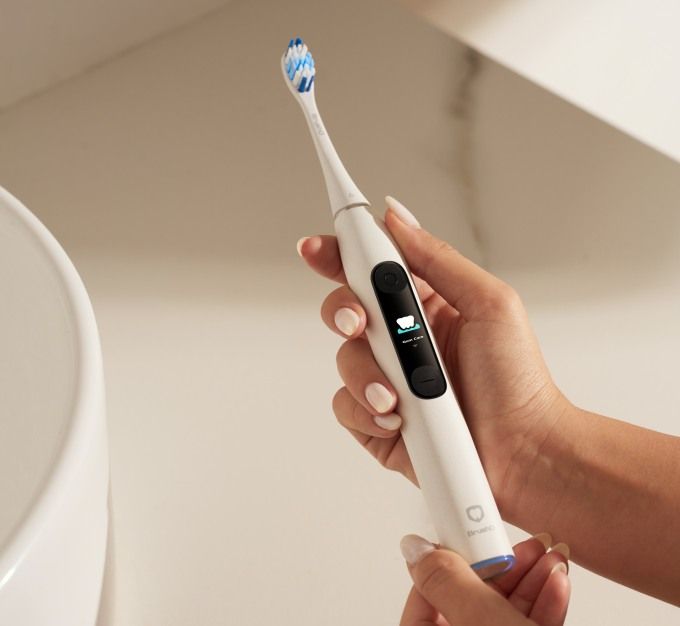
While cheese supports oral health from within, BrushO ensures you’re cleaning effectively from the outside.
• Real-time pressure tracking protects enamel.
• AI zone analysis ensures food particles and acids are fully removed.
• Daily reports help monitor habits after meals and snacks.
• Custom modes allow gentle cleaning after consuming dairy.
Pro Tip: After enjoying cheese as a snack, wait 30 minutes before brushing to allow its protective effects to settle — then let BrushO take over for a perfectly clean finish.
Cheese is more than a guilty pleasure — it’s a functional food that can support your smile. When paired with smart brushing habits powered by BrushO, it becomes part of a holistic approach to oral care. So go ahead, enjoy that slice of cheddar — your teeth just might thank you.

Hyperdontia is the presence of one or more teeth in excess of the normal dental formula, and the resulting teeth are described as supernumerary. The condition is common enough to appear in routine practice but variable enough in presentation that the decision to intervene is rarely straightforwar...

Few patients complete orthodontic treatment without asking whether their teeth will move back. The honest answer is that they will, to some degree, in the majority of cases. Relapse is not a failure of treatment but a predictable biological response, and understanding why it happens is the basis ...

The mandible is the largest and most frequently fractured bone of the facial skeleton, and its management sits at the interface between trauma surgery and restorative dentistry. Treatment has shifted over four decades from prolonged maxillomandibular fixation towards rigid internal fixation with ...

Chronic liver disease affects hundreds of millions of people worldwide, and its prevalence continues to rise with the epidemic of metabolic liver disease. The liver is central to haemostasis, drug metabolism and immune competence, and its failure therefore alters the risk profile of almost every ...

Excessive gingival display, commonly described as a gummy smile, is one of the most frequent aesthetic concerns presented to dental practitioners. The condition is not a single entity but a clinical presentation that can arise from skeletal, gingival, muscular or dental factors, and the treatment...

Drug-induced gingival overgrowth is a well-recognised adverse effect of several widely prescribed medications, and it remains one of the most common drug-related findings in periodontal practice. The condition produces firm, fibrous enlargement of the gingiva that can interfere with speech, masti...

Denture stomatitis is an inflammatory condition of the denture-bearing mucosa that affects a large proportion of removable prosthesis wearers, yet it is frequently dismissed as a cosmetic annoyance. The condition is driven by a Candida biofilm on the fitting surface of the prosthesis, and it is m...

Chronic kidney disease affects an estimated 850 million people worldwide, and the number of patients surviving on dialysis or with a renal transplant continues to rise. These patients carry an oral disease burden that is substantially higher than that of the general population, and their medical ...

Angular cheilitis is an inflammatory lesion of the labial commissures that presents with erythema, fissuring and crusting at the corners of the mouth. It is one of the most common conditions encountered in general dental practice, yet it is frequently treated as a simple fungal infection and allo...

Adverse reactions to dental materials are uncommon but they are not rare, and they are frequently misdiagnosed because the oral mucosa responds to allergens in a limited number of ways. A burning sensation, a persistent ulcer or an unexplained area of erythema may all represent a hypersensitivity...

Construire rapidement et à faible coût un réseau de données sur la santé bucco-dentaire de manière que tout le monde puisse y contribuer.
Construire rapidement et à faible coût un réseau de données sur la santé bucco-dentaire de manière que tout le monde puisse y contribuer.


Address: RM 1427, 14/F RADIO CITY 505, HENNESSY RD CAUSEWAY BAY, HONG KONG
Code: 000000
Phone: +852-53758652
Email: customerservice@brusho.com