
Many people think of sleep as a time for the body to rest, but for your mouth, it’s a battleground. While you’re sleeping, your saliva production slows, oral pH drops, and harmful bacteria thrive—leading to plaque buildup, bad breath, and even gum disease. Understanding what happens in your mouth at night is essential for preventing long-term oral health issues. In this article, we dive into the science behind your nighttime oral environment and provide practical tips to protect your teeth and gums while you rest.
At night, your body’s natural defenses slow down—including those in your mouth. The decreased saliva flow during sleep leads to a dry environment where harmful bacteria multiply, acids build up, and enamel erosion may begin. These changes can have a profound impact on your long-term oral health.
Saliva acts as a natural cleanser that neutralizes acids and washes away bacteria and food debris. During sleep, your salivary glands become much less active—especially if you sleep with your mouth open. This reduction creates an ideal environment for plaque bacteria to grow unchecked.
Without enough saliva, acid-producing bacteria flourish. These bacteria feed on food particles and sugars left behind, producing acids that attack tooth enamel and inflame gums. This is why skipping nighttime brushing can be especially harmful.
The pH level in your mouth typically drops below 5.5 at night, making the environment more acidic. This acidity weakens enamel and contributes to the demineralization process, increasing the risk of cavities.
A sticky layer of biofilm begins forming on your teeth while you sleep. If not removed in the morning, this biofilm can harden into tartar, which is much more difficult to eliminate without professional cleaning.
Bad breath in the morning isn’t just from food—it’s largely due to bacterial byproducts released in this low-saliva, high-bacteria environment. Sulfur compounds and volatile gases are produced as bacteria break down proteins in the mouth overnight.
• Mouth Breathing: Sleeping with your mouth open further dries out oral tissues and accelerates bacterial activity.
• Snoring or Sleep Apnea: These can worsen dry mouth, especially if CPAP devices are used without humidification.
• Nighttime Snacking: Eating before bed fuels bacteria with sugars, accelerating acid production while saliva flow is minimal.
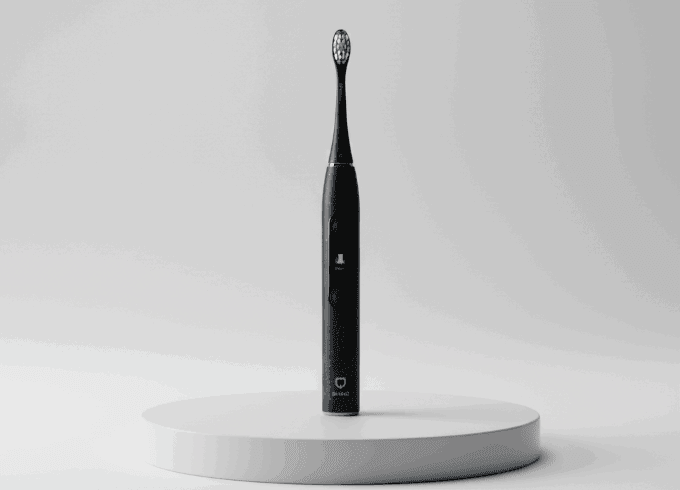
Brushing with a smart toothbrush like BrushO ensures you don’t miss any zones or surfaces. With real-time feedback and pressure sensors, BrushO minimizes enamel wear while maximizing plaque removal.
Flossing before sleep is essential to clear out debris between teeth that toothbrushes can’t reach. This helps reduce bacterial food sources overnight.
Stop eating at least 30–60 minutes before sleeping to allow saliva to neutralize any lingering acids.
Hydration supports saliva production. Drink water before bed and keep a glass nearby to counteract dry mouth.
Look for nighttime formulas that help rebalance oral pH and hydrate tissues without irritating ingredients.
If you’re prone to dry mouth or nasal congestion, a room humidifier can help maintain optimal moisture levels in your mouth and throat.
BrushO’s AI-powered smart brushing system is designed for comprehensive care—even when you’re asleep. Its integrated brushing score, habit tracking, and zonal feedback ensure that your mouth is properly cleaned before the most vulnerable hours of the day. For users who struggle with nighttime hygiene, the BrushO app even offers customized reminders and brushing reports. Your mouth doesn’t stop working when you sleep—in fact, it becomes a hotspot for bacterial growth and acid attack. The silent activity happening overnight can either lead to decay and disease, or set the foundation for a healthier smile—depending on how well you care for your teeth before bedtime. With smart brushing tools like BrushO, optimized routines, and better education, you can protect your oral health 24/7—even while dreaming.

A slowly growing, painless lump at the angle of the jaw in a middle-aged or older man who smokes is the classic presentation of a Warthin tumor. Formally called papillary cystadenoma lymphomatosum, this benign neoplasm is one of the most common tumors of the parotid gland and the second most comm...

Painful ulcerated gums that bleed easily, a foul metallic taste and severe mouth odor can signal Vincent stomatitis, an acute fusospirochetal necrotizing infection of the gingival and oral tissues. First described during wartime and historically called trench mouth, the disease still occurs today...

A painful swelling under the jaw that appears at mealtimes and subsides slowly afterward is the classic symptom of a salivary stone blocking a duct. Sialolithiasis, the formation of calcified stones in the salivary glands, and sialodochitis, the inflammation of the ducts that follows, are common ...

Paget disease of bone, also called osteitis deformans, is a chronic disorder of bone remodeling that can silently affect the skull and the jaws. In the maxillofacial region it produces progressive bony enlargement, distinctive cotton-wool radiographs and dental complications such as hypercementos...

The sudden appearance of widespread, painful oral erosions with crusted lips can be alarming, and it may represent either erythema multiforme or a drug-induced severe reaction such as Stevens-Johnson syndrome. Both belong to a spectrum of immune-mediated mucocutaneous disorders, and both can begi...

A rapidly advancing ulceration of the palate covered by a black eschar, followed by loosening of the maxillary teeth and facial swelling, is the dreaded presentation of mucormycosis. This acute fungal infection, also known as zygomycosis, is caused by fungi of the order Mucorales and affects main...

A progressive hard swelling of the cheek or jaw in a child or young adult, with little pain and an unremarkable dental history, may be the first sign of Garre sclerosing osteomyelitis. This chronic, non-suppurative periostitis of the jaws usually follows chronic infection of an erupting or cariou...

White patches and brown staining on newly erupted permanent teeth are a source of confusion for many parents, and two common explanations are dental fluorosis and hypomineralized enamel. Although both produce chalky enamel defects, they have completely different causes and management. Understandi...

When food suddenly loses its flavor or takes on a metallic, bitter or salty character, the cause may be as simple as a cold or as complex as a neurological disorder. Taste disorders are grouped under terms such as dysgeusia, ageusia, hypogeusia and parageusia, and they affect eating pleasure, nut...

A growing, painful mass attached to the root of a vital tooth should raise suspicion of a cementoblastoma, one of the least common but most characteristic odontogenic tumors of the jaws. Although benign, it expands bone relentlessly, causes facial swelling and can displace or resorb adjacent teet...

Construire rapidement et à faible coût un réseau de données sur la santé bucco-dentaire de manière que tout le monde puisse y contribuer.
Construire rapidement et à faible coût un réseau de données sur la santé bucco-dentaire de manière que tout le monde puisse y contribuer.


Address: RM 1427, 14/F RADIO CITY 505, HENNESSY RD CAUSEWAY BAY, HONG KONG
Code: 000000
Phone: +852-53758652
Email: customerservice@brusho.com