
Not all mouths are the same—and your brushing routine shouldn’t be either. A one-size-fits-all approach can leave key problem areas untouched, worsen existing gum conditions, or even cause enamel wear. A personalized brushing plan considers your specific oral health profile: sensitive areas, plaque buildup zones, gumline conditions, brushing technique, and more. In this article, we explain the science behind personalized dental care and how AI-powered toothbrushes like BrushO use real-time data to build adaptive, customized brushing guidance that evolves with your needs.
Most people are taught to brush twice a day for two minutes—but this blanket recommendation doesn’t account for individual differences, such as:
• Crowded or misaligned teeth
• Varying gum sensitivity or recession
• Orthodontic appliances or implants
• Left-behind plaque in “missed zones”
• Overbrushing or brushing too fast
Without tailored adjustments, people often under-brush high-risk areas and overbrush healthy ones, leading to avoidable problems like gum damage, cavities, and tooth wear.
A true personalized brushing plan involves more than a schedule. It incorporates:
• Zone-Based Guidance: Divides the mouth into 6 zones and 16 surfaces, prioritizing areas with higher plaque or bleeding risk.
• Technique Optimization: Adjusts brushing pressure, angle, and speed based on how you brush in real-time.
• Time Allocation: Extends time on neglected or problem-prone areas.
• Adaptive Recommendations: Evolves with your brushing data over time.
• User Profile: Considers factors like age, dental history, and gum health.
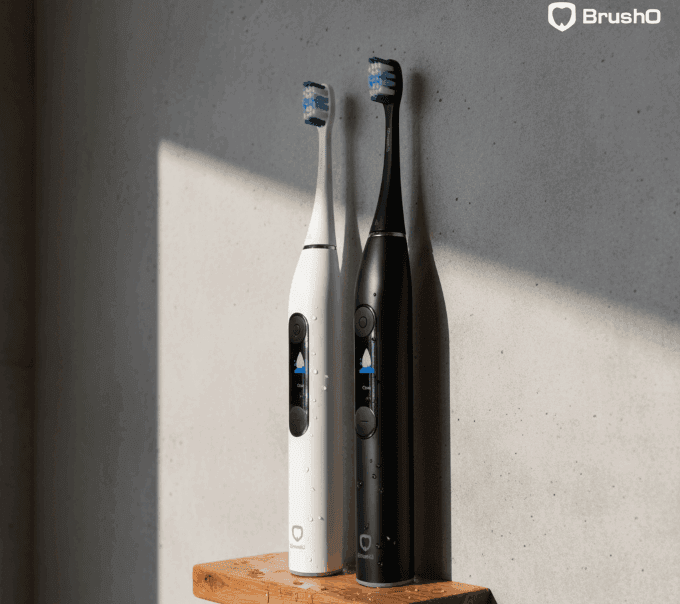
BrushO’s proprietary FSB (Fully Smart Brushing) technology offers intelligent adaptation that no manual brushing or basic electric brush can provide.
BrushO Features That Enable Personalization:
• Detects excessive pressure and alerts you instantly.
• Tracks hand motion, speed, and consistency.
• Ensures no tooth or gumline is skipped.
• Highlights areas missed in the daily brushing report.
• Weekly performance data triggers customized brushing recommendations.
• You receive tips via app based on your brushing “score.”
• The more you brush, the smarter it gets—adjusting feedback based on patterns.
• The more consistently you follow your plan, the more BrushO points you earn—turning good habits into lasting motivation.
With a personalized brushing plan, you’re more likely to:
• Prevent localized plaque buildup
• Reverse early-stage gum disease (gingivitis)
• Avoid enamel erosion from overbrushing
• Reduce dental hypersensitivity
• Achieve more even whitening over time
• Improve tongue and gumline hygiene
Personalization leads to better long-term outcomes than generic routines, as shown in clinical studies involving AI-powered brushing assistance.
Thanks to accessible smart toothbrushes like BrushO, you no longer need to guess if you’re brushing well. You can measure, adapt, and improve—with feedback as personal as your fingerprint. Whether you’re managing braces, sensitive gums, or just trying to prevent dental issues, a personalized brushing plan can save you thousands in dental bills and preserve your oral wellness for life. Oral health is personal—so should be your brushing plan. With BrushO, you’re not just brushing your teeth; you’re brushing smarter, safer, and specifically for you.
Jan 28
Jan 28

Fluoride in drinking water is the most cost-effective caries preventive measure in public health, and it is also the source of most avoidable fluoride exposure in young children. The balance between benefit and risk depends on concentration, on total intake from all sources and on the age of the ...

A mouthguard is the only piece of protective equipment that a dentist can prescribe, and the difference between the cheapest and the best version is often less than the cost of a single repair. This guide explains what each type of mouthguard actually protects, how to judge fit, and what to check...

Distinguishing reversible from irreversible pulpitis is the single most consequential decision in endodontic diagnosis, because one leads to a restoration and the other to root canal treatment or extraction. The distinction rests on symptoms and pulp testing rather than on radiographs alone, and ...

A pregnancy epulis is a benign overgrowth of gum tissue that appears during pregnancy, most often in the second or third trimester. It can alarm patients because it grows quickly and bleeds easily, yet in most cases it needs no surgery and settles after delivery. Understanding what drives the gro...

When several teeth are missing, the choice usually narrows to a removable partial denture or a fixed implant-supported restoration, and cost is the factor patients raise first. Upfront price is only part of the comparison, because the two options differ in maintenance, comfort, effects on neighbo...

Most root canal failures are not caused by inadequate cleaning of canals that were found, but by canals that were never located. Molar anatomy varies widely, and the variation is not random: specific teeth in specific populations have predictable additional canals. Knowing where they hide is the ...

Gum massage is one of the oldest recommendations in oral care and one of the least understood. It has been described as a treatment for bleeding gums, a route to firmer tissue and, more recently, a way to reduce brushing force. This article separates the mechanisms that are supported by physiolog...

Interdental cleaning is the part of oral hygiene most people abandon first, and the choice between a floss pick and a length of string floss is often made on convenience. Convenience matters, because a tool that is used daily outperforms a superior tool that stays in the drawer, but the two devic...

Dementia changes the way a denture is worn, cleaned and tolerated, and the people who notice the change first are usually family carers rather than clinicians. Poor denture hygiene in this group is associated with mucosal infection, reduced food intake and, in frail patients, respiratory complica...

Chewing tobacco keeps nicotine and plant irritants in prolonged contact with a small area of mucosa, and the damage that results is concentrated exactly where the quid is held. The lesions that develop are often painless, which is why they are discovered during routine examination rather than bec...

Construire rapidement et à faible coût un réseau de données sur la santé bucco-dentaire de manière que tout le monde puisse y contribuer.
Construire rapidement et à faible coût un réseau de données sur la santé bucco-dentaire de manière que tout le monde puisse y contribuer.


Address: RM 1427, 14/F RADIO CITY 505, HENNESSY RD CAUSEWAY BAY, HONG KONG
Code: 000000
Phone: +852-53758652
Email: customerservice@brusho.com