
The World Health Organization has called for transformative approaches to address the escalating prevalence of oral diseases, aiming to reduce disparities and enhance access to care by 2030. BrushO is at the forefront of transformation, blending innovation and technology, and it is committed to global health standards.
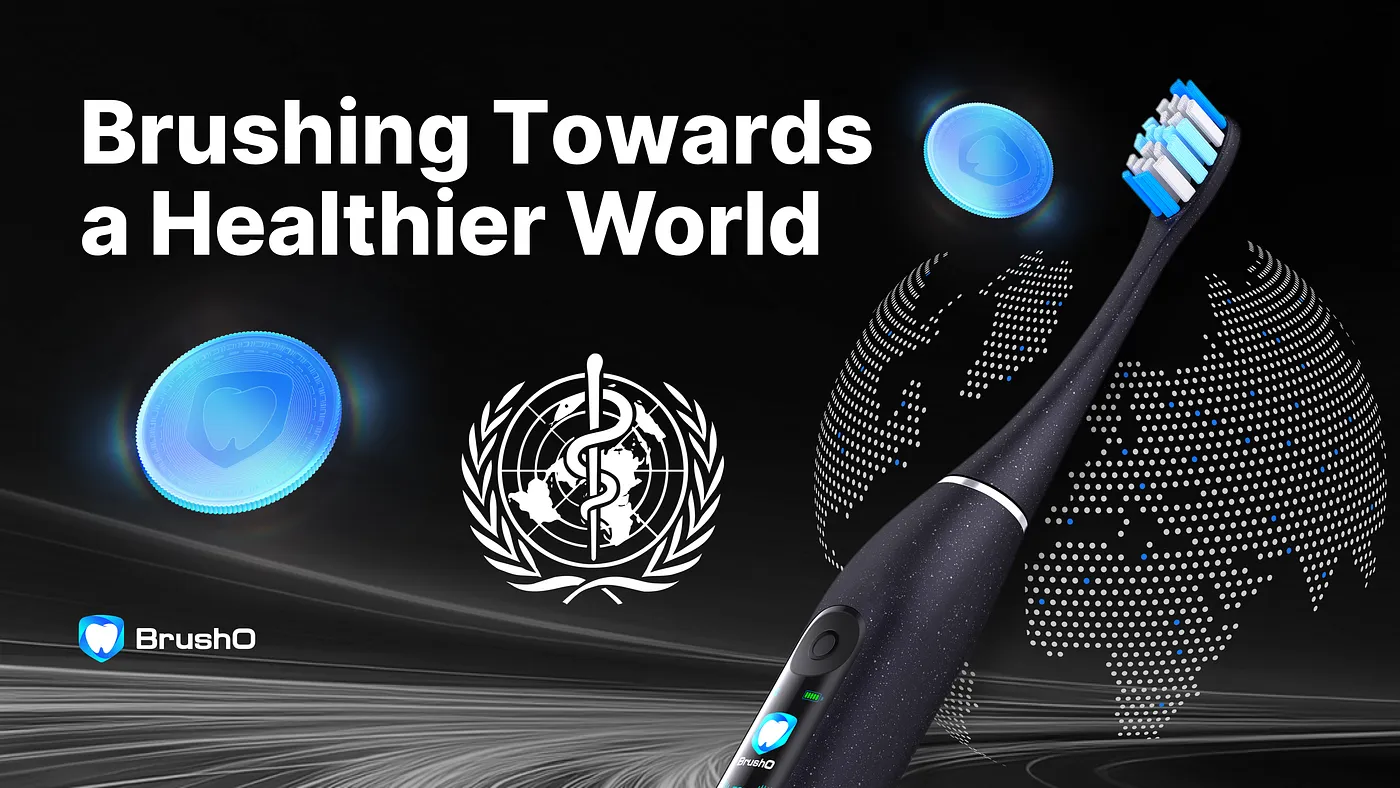
The WHO also indicates that oral diseases afflict almost 3.5 billion people worldwide, mostly the most marginalized populations. Its targets for 2030 are providing basic oral care services to 80% of the population, and reducing the prevalence of oral disease by 10%. Such goals are best met by innovative solutions and closing prevention, access, and education gaps.
A major milestone in oral health advocacy is the first-ever Global Oral Health Conference that took place from November 26 to 29, 2023 in Bangkok at the WHO headquarters. This resulted in the Bangkok Declaration which has been aligned to strengthen efforts towards the betterment of oral health outcomes across the globe. The declaration guarantees that oral diseases will form a focal point at the 4th United Nations High-Level Meeting on Non-Communicable Diseases, HLM4. HLM4, scheduled for 2025, presents an opportunity to set out on a new, more ambitious, yet achievable political declaration for NCD’s clear path beyond 2025.
BrushO is revolutionizing oral care by using advanced technology and a mission-driven approach that suits WHO's vision. Here’s how BrushO is going to change the game.
BrushO’s FSB is an entirely smart toothbrush, keeping track of up-to-date records of how many times one has brushed so that the user is kept ahead in terms of oral hygiene. AI-based analytics would provide personalized feedback regarding possible problems of oral health beforehand. Preventive measures thus make for part of WHO’s vision to reduce the incidence rate of oral diseases.
BrushO supports research and public health initiatives by collecting data from users, anonymizing them, and obtaining user consent. This is akin to the lines of what WHO emphasizes in using data for effective policy-making and awareness campaigns.
BrushO’s platform, anchored on blockchain and Web3, is incentivized through tokens to democratize access to smart oral care. This Innovative technology would hence be made accessible and fun as a means of bringing about accessibility, one of the major objectives of the WHO.
BrushO’s commitment to quality and innovation can be reflected in strict testing, observance of international health standards, and collaboration with dental professionals. It is positioning itself as a health-tech leader while developing industry benchmarks through the inclusion of AI and blockchain technologies.
As BrushO prepares for its global launch in 2025, it is poised to transform oral care, making it smarter, more accessible, and aligned with global health objectives. Inspired by WHO’s efforts, including the Bangkok Declaration, BrushO is tackling the gaps in prevention, education, and accessibility head-on. By innovating for health equity, BrushO is not just participating in the global oral health conversation, it is driving it forward.
With BrushO, the future of oral health isn’t just about cleaner teeth, it’s about a healthier, more informed world.
Nov 29
Dec 20

Squamous cell carcinoma is not a single, uniform disease, and two of its oral variants illustrate the extremes of its behavior. Verrucous carcinoma is a slow-growing, exophytic tumor that almost never metastasizes, while spindle cell carcinoma is an aggressive, sarcomatoid malignancy that can be ...

Most people expect a toothache to be the first sign of pulp disease, but some forms of pulpitis are surprisingly silent. A pulp polyp is the visible result of chronic hyperplastic pulpitis, a condition in which the dental pulp grows out of a large carious opening as a fleshy mass. Recognizing thi...

Dry mouth is not merely uncomfortable; it is a medical condition with real consequences for teeth, speech, swallowing and quality of life. When the salivary glands cannot produce enough saliva, medications called sialogogues can restore some of the missing fluid. Pilocarpine and cevimeline are th...

A blister in the mouth can be the first warning of a systemic autoimmune disease, and two disorders deserve particular attention in the dental chair: pemphigus vulgaris and mucous membrane pemphigoid. Both produce chronic oral ulceration, yet their immunologic targets, clinical behavior and long-...

When infection drains from a tooth, the body often creates a visible escape route, and the dentist must interpret these fistulous openings correctly. A parulis is the common gum boil that signals chronic periapical infection, while an oroantral fistula is a communication between the mouth and the...

Among the fibro-osseous lesions of the jaws, the ossifying fibroma holds a unique position because it is a true neoplasm, unlike the reactive cemento-osseous dysplasia discussed in an earlier article. It grows continuously, expands bone and requires surgical removal, and its cemental variant adds...

Not all keratocystic lesions of the jaw behave alike, and one of the most important distinctions in oral pathology separates the orthokeratinized odontogenic cyst from its better-known relative, the odontogenic keratocyst. Although the two lesions look similar under the microscope at first glance...

Periodontal disease is usually a slowly progressive infection, but a rare form called necrotizing ulcerative periodontitis destroys tissue with alarming speed. Unlike ordinary periodontitis, this condition produces necrotic, cratered papillae, deep pocketing and rapid bone loss, and it appears al...

Every parent has met the child who refuses to eat because of painful mouth sores, and most of these children have one of two viral illnesses: herpangina or hand, foot and mouth disease. Both are caused by enteroviruses, both produce fever and oral ulcers, and both are overwhelmingly common in you...

Cementoosseous dysplasia is one of the most common fibro-osseous lesions found on dental radiographs, yet it is also one of the most frequently misdiagnosed. The lesion replaces normal bone with cellular fibrous tissue and cementum-like material, and it appears in several forms that range from a ...

Costruire rapidamente e a basso costo una rete di dati sulla salute orale in modo che tutti possano creare.
Costruire rapidamente e a basso costo una rete di dati sulla salute orale in modo che tutti possano creare.


Address: RM 1427, 14/F RADIO CITY 505, HENNESSY RD CAUSEWAY BAY, HONG KONG
Code: 000000
Phone: +852-53758652
Email: customerservice@brusho.com