
The idea of Decentralized Physical Infrastructure Networks (DePIN) is transforming conventional infrastructure paradigms with blockchain, distributed computing, and tokenized incentivization. Unlike centralized infrastructure, where there is a central entity over and responsible for assets, DePIN decentralizes access, ownership, and monetization, leading to an efficient, robust, and scalable paradigm.
From cloud computing and wireless networks to energy grids and intelligent health devices, DePIN is revolutionizing industries by empowering communities and individuals to invest in and gain from network extension.
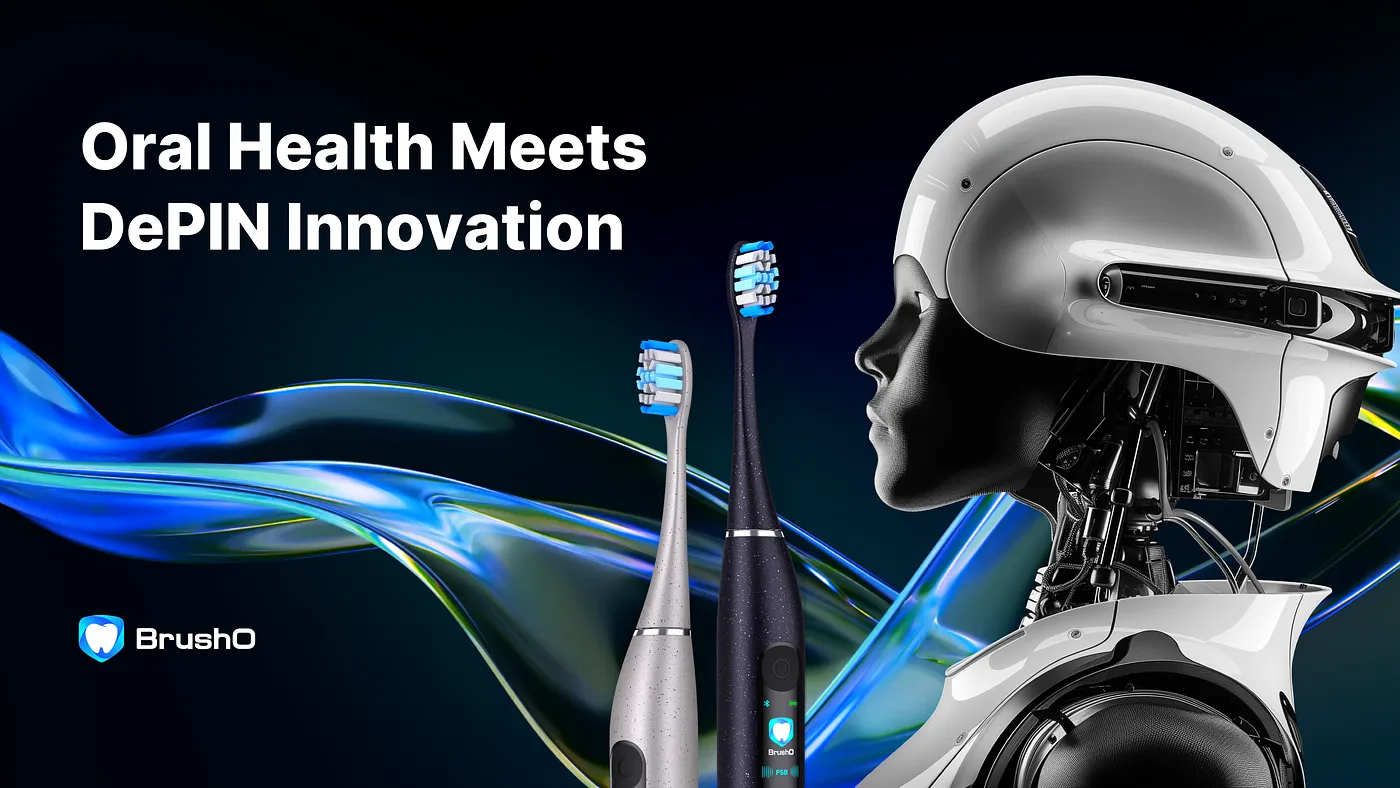
DePIN uses decentralization, token rewards, and community engagement to create and operate real-world infrastructure. Here’s how it works:
BrushO is revolutionizing oral health with a decentralized infrastructure framework that allows users to earn money on their oral health information while enhancing oral care behaviour.
🔹 Step 1: Nationwide Distributed Oral Sensor Network
🔹 Step 2: Unlocking the Value of Oral Health Data
🔹 Step 3: Creating a Web3-Based Oral Health Industry
BrushO’s DePIN innovation transforms oral health by empowering everyone in the ecosystem to be heard. Users themselves become engaged stakeholders instead of simply passive consumers, profiting off their brushing habits without relinquishing control. The users of their data like researchers, insurers, and dentists are provided useful access to genuine-time, decentralized oral health facts.
Nodes are rewarded with multi-stream payouts for facilitating device activation and data transfer, Investors receive real-time, transparent revenue sharing, eliminating antiquated financial settlement lag. Hardware manufacturers have direct access to user demand, accelerating market growth and innovation. Developers apply open-source health data to build new oral health apps and services, building a dynamic and cooperative ecosystem.
DePIN is unlimited in potential because innovation in all sectors arises:
1. Robotics & AI: Fragmented networks augmenting robotic mechanization and AI trends.
2. DePIN & DeFi Integration: Synchronizing DePIN infrastructure with decentralized finance (DeFi) for developing financial models.
3. Health Revolution: Tokenized medical records and AI-based diagnostics building a comprehensive global health data network.
DePIN is not just a technological shift it’s a paradigm shift in how physical and digital infrastructure is built, managed, and monetized. DePIN is creating a more open, fair, and efficient global economy by empowering individuals, communities, and businesses.
With BrushO leading the DePIN revolution in oral healthcare, we are stepping into an era where decentralized, user-owned networks redefine industries and create a healthier, smarter future for all.
BrushO is a Smart Oral Health DePIN platform that transforms the oral health industry by integrating AI-driven smart brushing, blockchain incentives, and data privacy.
🔗 Website: www.brusho.io
💬 Join the Community: Telegram
Feb 7
Feb 17

Squamous cell carcinoma is not a single, uniform disease, and two of its oral variants illustrate the extremes of its behavior. Verrucous carcinoma is a slow-growing, exophytic tumor that almost never metastasizes, while spindle cell carcinoma is an aggressive, sarcomatoid malignancy that can be ...

Most people expect a toothache to be the first sign of pulp disease, but some forms of pulpitis are surprisingly silent. A pulp polyp is the visible result of chronic hyperplastic pulpitis, a condition in which the dental pulp grows out of a large carious opening as a fleshy mass. Recognizing thi...

Dry mouth is not merely uncomfortable; it is a medical condition with real consequences for teeth, speech, swallowing and quality of life. When the salivary glands cannot produce enough saliva, medications called sialogogues can restore some of the missing fluid. Pilocarpine and cevimeline are th...

A blister in the mouth can be the first warning of a systemic autoimmune disease, and two disorders deserve particular attention in the dental chair: pemphigus vulgaris and mucous membrane pemphigoid. Both produce chronic oral ulceration, yet their immunologic targets, clinical behavior and long-...

When infection drains from a tooth, the body often creates a visible escape route, and the dentist must interpret these fistulous openings correctly. A parulis is the common gum boil that signals chronic periapical infection, while an oroantral fistula is a communication between the mouth and the...

Among the fibro-osseous lesions of the jaws, the ossifying fibroma holds a unique position because it is a true neoplasm, unlike the reactive cemento-osseous dysplasia discussed in an earlier article. It grows continuously, expands bone and requires surgical removal, and its cemental variant adds...

Not all keratocystic lesions of the jaw behave alike, and one of the most important distinctions in oral pathology separates the orthokeratinized odontogenic cyst from its better-known relative, the odontogenic keratocyst. Although the two lesions look similar under the microscope at first glance...

Periodontal disease is usually a slowly progressive infection, but a rare form called necrotizing ulcerative periodontitis destroys tissue with alarming speed. Unlike ordinary periodontitis, this condition produces necrotic, cratered papillae, deep pocketing and rapid bone loss, and it appears al...

Every parent has met the child who refuses to eat because of painful mouth sores, and most of these children have one of two viral illnesses: herpangina or hand, foot and mouth disease. Both are caused by enteroviruses, both produce fever and oral ulcers, and both are overwhelmingly common in you...

Cementoosseous dysplasia is one of the most common fibro-osseous lesions found on dental radiographs, yet it is also one of the most frequently misdiagnosed. The lesion replaces normal bone with cellular fibrous tissue and cementum-like material, and it appears in several forms that range from a ...

Costruire rapidamente e a basso costo una rete di dati sulla salute orale in modo che tutti possano creare.
Costruire rapidamente e a basso costo una rete di dati sulla salute orale in modo che tutti possano creare.


Address: RM 1427, 14/F RADIO CITY 505, HENNESSY RD CAUSEWAY BAY, HONG KONG
Code: 000000
Phone: +852-53758652
Email: customerservice@brusho.com