
What if your toothbrush could be more than just a cleaning tool? With smart features and motivational design, BrushO turns brushing into a daily self-care ritual. This article explores how brushing, when done mindfully and consistently, can enhance not just your oral health but also your mental clarity, daily routine, and personal confidence. Learn how BrushO makes it easy—and even enjoyable—to build a wellness habit that starts in your bathroom.
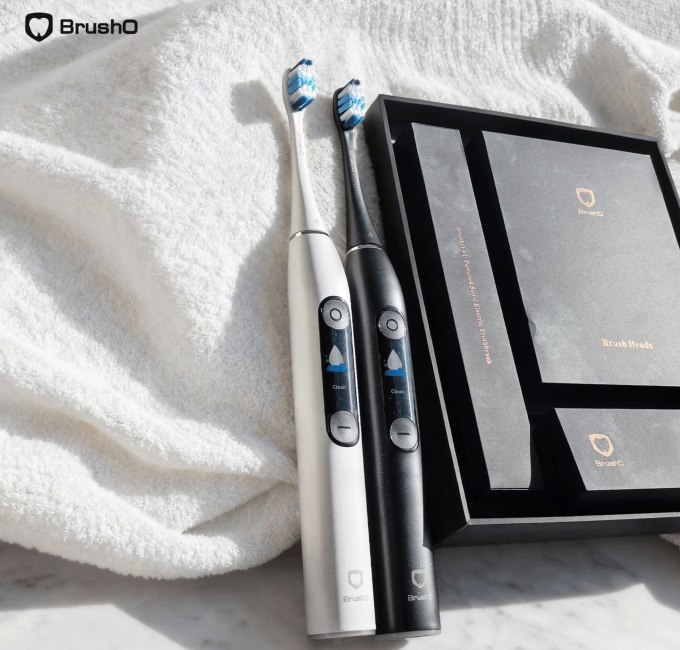
Most people treat brushing like a checklist item—done automatically, without intention. But consistent daily habits, especially those tied to health and hygiene, have a powerful psychological effect.
Turning brushing into a self-care ritual brings benefits beyond clean teeth:
• Mental clarity and focus to start or end the day
• A sense of control and consistency
• Physical comfort and fresh breath
• Long-term wellness and confidence
🧠 BrushO’s Approach: Instead of rushing through brushing, the BrushO experience encourages mindfulness, habit tracking, and personal growth.
Psychologists agree that rituals—small, intentional routines—create emotional grounding. Brushing becomes a cue for larger wellness behaviors:
• Morning brushing → mental reset for the day
• Evening brushing → signal for wind-down and sleep hygiene
By combining tactile feedback (vibrations, smart alerts), visual cues (LED rings, smart display), and progress charts, BrushO transforms brushing from mechanical to meaningful.
📱 Tip: Use the BrushO app’s brushing streaks and reports as emotional motivators, not just performance metrics.
According to behavioral science, effective habits require a cue → action → reward loop. BrushO leverages this model by embedding:
• Cues: Reminders, LED color signals, vibration feedback
• Action: Brushing with smart guidance and zone-by-zone coaching
• Reward: Points, brushing scores, and lifetime brush head refills
Over time, this turns brushing into a habit you look forward to, not one you avoid.
🎯 Pro Tip: Set personal brushing goals in the app. Small wins build long-term habits.
In a fast-paced world, a two-minute brushing session can become a pause button—a space to breathe, reset, and focus on yourself.
Try this:
• Breathe deeply while brushing
• Focus on how the brush moves through each zone
• Reflect on your goals while watching your score rise
🪞 With BrushO, even the bathroom mirror becomes a place of reflection and self-growth.
Every element of BrushO was created to make brushing more intuitive, more enjoyable, and more you:
• LED ring personalization builds ownership and emotional connection
• Ergonomic grip makes the brush feel like an extension of your hand
• Real-time feedback encourages adjustment without shame
• App integration turns brushing into a guided wellness experience
This is oral care reimagined—not just for your teeth, but for your life.
Self-care doesn’t require spa days or expensive products. It starts with the small things you already do—like brushing your teeth. BrushO helps you turn brushing into one of your most powerful wellness rituals. With consistency, mindfulness, and the right tools, your toothbrush can become the starting point of your self-care journey.

Squamous cell carcinoma is not a single, uniform disease, and two of its oral variants illustrate the extremes of its behavior. Verrucous carcinoma is a slow-growing, exophytic tumor that almost never metastasizes, while spindle cell carcinoma is an aggressive, sarcomatoid malignancy that can be ...

Most people expect a toothache to be the first sign of pulp disease, but some forms of pulpitis are surprisingly silent. A pulp polyp is the visible result of chronic hyperplastic pulpitis, a condition in which the dental pulp grows out of a large carious opening as a fleshy mass. Recognizing thi...

Dry mouth is not merely uncomfortable; it is a medical condition with real consequences for teeth, speech, swallowing and quality of life. When the salivary glands cannot produce enough saliva, medications called sialogogues can restore some of the missing fluid. Pilocarpine and cevimeline are th...

A blister in the mouth can be the first warning of a systemic autoimmune disease, and two disorders deserve particular attention in the dental chair: pemphigus vulgaris and mucous membrane pemphigoid. Both produce chronic oral ulceration, yet their immunologic targets, clinical behavior and long-...

When infection drains from a tooth, the body often creates a visible escape route, and the dentist must interpret these fistulous openings correctly. A parulis is the common gum boil that signals chronic periapical infection, while an oroantral fistula is a communication between the mouth and the...

Among the fibro-osseous lesions of the jaws, the ossifying fibroma holds a unique position because it is a true neoplasm, unlike the reactive cemento-osseous dysplasia discussed in an earlier article. It grows continuously, expands bone and requires surgical removal, and its cemental variant adds...

Not all keratocystic lesions of the jaw behave alike, and one of the most important distinctions in oral pathology separates the orthokeratinized odontogenic cyst from its better-known relative, the odontogenic keratocyst. Although the two lesions look similar under the microscope at first glance...

Periodontal disease is usually a slowly progressive infection, but a rare form called necrotizing ulcerative periodontitis destroys tissue with alarming speed. Unlike ordinary periodontitis, this condition produces necrotic, cratered papillae, deep pocketing and rapid bone loss, and it appears al...

Every parent has met the child who refuses to eat because of painful mouth sores, and most of these children have one of two viral illnesses: herpangina or hand, foot and mouth disease. Both are caused by enteroviruses, both produce fever and oral ulcers, and both are overwhelmingly common in you...

Cementoosseous dysplasia is one of the most common fibro-osseous lesions found on dental radiographs, yet it is also one of the most frequently misdiagnosed. The lesion replaces normal bone with cellular fibrous tissue and cementum-like material, and it appears in several forms that range from a ...

Costruire rapidamente e a basso costo una rete di dati sulla salute orale in modo che tutti possano creare.
Costruire rapidamente e a basso costo una rete di dati sulla salute orale in modo che tutti possano creare.


Address: RM 1427, 14/F RADIO CITY 505, HENNESSY RD CAUSEWAY BAY, HONG KONG
Code: 000000
Phone: +852-53758652
Email: customerservice@brusho.com