
Dry mouth, or xerostomia, might seem like a minor nuisance, but its effects on oral health can be surprisingly severe. Saliva plays a crucial role in neutralizing acids, washing away food particles, and maintaining a healthy oral microbiome. When saliva production drops—due to stress, medications, dehydration, or aging—your teeth and gums become more vulnerable to decay, erosion, and gum disease. In this article, we explore how dry mouth damages your teeth, how to recognize the early signs, and what you can do to protect your oral health. We’ll also look at how smart brushing tools like BrushO help prevent the complications of dry mouth by ensuring a complete, gentle, and effective cleaning routine—even in a saliva-compromised mouth.
Saliva isn’t just moisture—it’s your mouth’s first line of defense. It helps:
• Neutralize harmful acids produced by oral bacteria.
• Rinse away food debris and plaque.
• Deliver minerals like calcium and phosphate that help rebuild enamel.
• Maintain a stable oral pH to inhibit bacterial overgrowth.
Without enough saliva, your mouth becomes a breeding ground for harmful bacteria, leading to faster plaque buildup and increased enamel erosion.
Dry mouth can be caused by a variety of lifestyle, medical, or environmental factors, including:
• Medications: Antihistamines, antidepressants, and blood pressure drugs often reduce saliva production.
• Dehydration: Not drinking enough water or excessive caffeine/alcohol consumption.
• Mouth Breathing: Common during sleep or due to allergies.
• Medical Conditions: Diabetes, Sjögren’s syndrome, or cancer treatments like radiation.
If you’re experiencing persistent dryness, especially in the morning or during the night, it’s time to take action.
• Acids stick longer: Without saliva to buffer and wash away acids, your enamel stays under attack for longer periods.
• More plaque accumulation: Dry environments support bacterial growth, increasing your risk of cavities and gum disease.
• Higher risk of infection: A dry mouth is more prone to ulcers, sores, and oral thrush.
These effects are often worsened if oral hygiene is inconsistent or if you’re not using the right tools.
Here are effective ways to reduce the impact of dry mouth:
Drink water frequently throughout the day. Consider sucking on ice chips or sugar-free mints.
Stimulate saliva production naturally with xylitol-based products.
They can further dry out your mouth. Look for moisturizing rinses instead.
Avoid salty, spicy, or acidic foods. Eat more fibrous fruits and vegetables that stimulate saliva.
Traditional brushing may not remove all plaque in a dry mouth environment. That’s where BrushO makes a difference.
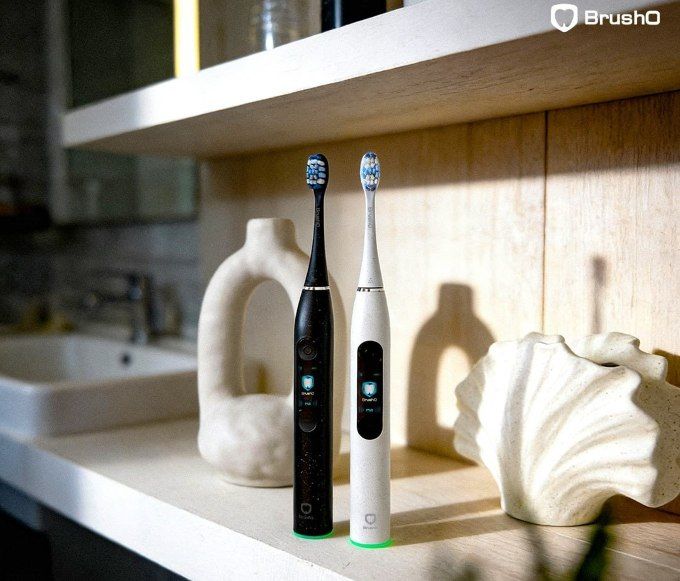
Dry mouth requires extra precision in oral hygiene. BrushO, the AI-powered smart toothbrush, is designed to adapt to these needs:
• Gentle Mode: Custom pressure settings protect weakened enamel and sensitive gums.
• Zone Detection: AI guides you to clean every surface, even in saliva-deficient zones.
• Brushing Feedback: Tracks duration, pressure, and missed spots to ensure no area is left behind.
• Reminders & Rewards: Keep you on track with consistent brushing and reward you with $BRUSH tokens for building healthier habits.
For those with dry mouth, BrushO ensures that every brushing session delivers maximum protection with minimal risk.
Dry mouth might not seem like a serious issue at first, but its long-term effects on your oral health can be devastating if ignored. By understanding the causes, taking daily preventive steps, and incorporating intelligent brushing technology like BrushO into your routine, you can protect your teeth and gums—even in the driest conditions.

The xerostomia is the symptom that the patient describes as the dry mouth, and the Sjogren syndrome is the systemic autoimmune condition that the clinician identifies as one of the causes that the symptom reveals. The dry mouth that the patient reports may follow the medication, the radiation, th...

The sinus lift is the augmentation procedure that the clinician performs to create the bone height that the posterior maxilla requires for the implant, and the choice between the lateral window and the transcrestal approach determines the surgical trauma, the healing, and the implant that the sit...

Post-extraction bleeding is one of the most common and most distressing experiences after a tooth extraction. For most patients, a small amount of oozing from the extraction site for 24 to 48 hours after the procedure is completely normal. However, when bleeding becomes excessive, prolonged, or d...

The skeletal class III malocclusion is the condition that the clinician treats with the orthognathic surgery or the camouflage orthodontic treatment, and the decision between the two paths determines the function, the aesthetics, and the stability that the patient receives. The orthognathic surge...

Interproximal enamel reduction — commonly referred to as IPR, slenderizing, stripping, or contouring — is the controlled removal of small amounts of enamel from the proximal surfaces of teeth. Despite sounding more invasive than it is, IPR is one of the most widely used and clinically safe proced...

The gingival graft is the surgical procedure that the periodontist performs to restore the keratinized tissue and to cover the exposed root, and the choice between the free gingival graft and the connective tissue graft determines the outcome that the patient receives. The free gingival graft har...

Denture adhesives — commonly known as fixatives or denture creams — are among the most widely used adjuncts in prosthodontic care. Millions of complete and partial denture wearers use some form of adhesive daily, often without a clear understanding of what these products do, when they should be u...

When a young patient presents with an immature tooth that has lost its vitality — typically due to trauma or deep caries — the endodontist faces one of the most consequential decisions in paediatric endodontics. The permanent root has not finished forming, the apex remains open, and the tooth is ...

The ankyloglossia is the condition that the lingual frenulum restricts the movement of the tongue, and the release of the frenulum in the infant is the procedure that the clinician performs to restore the function that the feeding and the speech require. The assessment that the clinician performs...

Dental amalgam fillings have been in clinical use since the mid-19th century, making them one of the most historically established restorative materials. In 2026, the conversation around amalgam replacement has shifted from a simple material preference debate to a nuanced clinical assessment of w...

Costruire rapidamente e a basso costo una rete di dati sulla salute orale in modo che tutti possano creare.
Costruire rapidamente e a basso costo una rete di dati sulla salute orale in modo che tutti possano creare.


Address: RM 1427, 14/F RADIO CITY 505, HENNESSY RD CAUSEWAY BAY, HONG KONG
Code: 000000
Phone: +852-53758652
Email: customerservice@brusho.com