
Brushing with salt is an age-old practice found in many cultures, passed down through generations. Some swear by its cleansing power, others question its safety. But does salt truly help your teeth, or could it be doing more harm than good? In this article, we explore the benefits, risks, and professional recommendations regarding salt as a brushing agent.
Before commercial toothpaste existed, natural substances like charcoal, ash, and salt were commonly used for oral hygiene. Salt, in particular, was favored for its:
• Antibacterial properties: Believed to reduce harmful bacteria in the mouth.
• Abrasive texture: Helpful in scrubbing off surface stains.
• Low cost and availability: A household staple used globally.
However, modern dentistry has come a long way, and so has our understanding of what’s truly beneficial (or harmful) to our teeth and gums.
While salt isn’t entirely without merit, its actual benefits are often misunderstood or overstated. Here’s what science says:
Saltwater rinses are commonly recommended by dentists for gum irritation or after dental surgery because salt can draw out moisture and reduce inflammation. This can help temporarily soothe gums or minor wounds in the mouth.
The gritty texture of salt can help polish away light surface stains, making teeth look temporarily brighter. However, this is not the same as true whitening — it doesn’t change the intrinsic color of teeth.
Despite its reputation as a natural cleaner, regular brushing with salt poses significant risks, especially with prolonged use:
Salt is abrasive. Unlike toothpaste that contains calibrated gentle abrasives, salt granules can be rough and uneven. Repeated scrubbing can wear away enamel — the protective layer of your teeth — leading to increased sensitivity and risk of decay.
Salt can be dehydrating and may irritate sensitive gum tissues, especially if used in raw form. Over time, this can contribute to gum recession or bleeding.
Fluoride is crucial for strengthening enamel and preventing cavities. Brushing with salt does not offer this benefit, making your teeth more vulnerable in the long term.
According to most dental professionals, the best oral care routine includes:
• Fluoride toothpaste: Strengthens enamel and prevents decay.
• Soft-bristle brush: Prevents mechanical damage to gums and teeth.
• Gentle technique: Avoid harsh scrubbing, even with regular toothpaste.
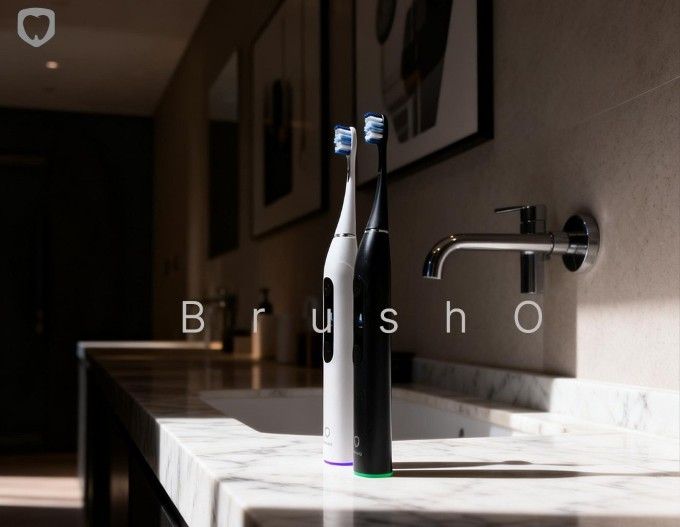
• Smart brushing technology: Tools like BrushO offer AI-guided brushing, pressure control, and real-time feedback to avoid common mistakes like brushing too hard.
💡 If you’re looking for natural remedies, consider using baking soda under dental guidance — it’s less abrasive and safer than salt.
Yes — but only in specific contexts and forms:
• Saltwater rinse (not brushing): A mild saline rinse (½ tsp salt in a glass of warm water) can be used occasionally for gum inflammation or post-surgical healing.
• Not for daily brushing: Never replace toothpaste with salt in your regular oral hygiene routine.
While brushing with salt might have historical roots, it’s not a safe or effective long-term oral care strategy. Enamel loss and gum irritation are serious concerns that outweigh the minimal benefits. If you’re looking to upgrade your brushing routine, consider switching to intelligent solutions like BrushO, which combines AI insights, smart brushing feedback, and habit reinforcement — all without the risk of abrasion.

Hyperdontia is the presence of one or more teeth in excess of the normal dental formula, and the resulting teeth are described as supernumerary. The condition is common enough to appear in routine practice but variable enough in presentation that the decision to intervene is rarely straightforwar...

Few patients complete orthodontic treatment without asking whether their teeth will move back. The honest answer is that they will, to some degree, in the majority of cases. Relapse is not a failure of treatment but a predictable biological response, and understanding why it happens is the basis ...

The mandible is the largest and most frequently fractured bone of the facial skeleton, and its management sits at the interface between trauma surgery and restorative dentistry. Treatment has shifted over four decades from prolonged maxillomandibular fixation towards rigid internal fixation with ...

Chronic liver disease affects hundreds of millions of people worldwide, and its prevalence continues to rise with the epidemic of metabolic liver disease. The liver is central to haemostasis, drug metabolism and immune competence, and its failure therefore alters the risk profile of almost every ...

Excessive gingival display, commonly described as a gummy smile, is one of the most frequent aesthetic concerns presented to dental practitioners. The condition is not a single entity but a clinical presentation that can arise from skeletal, gingival, muscular or dental factors, and the treatment...

Drug-induced gingival overgrowth is a well-recognised adverse effect of several widely prescribed medications, and it remains one of the most common drug-related findings in periodontal practice. The condition produces firm, fibrous enlargement of the gingiva that can interfere with speech, masti...

Denture stomatitis is an inflammatory condition of the denture-bearing mucosa that affects a large proportion of removable prosthesis wearers, yet it is frequently dismissed as a cosmetic annoyance. The condition is driven by a Candida biofilm on the fitting surface of the prosthesis, and it is m...

Chronic kidney disease affects an estimated 850 million people worldwide, and the number of patients surviving on dialysis or with a renal transplant continues to rise. These patients carry an oral disease burden that is substantially higher than that of the general population, and their medical ...

Angular cheilitis is an inflammatory lesion of the labial commissures that presents with erythema, fissuring and crusting at the corners of the mouth. It is one of the most common conditions encountered in general dental practice, yet it is frequently treated as a simple fungal infection and allo...

Adverse reactions to dental materials are uncommon but they are not rare, and they are frequently misdiagnosed because the oral mucosa responds to allergens in a limited number of ways. A burning sensation, a persistent ulcer or an unexplained area of erythema may all represent a hypersensitivity...

Costruire rapidamente e a basso costo una rete di dati sulla salute orale in modo che tutti possano creare.
Costruire rapidamente e a basso costo una rete di dati sulla salute orale in modo che tutti possano creare.


Address: RM 1427, 14/F RADIO CITY 505, HENNESSY RD CAUSEWAY BAY, HONG KONG
Code: 000000
Phone: +852-53758652
Email: customerservice@brusho.com