
Intermittent fasting (IF) is often praised for its weight loss and metabolic benefits—but did you know it may also promote better oral health? By limiting the frequency and timing of food intake, IF can reduce acid attacks on your teeth, lower plaque buildup, and support a healthier oral microbiome. Combined with smart brushing tools like BrushO, intermittent fasting not only benefits your body but also helps protect your smile.
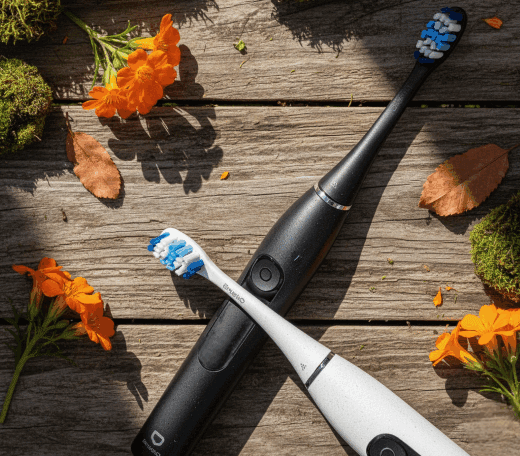
Intermittent fasting involves eating during specific time windows and fasting for the remaining hours. Common schedules include 16:8 (fast for 16 hours, eat during 8) or alternate-day fasting. While its systemic benefits—like blood sugar control and weight loss—are widely known, here’s how it uniquely impacts your oral health:
Every time you eat, bacteria in your mouth feed on sugars and starches, producing acids that erode enamel. By reducing the number of meals or snacks per day, IF lowers the frequency of acid exposure, giving your enamel more time to recover naturally between meals.
During fasting periods, saliva flow stabilizes, allowing it to do its job: neutralizing acids, washing away food particles, and supporting beneficial bacteria. Constant snacking disrupts this cycle, but IF gives your mouth a chance to reset and rebalance.
With fewer eating sessions, plaque-producing bacteria have less fuel, leading to a reduction in plaque formation and inflammation around the gums. This helps decrease the risk of gingivitis and periodontitis over time.
Surprisingly, IF can help with halitosis (bad breath). Fasting reduces the accumulation of food debris and bacteria in the mouth, especially when paired with good hydration and smart brushing. Fewer late-night snacks also mean your mouth is cleaner during long sleep hours.
While there are benefits, there are also potential risks if oral hygiene is neglected during IF:
• Dry Mouth: Some people forget to hydrate during fasting windows, leading to reduced saliva and increased bacterial activity.
• Skipping Brushing: Fasting can disrupt routines, causing people to skip morning or night brushing unintentionally.
• Acidic Break-Fasts: Breaking a fast with citrus or high-acid foods (like apple cider vinegar) can temporarily soften enamel if not followed by proper care.
BrushO’s AI-powered smart toothbrush is an ideal companion for those practicing IF. Here’s how it helps:
✅ Smart Reminders to brush before and after fasting windows.
✅ Real-Time Feedback on pressure and coverage to ensure enamel protection.
✅ Custom Brushing Modes like “Sensitive” or “Deep Clean” for post-fast recovery.
✅ Habit Tracking so users don’t forget night brushing after early fasting.
✅ $BRUSH Rewards to encourage consistent care even when routines shift.
🕗 Brush Before Fasting Begins: Clean your mouth thoroughly before your fast starts, especially if you won’t eat for 12+ hours.
💧 Stay Hydrated: Drink water during eating windows to keep your mouth moist and support saliva production.
🍽️ Break Fast Wisely: Avoid highly acidic foods first. Wait 30 minutes before brushing after acidic meals.
🪥 Use AI Tools: Let BrushO guide your brushing to make sure you don’t miss critical zones, especially if you’re adjusting to a new eating schedule.
Intermittent fasting is more than a dietary trend—it’s a potential ally in your oral health journey. Fewer meals mean fewer acid attacks, better saliva regulation, and less plaque. However, fasting without proper brushing can backfire. That’s where BrushO shines—combining AI guidance, habit tracking, and custom brushing modes to keep your teeth protected, even while you fast.
BrushO is an AI-powered smart toothbrush that transforms brushing into a personalized, data-driven wellness habit. With zone-based feedback, real-time coaching, and $BRUSH token rewards, BrushO empowers users to take control of their oral health—whether fasting, feasting, or anywhere in between.
Jan 16
Jan 15

Torus mandibularis and torus palatinus are benign bony overgrowths that arise on the lingual surface of the mandible and on the midline of the hard...

Oral pigmented lesions are a diverse group of conditions that appear as areas of abnormal color in the oral mucosa, ranging from brown and black...

Gingivoplasty is a periodontal surgical procedure designed to reshape the gingiva and restore a natural, harmonious contour to the gum line. Unlike...

Fusion and gemination are developmental dental anomalies in which two teeth appear to be joined together, producing a single crown that is wider than...

An anterior open bite is a malocclusion in which the anterior teeth fail to meet in the vertical dimension when the posterior teeth are in occlusion,...

Zirconia implant abutments have become the standard of care in the esthetic zone because of their ability to mimic the natural translucency of tooth structure and to preserve the appearance of peri-implant soft tissue. As patients increasingly demand restorations that are indistinguishable from n...

A frenectomy is a minor surgical procedure that removes or releases a frenum, the small fold of tissue that connects the lips, cheeks, or tongue to the underlying structures. When a frenum is abnormally positioned, large, or tight, it can interfere with speech, feeding, oral hygiene, the eruption...

The separation of an instrument within a root canal is one of the most stressful events in endodontic practice, and it occurs in every clinician's career at some point. When a nickel-titanium or stainless steel file fractures, its fragment remains in the canal and can obstruct cleaning, shape, fi...

Corticotomy-assisted orthodontics is an advanced technique that combines surgical stimulation of the alveolar bone with conventional tooth movement to shorten treatment time. The approach, popularized as periodontally accelerated osteogenic orthodontics, or PAOO, has transformed the management of...

Bruxism, the involuntary clenching and grinding of the teeth, affects a large proportion of the population and can cause severe damage to the dentition, the supporting structures, and the temporomandibular joint. The occlusal splint, or night guard, is the most widely used appliance for the manag...

Costruire rapidamente e a basso costo una rete di dati sulla salute orale in modo che tutti possano creare.
Costruire rapidamente e a basso costo una rete di dati sulla salute orale in modo che tutti possano creare.


Address: RM 1427, 14/F RADIO CITY 505, HENNESSY RD CAUSEWAY BAY, HONG KONG
Code: 000000
Phone: +852-53758652
Email: customerservice@brusho.com