
The design of your toothbrush handle—its shape, texture, and grip—directly influences how effectively you brush. A good handle supports better angles, control, and coverage. Most people focus on bristle softness or motor speed when choosing a toothbrush—but overlook the handle grip design. Yet studies show that a poorly designed, slippery, or awkward handle can lead to improper brushing technique, missed surfaces, and even fatigue. In this article, we’ll break down why an ergonomic, non‑slip toothbrush handle matters for brushing quality—and how the smart design of the BrushO handle supports better oral hygiene for all users.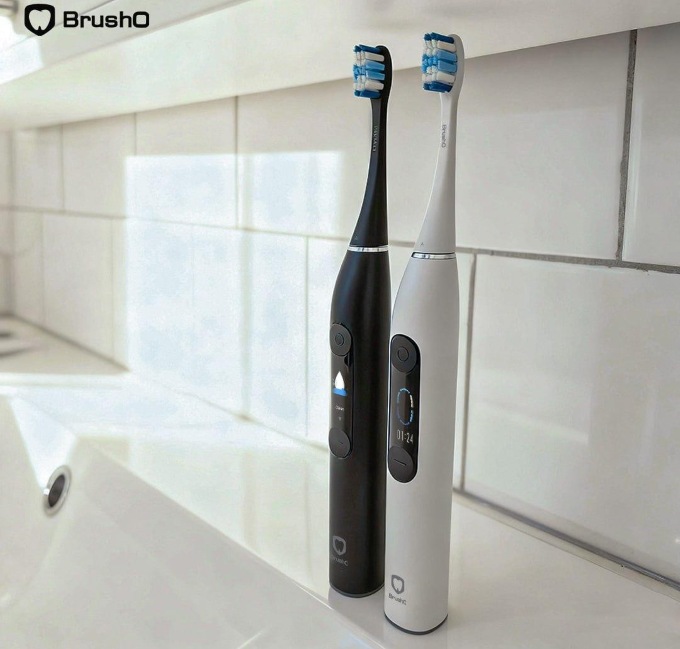
When you think of a toothbrush, you often picture the bristles or the head. But the handle—the part you hold—is where the action really begins. The way you grip the handle affects your angle, pressure, reach, and control during every brushing session. Thus, the handle’s design is far more than aesthetic—it’s functional and influences the outcome of your brushing.
An ergonomic handle is designed to fit your hand and your brushing motion naturally. Research indicates that handle diameter, texture, and balance affect grip comfort and brushing performance. When you have a secure, comfortable handle, you’re more likely to sustain correct brushing motion, cover all zones, and avoid over‑pressure or awkward angles.
Handles with non‑slip textures or ridged surfaces help maintain control, especially when your hand is wet. Many manufacturers now incorporate “no‑slip” grips to prevent slippage that can compromise control.
Studies show that the optimal handle dimensions reduce muscle fatigue and improve brushing outcomes. A handle too thin or too long may force awkward wrist angles, reducing effectiveness and increasing the risk of missing surfaces or brushing inconsistently.
A handle that enables you to naturally hold the brush at a 45° angle—ideal for cleaning the gum‑line—leads to better results. When the grip is comfortable and stable, you can maintain that angle without strain.
When the handle gives you good control, you’re less likely to press too hard—one of the biggest causes of gum recession. A secure grip helps you feel subtle feedback from the brush head, enabling gentler, more effective brushing.
Handles with balanced weight and good grip help you manoeuvre the brush behind molars and along the lower inner surfaces. This is especially helpful for users with braces, crowded teeth, or limited mobility.
For younger users, a thicker or textured handle improves grip and encourages proper technique, making brushing less of a chore and more of a success.
A non‑slip, ergonomic handle is critical for those with hand strength limitations or mobility issues. Good handle design supports independent brushing and reduces the risk of dropping or mis‑handling the toothbrush.
At BrushO, we’ve prioritised grip and control in the handle design:
• Textured, anti‑slip surface that remains steady in wet hands
• Ergonomically balanced weight to reduce wrist fatigue and improve manoeuvrability
• Extended grip zone allowing a stable hold whether you’re brushing in conventional or deep‑clean modes
Together, these features support better brushing technique, improved coverage, and a lower risk of missed zones or gum damage.
Brushing well is not just about bristles or technology—it starts with how you hold the brush. An ergonomic, non‑slip handle supports better angles, steadier pressure, and full‑mouth coverage. Think of it as the foundation of your brushing routine. With BrushO’s well‑designed handle, you’re not only getting smart features and powerful cleaning—you’re getting superior control that yields better results.
BrushO is a next‑generation AI‑powered smart toothbrush brand committed to improving daily oral care through precision design, intelligent features, and user‑centred engineering. With a handle crafted for comfort and control, BrushO helps users brush smarter, longer, and more effectively.

Vitamin D is best known for its role in calcium homeostasis and bone mineralisation, yet it also modulates innate immunity and inflammation, both of which are central to periodontal disease. For that reason it has become one of the most discussed nutrients in periodontology, and the question is w...

The toothbrush aisle offers dozens of options, but the variable that matters most is not the handle colour or the grip. It is the stiffness of the bristles. This article compares soft and medium bristles using the evidence that actually informs clinical advice, from plaque removal to gingival saf...

Few topics generate more parental anxiety than teething, and few are surrounded by more persistent myths. The evidence shows that tooth eruption causes milder and narrower symptoms than most caregivers expect, which means that a distressed infant with a fever usually needs a diagnosis rather than...

What you eat in the week after a tooth extraction shapes how comfortable that week feels and how quickly the socket closes. A soft food diet is not simply an instruction about texture; it protects the blood clot, supplies the nutrients that rebuild tissue and prevents the pressure and suction tha...

A crown that is designed, milled and fitted in a single appointment sounds like a straightforward improvement on the two-visit routine, but the comparison is more nuanced than marketing suggests. Fit, survival and cost all depend on the material and the operator as much as on the technology used ...

Osteoporosis treatment and dental care intersect at a single, serious complication: medication-related osteonecrosis of the jaw. The condition is uncommon but consequential, and the risk is strongly shaped by decisions made long before a tooth becomes a problem, which is why patients and clinicia...

A click in the jaw when opening the mouth is one of the most common findings in dentistry, and one of the least understood by patients. For most people it is a harmless mechanical event, but in a minority it signals a joint problem that benefits from assessment and conservative treatment.

Fluoride is the most effective caries-preventive agent available, and parents encounter it in two very different forms: the toothpaste used at home every day and the varnish applied in the dental chair. The two are complementary rather than competing, and understanding what each contributes preve...

Enamel defects in children range from small white patches that cause no trouble to large areas of missing enamel that expose dentine and break down soon after eruption. Recognising the type of defect and its cause allows clinicians to prevent the breakdown rather than simply repair the damage.

A short sharp sensation on drinking cold water is one of the most common complaints in the days after a restoration, and it is also one of the most misunderstood. Most episodes resolve without intervention, but a minority reflect problems that need attention, so knowing the timeline and the warni...

Costruire rapidamente e a basso costo una rete di dati sulla salute orale in modo che tutti possano creare.
Costruire rapidamente e a basso costo una rete di dati sulla salute orale in modo che tutti possano creare.


Address: RM 1427, 14/F RADIO CITY 505, HENNESSY RD CAUSEWAY BAY, HONG KONG
Code: 000000
Phone: +852-53758652
Email: customerservice@brusho.com