
Braces play a critical role in straightening teeth and improving long-term oral health, but they can also introduce new challenges—especially when it comes to maintaining fresh breath. Food particles, plaque, and bacteria easily accumulate around brackets and wires, increasing the risk of bad breath, also known as halitosis. This article explores the science behind breath issues for people with braces, explains why conventional brushing methods often fall short, and introduces how AI-powered solutions like BrushO can help clean thoroughly around orthodontic appliances. We also offer practical tips to keep your breath fresh and your oral hygiene in check throughout your braces journey.
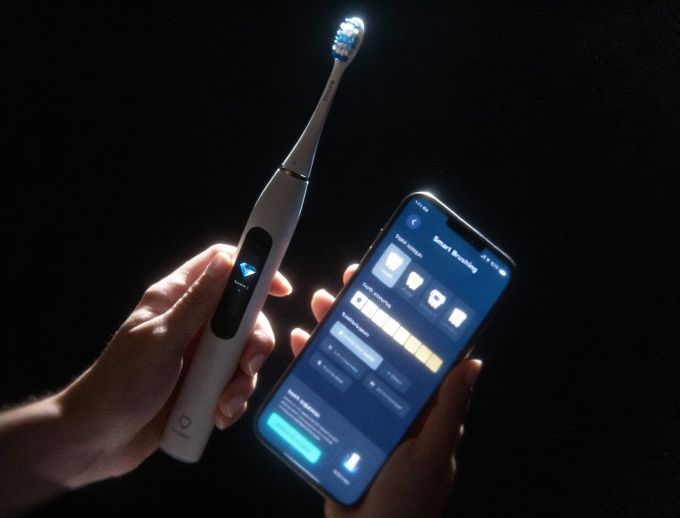
Braces make it significantly harder to clean every surface of your teeth. The brackets, wires, and elastics create multiple hiding spots for food particles and bacteria. When these aren’t removed effectively, plaque builds up, releasing volatile sulfur compounds—the chemicals responsible for bad breath. In fact, studies show that individuals with braces are more prone to gingivitis, dry mouth, and bacterial imbalance—all of which contribute to halitosis. The challenge isn’t that braces directly cause bad breath, but rather that they create conditions that allow bacteria to thrive.
1. Trapped Food Particles: Small bits of food can stick between brackets and wires.
2. Dry Mouth: Some orthodontic devices reduce natural saliva flow, impairing your mouth’s ability to self-clean.
3. Improper Brushing: Many users struggle to clean thoroughly around appliances, especially behind the molars and along the gumline.
4. Lack of Tongue Cleaning: Bacteria on the tongue remain a leading source of odor.
Traditional toothbrushes often fail to adapt to the complexities of orthodontic appliances. BrushO, however, is designed to bridge this gap with intelligent, user-guided brushing:
• AI-Powered Coverage Detection: Ensures no zone—especially around brackets—is left uncleaned.
• Real-Time Feedback: Alerts you when brushing pressure is too low or too high.
• Custom Modes: “Braces Mode” can deliver gentler brushing while maximizing cleaning efficiency.
• Tongue Cleaning Reminder: Helps remove bacterial biofilm from a key odor zone.
Moreover, BrushO’s app generates brushing reports, gamifies habit tracking, and rewards consistency with $BRUSH tokens, encouraging better hygiene even during lengthy orthodontic treatment.
• Brush After Every Meal: Especially important to avoid food decay around brackets.
• Floss or Use Interdental Brushes: Clean between teeth and beneath wires.
• Hydrate Often: Water helps wash away bacteria and stimulate saliva.
• Avoid Sticky, Sugary Foods: These are harder to clean off and feed bacteria.
• Clean the Tongue: Use a scraper or tongue-cleaning mode on smart brushes.
• Use Mouthwash: Choose alcohol-free versions to avoid drying out your mouth.
Wearing braces doesn’t have to be a sentence to chronic bad breath. With the right oral hygiene routine and the help of tools like BrushO, you can maintain fresh breath, prevent plaque buildup, and protect your gums. Orthodontic care is a journey—and your oral health shouldn’t suffer along the way.
BrushO is an AI-powered smart toothbrush engineered for modern oral care challenges. Whether you wear braces, suffer from sensitive gums, or just want cleaner teeth, BrushO offers real-time guidance, adaptive cleaning modes, and a unique Brush & Earn system to reward you for brushing smarter. Make your brushing count—with precision, feedback, and freshness every day.

Fluoride in drinking water is the most cost-effective caries preventive measure in public health, and it is also the source of most avoidable fluoride exposure in young children. The balance between benefit and risk depends on concentration, on total intake from all sources and on the age of the ...

A mouthguard is the only piece of protective equipment that a dentist can prescribe, and the difference between the cheapest and the best version is often less than the cost of a single repair. This guide explains what each type of mouthguard actually protects, how to judge fit, and what to check...

Distinguishing reversible from irreversible pulpitis is the single most consequential decision in endodontic diagnosis, because one leads to a restoration and the other to root canal treatment or extraction. The distinction rests on symptoms and pulp testing rather than on radiographs alone, and ...

A pregnancy epulis is a benign overgrowth of gum tissue that appears during pregnancy, most often in the second or third trimester. It can alarm patients because it grows quickly and bleeds easily, yet in most cases it needs no surgery and settles after delivery. Understanding what drives the gro...

When several teeth are missing, the choice usually narrows to a removable partial denture or a fixed implant-supported restoration, and cost is the factor patients raise first. Upfront price is only part of the comparison, because the two options differ in maintenance, comfort, effects on neighbo...

Most root canal failures are not caused by inadequate cleaning of canals that were found, but by canals that were never located. Molar anatomy varies widely, and the variation is not random: specific teeth in specific populations have predictable additional canals. Knowing where they hide is the ...

Gum massage is one of the oldest recommendations in oral care and one of the least understood. It has been described as a treatment for bleeding gums, a route to firmer tissue and, more recently, a way to reduce brushing force. This article separates the mechanisms that are supported by physiolog...

Interdental cleaning is the part of oral hygiene most people abandon first, and the choice between a floss pick and a length of string floss is often made on convenience. Convenience matters, because a tool that is used daily outperforms a superior tool that stays in the drawer, but the two devic...

Dementia changes the way a denture is worn, cleaned and tolerated, and the people who notice the change first are usually family carers rather than clinicians. Poor denture hygiene in this group is associated with mucosal infection, reduced food intake and, in frail patients, respiratory complica...

Chewing tobacco keeps nicotine and plant irritants in prolonged contact with a small area of mucosa, and the damage that results is concentrated exactly where the quid is held. The lesions that develop are often painless, which is why they are discovered during routine examination rather than bec...

모두가 쉽게 구축할 수 있는 방식으로 구강 건강 데이터 네트워크를 저렴한 비용으로 빠르게 구축하세요.


Address: RM 1427, 14/F RADIO CITY 505, HENNESSY RD CAUSEWAY BAY, HONG KONG
Code: 000000
Phone: +852-53758652
Email: customerservice@brusho.com