
Brushing your teeth removes harmful bacteria and disrupts plaque formation—but it doesn’t sterilize your mouth. In fact, oral bacteria begin rebuilding within minutes of brushing. Understanding how bacteria repopulate after brushing can help you optimize your oral care routine, protect your enamel, and prevent issues like cavities and gum disease. With the help of AI-powered smart toothbrushes like BrushO, you can better manage the balance of your oral microbiome.
Your mouth is home to over 700 species of bacteria, many of which are essential for digestion, immunity, and maintaining oral pH. After brushing, most of the harmful bacteria are disrupted, but beneficial bacteria remain—and all bacteria quickly begin rebuilding.
• Reattach to enamel surfaces
• Digest food particles and sugars
• Produce acid, starting the decay process again
This cycle means that brushing twice a day is essential—but technique, timing, and routine consistency matter even more.
Brushing removes plaque biofilm and disrupts bacterial colonies. Here’s what happens immediately after:
• Saliva neutralizes acids and begins restoring pH balance
• Residual bacteria left in missed zones begin recolonizing
• Food and drink intake can speed up the regrowth of bad bacteria
The mouth is a dynamic environment—so bacterial rebuilding is inevitable. The goal isn’t total elimination but rather controlled balance.
Some habits and conditions accelerate how fast harmful bacteria return:
• Skipping tongue cleaning: The tongue harbors bacteria that spread quickly
• Eating sugary snacks or acidic drinks: Fuels rapid bacterial growth
• Mouth breathing or dry mouth: Reduces saliva, which naturally controls bacteria
• Incomplete brushing coverage: Leaves safe zones for bacteria to repopulate
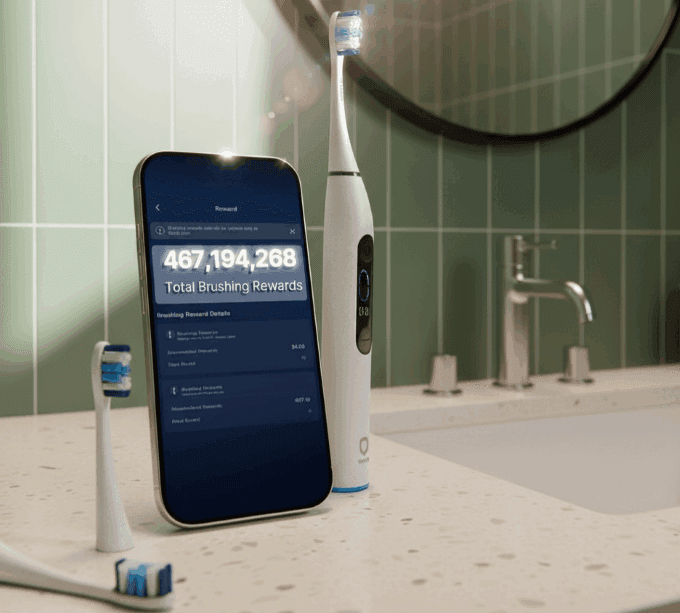
BrushO is designed to slow harmful bacterial rebuilding by improving your brushing precision:
Ensures no area is left unbrushed, reducing bacterial hotspots.
Brushing too lightly? Too short? BrushO corrects you in real-time.
Tracks daily performance and helps you build long-term microbiome-friendly habits.
Reminds you when it’s time to brush or rinse—especially after high-sugar or acidic meals.
Want to extend the benefits of brushing? Try these:
• Brush twice a day, once before bed and once after waking up
• Avoid snacking constantly, which feeds bacteria all day
• Clean your tongue to reduce bacterial reservoirs
• Use a fluoride toothpaste to strengthen enamel against bacterial acids
• Rinse with water after meals if brushing isn’t possible
Bacteria start rebuilding just minutes after you brush—but the goal isn’t to kill them all. It’s about balancing your oral microbiome and keeping harmful species under control. Smart toothbrushes like BrushO help you brush more effectively and consistently, slowing the regrowth of harmful bacteria and protecting your long-term oral health.

The uncontrolled hypertension is the condition that the dental practice meets in the patient who presents with the elevated pressure that the guideline does not permit for the elective treatment, and the management of this patient requires the deferral of the dental procedure and the referral to ...

The closure of the extraction space in the orthodontic treatment is the phase that demands the careful selection of the mechanics and the monitoring of the force that the appliance delivers. The sliding mechanics that rely on the continuous archwire and the power chain that connects the brackets ...

The transverse discrepancy of the maxilla is the problem that the crowding and the posterior crossbite often hide, and the maxillary expansion is the treatment that addresses the width of the arch rather than the position of the individual tooth. The clinician who diagnoses the constriction early...

The local anaesthesia is the daily procedure that the modern dentistry treats as the routine, and the complications that follow it range from the transient and the trivial to the permanent and the serious. The clinician who injects by the habit without the anatomy in the mind is the clinician who...

The hypertension is the condition that the dental practice meets in the every day, and the patient who carries the elevated pressure without the symptoms is the patient who presents the risk that the chair-side measurement reveals. The dental team occupies the position that no other profession ho...

The glass-ceramic crown has become the default restoration for the anterior and the many posterior teeth, and the material selection within the family is the decision that determines the strength, the aesthetics, and the longevity of the result. The lithium disilicate, the leucite, and the zircon...

The dental phobia is the extreme form of the dental fear that prevents the patient from attending the treatment that the oral health requires, and the management of the phobia demands the skill that extends beyond the routine behaviour guidance. The systematic desensitization, the exposure therap...

The dental fear of the child is the condition that shapes the attitude for the lifetime, and the clinician who manages the first visits with the skill builds the patient who attends the recall without the dread. The fear that the child develops follows the many sources, and the practice that reco...

The patient with controlled hypertension is the patient who requires the dental care that the oral health demands and the treatment that the blood pressure permits, and the clinician who manages the controlled case safely follows the guideline that the evidence supports. The controlled hypertensi...

The ceramic veneer is the restoration that the aesthetic dentistry depends on, and the bond that retains the veneer on the enamel is the critical link that determines whether the restoration survives the function or fractures and debonds. The clinical technique from the preparation to the cementa...

모두가 쉽게 구축할 수 있는 방식으로 구강 건강 데이터 네트워크를 저렴한 비용으로 빠르게 구축하세요.


Address: RM 1427, 14/F RADIO CITY 505, HENNESSY RD CAUSEWAY BAY, HONG KONG
Code: 000000
Phone: +852-53758652
Email: customerservice@brusho.com