
Sugar is addictive—but what if your toothbrush could help curb your sweet tooth? Research and behavioral patterns suggest that a regular brushing routine, especially when powered by smart technology like BrushO, can significantly reduce sugar cravings. This article explores the science behind it, how brushing influences taste perception and habit loops, and how BrushO turns this habit into a powerful tool for better wellness.
Sugar triggers dopamine release, activating the brain’s reward system. That’s why it’s so hard to say no to dessert, soda, or candy. Unfortunately, frequent sugar intake also leads to:
• Tooth decay and enamel erosion
• Increased plaque buildup
• Gum inflammation
• Long-term oral health risks
Cravings often spike after meals, during stress, or when your taste buds are already dulled by processed foods—this is where brushing comes in.
Brushing your teeth changes the environment in your mouth, sending clear biological and psychological signals that:
• The meal is over
• The taste is reset
• Sweet treats no longer taste “right”
Here’s how brushing helps:
Toothpaste ingredients like sodium lauryl sulfate (SLS) temporarily suppress sweet receptors and amplify bitter ones. That chocolate bar you crave? It suddenly doesn’t taste so great after brushing.
Brushing becomes a behavioral cue that “eating time is done.” It trains your brain to disconnect from post-meal snacking—especially sweets.
After brushing, your mouth feels clean and minty. Introducing sugary foods immediately after feels unpleasant, which deters the impulse.
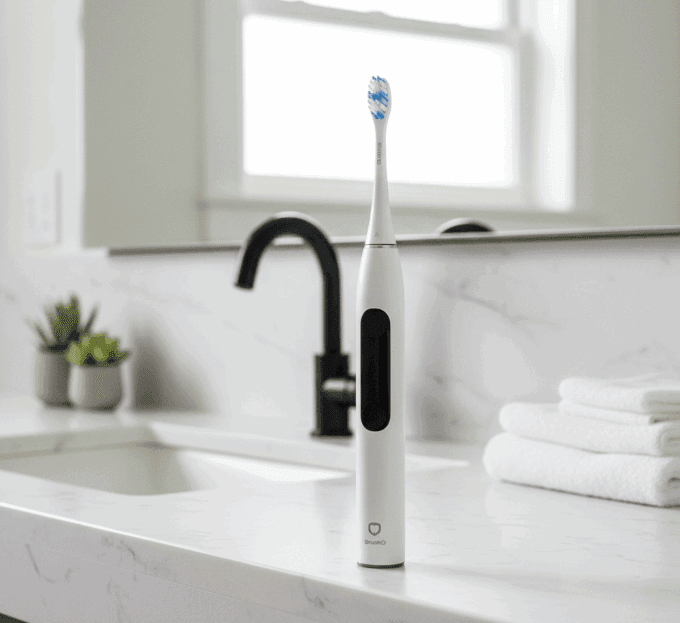
BrushO isn’t just a toothbrush—it’s a behavior reinforcement tool that makes this process more powerful:
BrushO tracks when and how you brush. Morning and post-meal routines can be optimized for maximum craving disruption.
Proper brushing coverage ensures the taste bud reset is thorough, enhancing the craving-reduction effect.
Get rewarded for brushing after meals instead of snacking. Replace the dopamine from sugar with the motivation of progress and digital incentives.
Use the BrushO app to review your brushing habits and correlate them with reduced snacking over time. It becomes a mini habit journal for your health.
Especially after lunch and dinner, to reset your palate and shut down the urge to snack.
Minty toothpaste enhances the post-brush “cleansing” sensation, making sugar less appealing.
Drink a glass of water after brushing to further reduce oral acidity and freshen your system.
Set reminders and earn $BRUSH rewards for brushing after risky times (like dessert cravings or late-night snacking).
Reducing sugar cravings isn’t just good for your waistline—it’s one of the best ways to protect your teeth. By reinforcing meal closure, enhancing self-discipline, and rewiring the brain’s reward loop, brushing—especially with smart tools like BrushO—becomes a micro-habit with macro impact.
BrushO is an AI-powered smart toothbrush system designed to help you build better brushing habits, improve oral health, and reinforce whole-body wellness. With intelligent brushing guidance, habit rewards, and personalized brushing reports, BrushO makes brushing smarter, more rewarding, and even helpful in breaking your sugar habit.
Jan 13
Jan 13

Wisdom teeth, or third molars, are the last teeth to erupt, and a large proportion of them never achieve a functional position. When a wisdom tooth is trapped beneath the gum or bone, it is described as impacted, and the decision to remove it is one of the most common surgical judgments in dentis...

Disk displacement is the most common internal derangement of the temporomandibular joint (TMJ) and a frequent reason for orofacial pain consultations. Magnetic resonance imaging (MRI) is the accepted gold standard for confirming the position of the articular disk because it visualizes soft tissue...

Pulp sensibility testing remains the first diagnostic step before any endodontic intervention. Cold, heat and electric pulp tests (EPT) probe the neural response of the pulp through enamel and dentin, and their results decide whether a tooth needs root canal treatment, a direct pulp cap or simple...

Mouthguards protect teeth from sports trauma and night-time grinding, but a dirty guard can become a reservoir for bacteria, fungi and oral disease. Studies show that used mouthguards accumulate plaque, streptococci and Candida within days of normal wear, and poor hygiene has been linked to gingi...

Halitosis, or persistent bad breath, affects a large share of the adult population and carries real social and psychological consequences. In the vast majority of cases the source is the mouth itself, and the most important reservoir is the coating on the dorsal surface of the tongue. Understandi...

Root canal treatment succeeds only when instrumentation stops at the right place. Working length is the distance from a stable coronal reference point to the apical constriction, and every millimeter of error changes the outcome: over-instrumentation pushes debris and irrigant beyond the apex, wh...

Dry mouth is one of the most common complaints in dental practice, yet it is frequently underestimated. Xerostomia is the subjective feeling of oral dryness, while salivary hypofunction is the measurable reduction in saliva output, and the two do not always coincide. Because saliva protects teeth...

Diabetes affects more than blood sugar, and the mouth is often one of the first places where the disease makes itself known. The relationship is genuinely bidirectional: uncontrolled diabetes increases the risk and severity of periodontal disease, while severe gum inflammation makes blood sugar h...

Enamel is the hardest tissue in the human body, but it is not indestructible. Dental erosion is the chemical dissolution of enamel by acids that are not produced by bacteria, and modern diets supply those acids in abundance. Understanding how acidic foods and drinks attack the tooth surface is th...

A good toothbrush should work as well in a hotel bathroom as it does at home, and that is exactly what BrushO Travel Mode is designed to do. By lowering motor speed and trimming acoustic output, Travel Mode keeps the full two-minute cleaning routine in a form that is discreet enough for shared ro...

모두가 쉽게 구축할 수 있는 방식으로 구강 건강 데이터 네트워크를 저렴한 비용으로 빠르게 구축하세요.


Address: RM 1427, 14/F RADIO CITY 505, HENNESSY RD CAUSEWAY BAY, HONG KONG
Code: 000000
Phone: +852-53758652
Email: customerservice@brusho.com