
Tooth loss is often viewed as a localized dental issue, but its effects extend far beyond the mouth. Each tooth plays a vital role in maintaining jawbone density, facial symmetry, and structural support for soft tissue. When teeth are lost, the surrounding bone gradually resorbs due to reduced stimulation, altering facial contours and accelerating visible aging. Understanding the biological mechanisms behind bone remodeling after tooth loss highlights the importance of preventive oral care, early intervention, and advanced monitoring technologies that support long-term structural health.
Teeth are not just functional tools for chewing — they are biomechanical stimulators of the jawbone. Every bite and chewing motion transfers force through the tooth root into the surrounding bone tissue. This mechanical stimulation signals the body to maintain bone density through continuous remodeling.
Healthy teeth help preserve:
• Jawbone volume
• Facial symmetry
• Muscle attachment stability
• Soft tissue support
Without this stimulation, bone maintenance mechanisms slow down.
When a tooth is lost, the alveolar bone that once supported it no longer receives mechanical stimulation. The body interprets this as unnecessary tissue and gradually reabsorbs it. This process can start within months and continue for years.
• Reduced bone thickness
• Decreased bone height
• Altered jaw structure
Bone loss is permanent without medical intervention.
As bone volume decreases, external facial changes may appear:
• Sunken cheeks
• Thinner lips
• Shortened lower face height
• Wrinkling around the mouth
• Reduced chin projection
These changes contribute to premature facial aging and altered expression dynamics.
Tooth loss affects neighboring teeth and bite mechanics:
• Adjacent teeth may shift
• Opposing teeth may over-erupt
• Chewing force distribution becomes uneven
This further accelerates structural imbalance and joint strain.
Beyond aesthetics, bone changes influence:
• Speech articulation
• Chewing efficiency
• Digestive effectiveness
• Temporomandibular joint (TMJ) stability
Maintaining dental integrity is therefore a whole-system health priority.
Periodontal disease is a major contributor to tooth loss. Controlling bacterial buildup helps preserve supporting structures.
Aggressive brushing or missed zones increases gum and bone risk.
Early detection of inflammation prevents progression to irreversible structural damage.
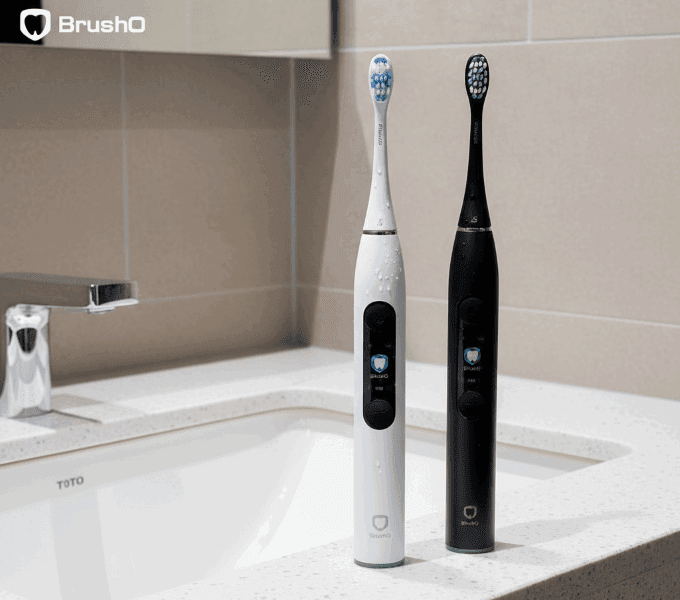
AI-guided toothbrush technologies like BrushO assist users in maintaining protective habits that reduce tooth loss risk.
Prevents gum trauma that contributes to recession and instability.
Ensures complete plaque removal across all surfaces.
Identifies behavioral patterns linked to oral health decline.
Adapt intensity to protect sensitive or at-risk areas.
These tools support long-term preservation of dental and bone structure through consistent daily feedback.
Dental professionals may recommend:
• Implants
• Bridges
• Dentures
These interventions restore function and partially preserve bone stimulation, though prevention remains the optimal strategy.
Tooth loss triggers structural changes that extend far beyond missing teeth. Reduced bone stimulation leads to jaw resorption, facial contour alteration, and functional complications. Recognizing this connection reinforces the importance of preventive oral hygiene and consistent monitoring. Combining daily care practices with intelligent brushing guidance — such as provided by BrushO — helps reduce the risk of periodontal decline and supports lifelong structural health. Oral health preservation is not only about maintaining a smile — it is about protecting the architecture of the face itself.

The uncontrolled hypertension is the condition that the dental practice meets in the patient who presents with the elevated pressure that the guideline does not permit for the elective treatment, and the management of this patient requires the deferral of the dental procedure and the referral to ...

The closure of the extraction space in the orthodontic treatment is the phase that demands the careful selection of the mechanics and the monitoring of the force that the appliance delivers. The sliding mechanics that rely on the continuous archwire and the power chain that connects the brackets ...

The transverse discrepancy of the maxilla is the problem that the crowding and the posterior crossbite often hide, and the maxillary expansion is the treatment that addresses the width of the arch rather than the position of the individual tooth. The clinician who diagnoses the constriction early...

The local anaesthesia is the daily procedure that the modern dentistry treats as the routine, and the complications that follow it range from the transient and the trivial to the permanent and the serious. The clinician who injects by the habit without the anatomy in the mind is the clinician who...

The hypertension is the condition that the dental practice meets in the every day, and the patient who carries the elevated pressure without the symptoms is the patient who presents the risk that the chair-side measurement reveals. The dental team occupies the position that no other profession ho...

The glass-ceramic crown has become the default restoration for the anterior and the many posterior teeth, and the material selection within the family is the decision that determines the strength, the aesthetics, and the longevity of the result. The lithium disilicate, the leucite, and the zircon...

The dental phobia is the extreme form of the dental fear that prevents the patient from attending the treatment that the oral health requires, and the management of the phobia demands the skill that extends beyond the routine behaviour guidance. The systematic desensitization, the exposure therap...

The dental fear of the child is the condition that shapes the attitude for the lifetime, and the clinician who manages the first visits with the skill builds the patient who attends the recall without the dread. The fear that the child develops follows the many sources, and the practice that reco...

The patient with controlled hypertension is the patient who requires the dental care that the oral health demands and the treatment that the blood pressure permits, and the clinician who manages the controlled case safely follows the guideline that the evidence supports. The controlled hypertensi...

The ceramic veneer is the restoration that the aesthetic dentistry depends on, and the bond that retains the veneer on the enamel is the critical link that determines whether the restoration survives the function or fractures and debonds. The clinical technique from the preparation to the cementa...

모두가 쉽게 구축할 수 있는 방식으로 구강 건강 데이터 네트워크를 저렴한 비용으로 빠르게 구축하세요.


Address: RM 1427, 14/F RADIO CITY 505, HENNESSY RD CAUSEWAY BAY, HONG KONG
Code: 000000
Phone: +852-53758652
Email: customerservice@brusho.com