
Most of us brush without thinking twice about the water temperature we use. But is warm or cold water better for your teeth and gums? This seemingly minor detail can impact everything from tooth sensitivity to bacterial control. In this article, we explore the benefits and drawbacks of both options, what dentists recommend, and how smart toothbrushes like BrushO can enhance your brushing routine regardless of temperature. Learn how to build an optimal oral care ritual down to the finest detail. Brushing your teeth is a daily ritual—but have you ever questioned whether the temperature of your water makes a difference? It’s a commonly overlooked detail in oral hygiene, yet it can have a surprising impact on comfort, effectiveness, and even long-term dental health.
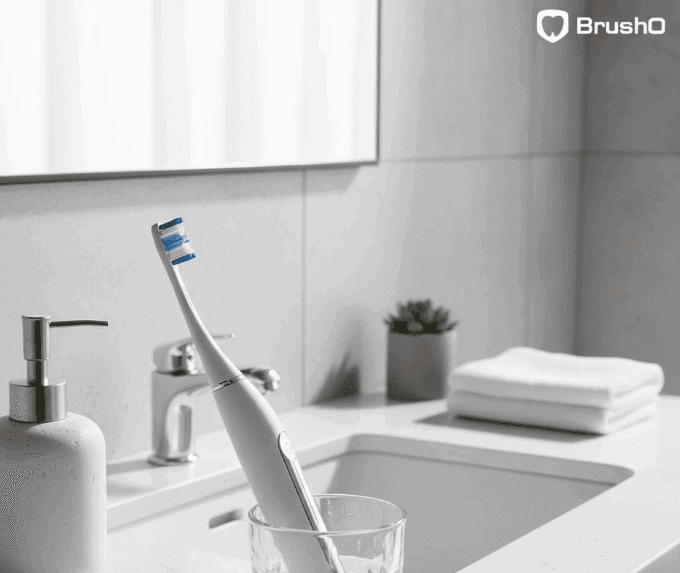
Water temperature can influence:
• Tooth sensitivity
• Gum response
• Plaque breakdown
• Comfort during brushing
• Bacteria control on your brush
Let’s look at how warm and cold water affect each of these factors.
✅ Pros:
• Refreshing feel: Many people find cold water invigorating in the morning.
• Good for healthy teeth: If you don’t have sensitivity issues, cold water poses no harm.
• Preserves brush bristle shape: Cold water doesn’t soften bristles, maintaining cleaning performance.
❌ Cons:
• Triggers sensitivity: Cold water can cause pain or discomfort in people with exposed roots, enamel erosion, or gum recession.
• Less effective at dissolving toothpaste: Cold water may not activate certain components in toothpaste (especially those with baking soda or peroxide) as efficiently as warmer water.
✅ Pros:
• Gentler for sensitive teeth and gums: Warm water can reduce the sharp discomfort caused by cold stimuli.
• Improves toothpaste activation: Some ingredients in whitening or baking-soda-based pastes dissolve better in warm water.
• More comfortable during colder seasons: Particularly helpful for children or elderly users with sensitivity to cold.
❌ Cons:
• Softens bristles: Excessive heat may make bristles less effective.
• Risk of being too hot: Water that’s too warm can irritate soft tissues and damage gums or enamel if extreme.
Most dental professionals agree:
🦷 Water temperature should be comfortable—not too hot, not icy cold.
In general:
• Lukewarm water (around body temperature) is ideal for most users
• If you have tooth sensitivity or gum inflammation, avoid cold water
• Don’t use hot water, as it may cause tissue irritation or damage to your brush head
While BrushO doesn’t control water temperature directly, it’s designed to protect your teeth and gums under any brushing condition. Here’s how:
Cold or hot water may lead users to unknowingly press harder. BrushO’s real-time pressure sensors alert you to reduce force, protecting your gums from damage.
If you use cold water and experience sensitivity, switch to BrushO’s “Sensitive” or “Gum Care” mode to reduce brush intensity and vibration.
Using warm water may increase brushing time. BrushO’s app feedback ensures you’re still brushing effectively and evenly across all zones.
| Scenario | Recommended Water Temp |
| Sensitive teeth | Warm (not hot) |
| Children brushing | Lukewarm |
| Using whitening toothpaste | Warm or lukewarm |
| Healthy teeth, no discomfort | Either is fine |
| During winter | Lukewarm |
| Using smart brush with AI feedback | Either is optimized |
There’s no single “correct” temperature—but there is a right temperature for you. The best practice is to:
• Use lukewarm water for comfort and effectiveness
• Avoid extremely hot or cold extremes
• Combine optimal water temperature with a smart toothbrush like BrushO to protect enamel, preserve gum health, and maintain long-term oral wellness.
Jan 30
Jan 30

The posterior maxilla is the most demanding site in implant dentistry, because the pneumatized maxillary sinus frequently leaves the clinician with less bone than the implant requires. Maxillary sinus augmentation, the surgical procedure that raises the sinus floor to create vertical bone, has be...

The rubber dam is the oldest and still the most effective isolation device in restorative dentistry, and its reputation as an inconvenient extra step survives among practitioners who have never measured the time it actually saves. The dam isolates the field from the saliva, the tongue, and the ch...

The margin is the most vulnerable line in fixed prosthodontics, because it is the only boundary between the prepared tooth, the restoration, and the oral environment that the clinician cannot fully seal by effort alone. A restoration that fits seamlessly at the margin resists leakage, caries, and...

The masticatory system is built for function, yet much of its damage comes from habits that serve no purpose. Parafunctional habits, the clenching, the grinding, and the tongue pressing performed outside of normal function, sit behind much of the tooth wear, the temporomandibular pain, and the my...

Chronic mouth breathing in the growing child is seldom a dental problem in origin and almost always a facial one in consequence. The child who sleeps with the mouth open bypasses the physiologic benefits of nasal respiration, and the posture that the airway forces upon the tongue, the mandible, a...

The immediate denture is the prosthesis placed on the day the teeth are extracted, sparing the patient the edentulous interval the conventional denture imposes and preserving the occlusal vertical dimension, the facial support, and the appearance through the transition. The clinical literature ha...

The Class III malocclusion in the growing child carries a special urgency, because the maxillary deficiency that marks the pattern does not correct itself and the window for the growth-modifying treatment closes with the skeletal maturity. Elastic protraction, the orthopedic therapy that pulls th...

The denture is the only prosthetic device in medicine that its owner is expected to wear daily and to clean personally, yet it is also the device most commonly neglected until the signs of disease appear. A biofilm that forms on the acrylic base within hours is a reservoir of candida and bacteria...

The complete denture stands or falls on the impression, because the impression determines how well the base follows the mucous membrane and how evenly the occlusal load is distributed across the basal seat. For a century the profession has argued about whether the impression should record the muc...

The all-ceramic crown has moved from a niche product to the default restoration for the anterior single tooth in a single clinical generation, driven by patient demand for metal-free appearance and by materials that now survive functional loading as reliably as their metal-ceramic predecessors. A...

모두가 쉽게 구축할 수 있는 방식으로 구강 건강 데이터 네트워크를 저렴한 비용으로 빠르게 구축하세요.


Address: RM 1427, 14/F RADIO CITY 505, HENNESSY RD CAUSEWAY BAY, HONG KONG
Code: 000000
Phone: +852-53758652
Email: customerservice@brusho.com