
Your gums do more than hold your teeth in place—they’re an early warning system for your overall health. In particular, the state of your gum tissue can provide powerful clues about your immune function. Inflammation, bleeding, and gum recession may indicate more than just poor brushing—they could signal immune stress or chronic inflammation. Discover how your gums reveal your internal defenses and how effective brushing habits, combined with tools like BrushO, can enhance both your smile and immunity.
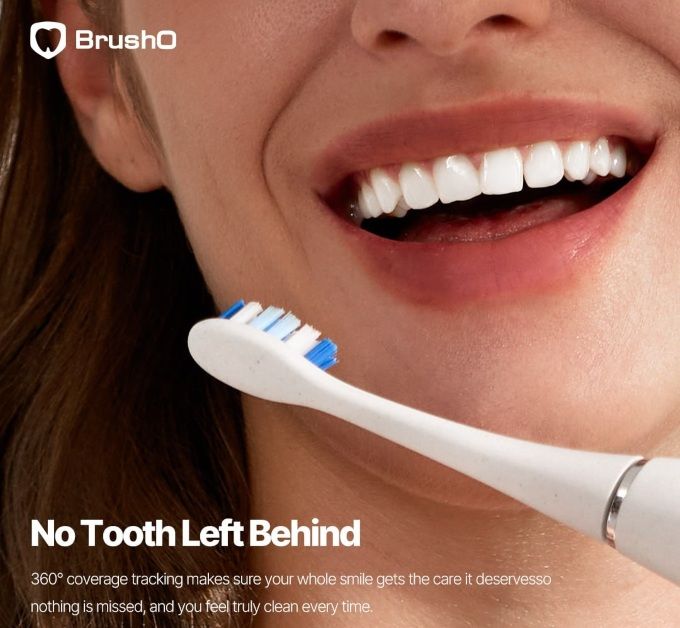
Your gums are part of the mucosal immune system, which serves as the body’s first line of defense against pathogens. When harmful bacteria build up in the mouth, your immune system responds. But if the system is overactive or weakened, gum tissue may suffer.
Persistent gum swelling, redness, or tenderness often reflects underlying inflammation. While it may start locally (due to plaque or poor hygiene), it can signal a system-wide inflammatory state tied to:
• Chronic stress
• Autoimmune diseases
• Nutritional deficiencies
• Hormonal imbalances
If your gums bleed during brushing or flossing, your immune system may be struggling to repair damaged tissue or respond effectively to bacteria. Frequent bleeding may also hint at:
• Vitamin C or D deficiency
• Overactive immune response
• Poor blood clotting
Advanced gum disease (periodontitis) isn’t just a local issue. Research links it to serious conditions like:
• Diabetes
• Cardiovascular disease
• Rheumatoid arthritis
• Respiratory infections
These links exist because inflamed gums can allow bacteria to enter the bloodstream, triggering immune reactions throughout the body.
Maintaining healthy gums isn’t just about keeping your teeth in place—it’s a way to actively support your body’s immune defenses. BrushO’s AI technology helps identify and prevent early signs of immune imbalance in the gums.
BrushO’s AI-guided brushing ensures you don’t miss high-risk zones like the gumline. Proper gumline cleaning reduces inflammation triggers and improves local immunity.
Too much pressure can damage sensitive gum tissue, while too little allows plaque to thrive. BrushO alerts you in real-time, helping preserve gum integrity and immune balance.
BrushO’s specialized gum care mode stimulates blood flow to the gums, encouraging tissue repair and a stronger immune response.
With the BrushO app, you can monitor your gum health over time. Consistent brushing is rewarded with $BRUSH tokens—reinforcing habits that keep your immune system supported.
Focus on where teeth meet gums, using gentle circular motions to reduce plaque and irritation.
This protects fragile gum tissue while still providing effective cleaning.
Floss reaches the tight gum pockets where bacteria hide and cause inflammation.
Saliva helps maintain immune defense in the mouth—drink plenty of water daily.
Bleeding, redness, or recession are early signs—don’t ignore them. Use the BrushO app to stay alert.
Your mouth is a window into your immune system. Keeping your gums healthy helps limit inflammation, reduce disease risk, and enhance overall resilience. By integrating smart brushing routines with BrushO, you’re not just caring for your smile—you’re investing in your long-term wellness.

Squamous cell carcinoma is not a single, uniform disease, and two of its oral variants illustrate the extremes of its behavior. Verrucous carcinoma is a slow-growing, exophytic tumor that almost never metastasizes, while spindle cell carcinoma is an aggressive, sarcomatoid malignancy that can be ...

Most people expect a toothache to be the first sign of pulp disease, but some forms of pulpitis are surprisingly silent. A pulp polyp is the visible result of chronic hyperplastic pulpitis, a condition in which the dental pulp grows out of a large carious opening as a fleshy mass. Recognizing thi...

Dry mouth is not merely uncomfortable; it is a medical condition with real consequences for teeth, speech, swallowing and quality of life. When the salivary glands cannot produce enough saliva, medications called sialogogues can restore some of the missing fluid. Pilocarpine and cevimeline are th...

A blister in the mouth can be the first warning of a systemic autoimmune disease, and two disorders deserve particular attention in the dental chair: pemphigus vulgaris and mucous membrane pemphigoid. Both produce chronic oral ulceration, yet their immunologic targets, clinical behavior and long-...

When infection drains from a tooth, the body often creates a visible escape route, and the dentist must interpret these fistulous openings correctly. A parulis is the common gum boil that signals chronic periapical infection, while an oroantral fistula is a communication between the mouth and the...

Among the fibro-osseous lesions of the jaws, the ossifying fibroma holds a unique position because it is a true neoplasm, unlike the reactive cemento-osseous dysplasia discussed in an earlier article. It grows continuously, expands bone and requires surgical removal, and its cemental variant adds...

Not all keratocystic lesions of the jaw behave alike, and one of the most important distinctions in oral pathology separates the orthokeratinized odontogenic cyst from its better-known relative, the odontogenic keratocyst. Although the two lesions look similar under the microscope at first glance...

Periodontal disease is usually a slowly progressive infection, but a rare form called necrotizing ulcerative periodontitis destroys tissue with alarming speed. Unlike ordinary periodontitis, this condition produces necrotic, cratered papillae, deep pocketing and rapid bone loss, and it appears al...

Every parent has met the child who refuses to eat because of painful mouth sores, and most of these children have one of two viral illnesses: herpangina or hand, foot and mouth disease. Both are caused by enteroviruses, both produce fever and oral ulcers, and both are overwhelmingly common in you...

Cementoosseous dysplasia is one of the most common fibro-osseous lesions found on dental radiographs, yet it is also one of the most frequently misdiagnosed. The lesion replaces normal bone with cellular fibrous tissue and cementum-like material, and it appears in several forms that range from a ...

모두가 쉽게 구축할 수 있는 방식으로 구강 건강 데이터 네트워크를 저렴한 비용으로 빠르게 구축하세요.


Address: RM 1427, 14/F RADIO CITY 505, HENNESSY RD CAUSEWAY BAY, HONG KONG
Code: 000000
Phone: +852-53758652
Email: customerservice@brusho.com