
When we think about brushing our teeth, we often focus only on the teeth themselves—front, back, and chewing surfaces. But what about the roof of your mouth? Also known as the palate, this area is often skipped in daily routines, despite its role in harboring bacteria and affecting breath freshness. In this article, we’ll explore why cleaning the roof of your mouth matters, what risks are associated with ignoring it, and how BrushO’s smart feedback system helps ensure no area is left behind.
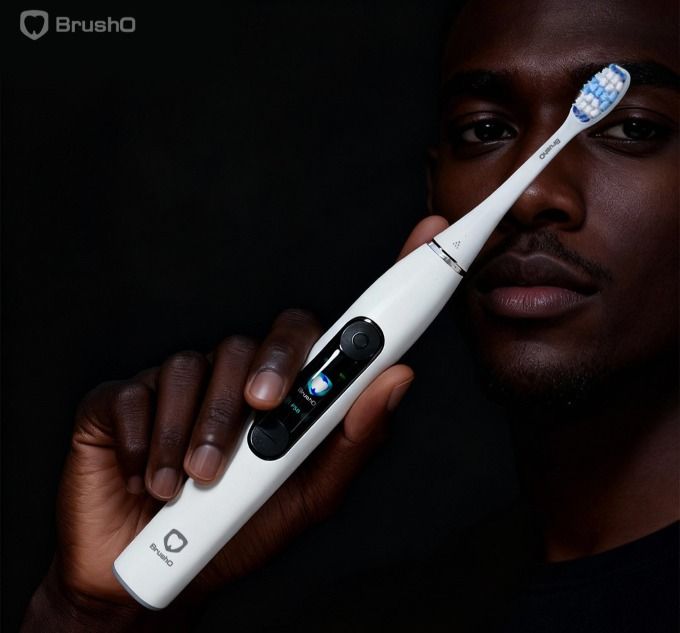
The roof of your mouth—the hard and soft palate—is part of the oral cavity and plays an active role in speech, swallowing, and even your immune response. Like your tongue and teeth, it can accumulate bacteria, food debris, and dead cells throughout the day.
• Bacterial buildup: This area provides a warm, moist environment where bacteria thrive.
• Halitosis (bad breath): When left uncleaned, it can contribute to persistent bad breath.
• Oral health imbalance: Neglecting any part of the mouth can throw off your overall oral hygiene balance.
Most traditional brushing routines and even many electric toothbrushes don’t include guidance for cleaning the roof of the mouth. The lack of awareness, combined with the awkwardness of reaching this area, means it’s easily forgotten.
• It’s not part of conventional brushing instructions.
• Discomfort or gag reflex when brushing that area.
• Misconception that only teeth and tongue need cleaning.
1. Use a soft-bristled toothbrush head (like BrushO’s gentle mode head).
2. After brushing your teeth and tongue, gently glide the brush over the hard and soft palate using slow circular motions.
3. Be gentle—you’re not scrubbing, just sweeping away buildup.
4. Finish with a rinse, preferably with a mouthwash that targets bacteria.
BrushO’s FSB (Fully Smart Brushing) technology is designed to ensure no area is overlooked during your routine.
🧠 AI-Powered Heatmaps: Tracks coverage, including commonly missed areas like the palate and inner cheeks.
📱 App-Based Reminders: Suggests full-mouth hygiene, including less commonly cleaned surfaces.
🚨 Real-Time Alerts: If you’re skipping areas, the app provides gentle guidance and tips for a complete clean.
Whether it’s the back molars or the roof of your mouth, BrushO helps form whole-mouth awareness—a key to better breath and lasting oral health.
Your mouth is the gateway to your body. Ensuring all surfaces—including the roof—are properly cleaned reduces oral bacteria that can contribute to:
• Gum disease
• Systemic inflammation
• Bad breath and dry mouth
With BrushO, whole-mouth care becomes not just easier—but smarter and more rewarding.
Ignoring the roof of your mouth might seem like a small oversight, but it can have big consequences for your oral hygiene. By giving this often-forgotten area the attention it deserves, you enhance your brushing routine and support your full-body health. With the help of smart tools like BrushO, no surface gets left behind.
Dec 15
Dec 11

The uncontrolled hypertension is the condition that the dental practice meets in the patient who presents with the elevated pressure that the guideline does not permit for the elective treatment, and the management of this patient requires the deferral of the dental procedure and the referral to ...

The closure of the extraction space in the orthodontic treatment is the phase that demands the careful selection of the mechanics and the monitoring of the force that the appliance delivers. The sliding mechanics that rely on the continuous archwire and the power chain that connects the brackets ...

The transverse discrepancy of the maxilla is the problem that the crowding and the posterior crossbite often hide, and the maxillary expansion is the treatment that addresses the width of the arch rather than the position of the individual tooth. The clinician who diagnoses the constriction early...

The local anaesthesia is the daily procedure that the modern dentistry treats as the routine, and the complications that follow it range from the transient and the trivial to the permanent and the serious. The clinician who injects by the habit without the anatomy in the mind is the clinician who...

The hypertension is the condition that the dental practice meets in the every day, and the patient who carries the elevated pressure without the symptoms is the patient who presents the risk that the chair-side measurement reveals. The dental team occupies the position that no other profession ho...

The glass-ceramic crown has become the default restoration for the anterior and the many posterior teeth, and the material selection within the family is the decision that determines the strength, the aesthetics, and the longevity of the result. The lithium disilicate, the leucite, and the zircon...

The dental phobia is the extreme form of the dental fear that prevents the patient from attending the treatment that the oral health requires, and the management of the phobia demands the skill that extends beyond the routine behaviour guidance. The systematic desensitization, the exposure therap...

The dental fear of the child is the condition that shapes the attitude for the lifetime, and the clinician who manages the first visits with the skill builds the patient who attends the recall without the dread. The fear that the child develops follows the many sources, and the practice that reco...

The patient with controlled hypertension is the patient who requires the dental care that the oral health demands and the treatment that the blood pressure permits, and the clinician who manages the controlled case safely follows the guideline that the evidence supports. The controlled hypertensi...

The ceramic veneer is the restoration that the aesthetic dentistry depends on, and the bond that retains the veneer on the enamel is the critical link that determines whether the restoration survives the function or fractures and debonds. The clinical technique from the preparation to the cementa...

Construa uma rede de dados de saúde bucal rapidamente e com baixo custo de forma que todos possam construir.
Construa uma rede de dados de saúde bucal rapidamente e com baixo custo de forma que todos possam construir.


Address: RM 1427, 14/F RADIO CITY 505, HENNESSY RD CAUSEWAY BAY, HONG KONG
Code: 000000
Phone: +852-53758652
Email: customerservice@brusho.com