
In today’s tech-driven world, AI is revolutionizing more than just smart homes or self-driving cars—it’s also changing how we care for our teeth. With rising global concerns about cavities, gum disease, and costly dental visits, early detection has become a top priority. Enter AI toothbrushes like BrushO, which use real-time sensors, smart data tracking, and personalized insights to monitor brushing behavior and spot warning signs of oral health issues—before you even notice symptoms.
This blog explores how AI toothbrushes support early dental diagnosis by detecting unusual patterns in brushing habits, identifying areas of plaque buildup, monitoring gum pressure, and promoting proactive oral health. Read on to understand why your next dental checkup might start with your smart toothbrush.
Cavities, gingivitis, and enamel erosion don’t happen overnight. They start as small, often invisible issues that gradually worsen. Traditional brushing habits may not effectively remove all plaque or alert users to early problems. Most people don’t notice symptoms like gum bleeding or tooth sensitivity until the damage is already done. That’s where AI technology can make a difference—by detecting subtle changes in your oral habits and helping you take action before it’s too late.
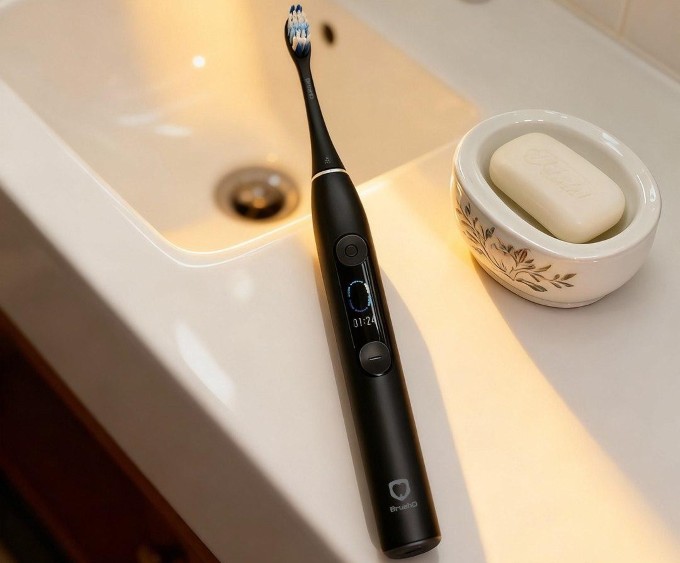
BrushO is a next-generation smart toothbrush equipped with:
• AI-powered pressure sensors: Detect when you’re brushing too hard or not enough, reducing gum trauma and enamel wear.
• Real-time zone tracking: Ensures you’re covering all quadrants of your mouth equally.
• Brushing duration analysis: Confirms that you’re spending enough time in each area.
• Personalized brushing reports: Delivered via the BrushO App to highlight irregularities that may signal early oral health concerns.
These features aren’t just for better brushing—they can help uncover patterns like recurring missed areas, sudden sensitivity, or overbrushing that may hint at developing problems.
What makes AI toothbrushes truly revolutionary is their ability to detect behavioral red flags, such as:
• Repeated neglect of certain areas → potential plaque buildup or early-stage decay.
• Consistent high pressure → early warning sign for gum recession or enamel damage.
• Short brushing time in key zones → higher risk for bacteria accumulation.
By identifying these patterns over time, BrushO helps users adjust their habits—before they turn into dental problems that require professional treatment.
One of the most powerful aspects of AI brushing is real-time correction. Unlike a regular toothbrush that simply ticks down a timer, BrushO nudges you when you’re brushing too fast, too hard, or skipping zones. It’s like having a dental hygienist in your bathroom—minus the awkward small talk.
The “Brushprint” feature visualizes your progress, helps you build consistent habits, and motivates long-term oral wellness.
BrushO bridges the gap between daily hygiene and clinical insight. While it’s not a replacement for a dentist, its smart feedback system can:
• Track early signs of gum sensitivity.
• Detect decreased brushing time during periods of illness or stress.
• Alert you to potential problem areas that deserve closer attention during your next dental visit.
In the age of teledentistry, this data can also be shared with dental professionals for remote consultations, making preventative care more accessible than ever.
As one of the most advanced AI toothbrushes on the market, BrushO combines:
• AI + sensor tech for smarter monitoring
• App integration for habit tracking and personalized insights
• Reward system (“Brush & Earn”) to build consistency
• Eco-friendly brush heads for sustainable health routines
With praise from dental professionals and institutions like Stanford School of Medicine, BrushO is reshaping how we understand—and improve—daily oral care.
So, can AI toothbrushes detect early signs of dental problems? The answer is a confident yes. While they don’t diagnose in the way dentists do, smart toothbrushes like BrushO help detect unhealthy patterns, promote proactive changes, and empower you with knowledge about your own brushing behavior. This is the future of oral health—preventative, data-driven, and smarter with every brush.
Nov 10
Nov 9

Vitamin D is best known for its role in calcium homeostasis and bone mineralisation, yet it also modulates innate immunity and inflammation, both of which are central to periodontal disease. For that reason it has become one of the most discussed nutrients in periodontology, and the question is w...

The toothbrush aisle offers dozens of options, but the variable that matters most is not the handle colour or the grip. It is the stiffness of the bristles. This article compares soft and medium bristles using the evidence that actually informs clinical advice, from plaque removal to gingival saf...

Few topics generate more parental anxiety than teething, and few are surrounded by more persistent myths. The evidence shows that tooth eruption causes milder and narrower symptoms than most caregivers expect, which means that a distressed infant with a fever usually needs a diagnosis rather than...

What you eat in the week after a tooth extraction shapes how comfortable that week feels and how quickly the socket closes. A soft food diet is not simply an instruction about texture; it protects the blood clot, supplies the nutrients that rebuild tissue and prevents the pressure and suction tha...

A crown that is designed, milled and fitted in a single appointment sounds like a straightforward improvement on the two-visit routine, but the comparison is more nuanced than marketing suggests. Fit, survival and cost all depend on the material and the operator as much as on the technology used ...

Osteoporosis treatment and dental care intersect at a single, serious complication: medication-related osteonecrosis of the jaw. The condition is uncommon but consequential, and the risk is strongly shaped by decisions made long before a tooth becomes a problem, which is why patients and clinicia...

A click in the jaw when opening the mouth is one of the most common findings in dentistry, and one of the least understood by patients. For most people it is a harmless mechanical event, but in a minority it signals a joint problem that benefits from assessment and conservative treatment.

Fluoride is the most effective caries-preventive agent available, and parents encounter it in two very different forms: the toothpaste used at home every day and the varnish applied in the dental chair. The two are complementary rather than competing, and understanding what each contributes preve...

Enamel defects in children range from small white patches that cause no trouble to large areas of missing enamel that expose dentine and break down soon after eruption. Recognising the type of defect and its cause allows clinicians to prevent the breakdown rather than simply repair the damage.

A short sharp sensation on drinking cold water is one of the most common complaints in the days after a restoration, and it is also one of the most misunderstood. Most episodes resolve without intervention, but a minority reflect problems that need attention, so knowing the timeline and the warni...

Construa uma rede de dados de saúde bucal rapidamente e com baixo custo de forma que todos possam construir.
Construa uma rede de dados de saúde bucal rapidamente e com baixo custo de forma que todos possam construir.


Address: RM 1427, 14/F RADIO CITY 505, HENNESSY RD CAUSEWAY BAY, HONG KONG
Code: 000000
Phone: +852-53758652
Email: customerservice@brusho.com