
Your chewing habits do more than just break down food—they play a pivotal role in shaping your jawline, maintaining balanced oral muscles, and preserving dental alignment. This article explores how uneven or improper chewing can lead to jaw discomfort, facial asymmetry, and even tooth wear, and how consistent oral care with tools like BrushO can help identify and counteract these issues early on.
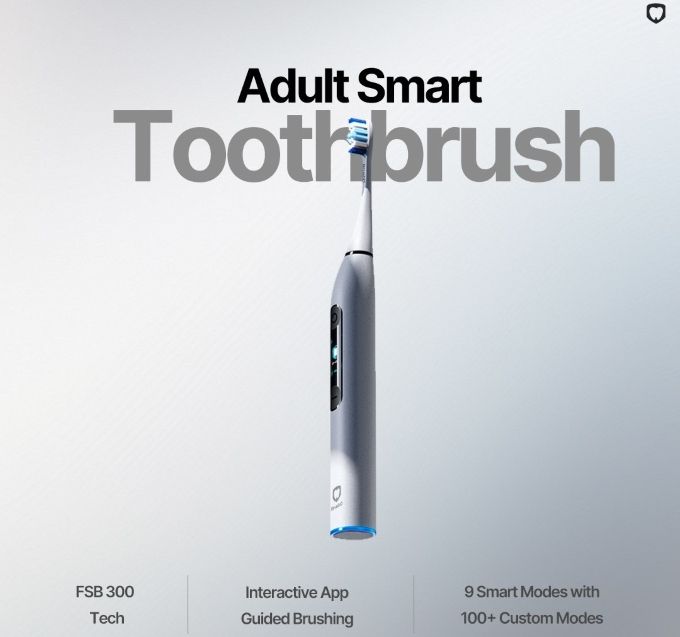
Most people unconsciously favor one side of the mouth while chewing. Over time, this asymmetry can cause:
• Muscle Imbalance: Leading to one side of the face appearing bulkier or more developed.
• Joint Stress: Extra strain on the temporomandibular joint (TMJ), possibly resulting in pain, clicking, or limited mobility.
• Uneven Tooth Wear: Excessive pressure on certain teeth accelerates enamel loss and gum recession.
• Jaw pain after eating
• Clicking or popping sounds in the jaw
• Crooked smile or facial asymmetry
• More plaque or tartar on one side
• Worn or flattened surfaces on certain teeth
While a toothbrush doesn’t directly affect chewing, BrushO’s AI-powered feedback reveals patterns that may indicate uneven usage:
• Plaque Detection in Specific Zones: A buildup on one side may signal underuse, hinting at an imbalanced chewing pattern.
• Brushing Pressure & Duration Data: If one side receives consistently more brushing pressure or longer duration, it might be compensating for more food breakdown on that side.
Identifying these trends helps users take proactive steps:
• Adjust chewing to both sides for better muscle balance
• Seek professional help if TMJ symptoms arise
• Improve brushing techniques based on real-time feedback
• Alternate Sides: Consciously switch sides during meals to distribute muscle activity evenly.
• Chew Slowly: Rushed eating often reinforces dominant-side chewing.
• Watch Posture: Slouching can affect jaw alignment and chewing efficiency.
• Brush Evenly: Use BrushO’s 6-zone, 16-surface tracking to ensure equal attention across all teeth.
Your chewing style is more than a habit—it’s a determinant of long-term jaw and dental health. Imbalances can quietly lead to facial asymmetry, discomfort, and dental complications. By pairing mindful chewing with smart brushing habits using BrushO, you can identify hidden issues early and maintain a healthier, more symmetrical smile.
BrushO is an AI-powered smart toothbrush system that transforms daily brushing into a guided wellness habit. With real-time feedback, habit tracking, and $BRUSH token rewards, BrushO ensures every brushing session supports long-term oral and jaw health—making it the perfect companion for users seeking a healthier, more balanced smile.

If you are thirsty after brushing, choose plain water. Plan your usual bedtime drink before brushing and skip the immediate rinse at the sink.

Waterpik recommends warm water for its flossers. Check your own model and use comfortably lukewarm water if cold water feels sharp.

Let an intact handle return to room temperature before you consider charging it. Check your manual and watch for signs of battery or housing damage.

Lift away the paste, check the care label, and use cool water on washable fabric. Here is a quick approach for a fresh spot.

Turn the brush off, then check the fit, the connection, and the condition of the head. A second compatible head can help you narrow it down.

Look for a clean, rigid container with a secure lid and keep it with your belongings. A napkin on a lunch tray is easy to clear away.

Check the care directions for your clear retainer. Clinics give different instructions, and the right cleaning method depends on the appliance you received.

Try a gentle rinse first. If the hull sits between teeth and floss moves freely, make a careful pass and stop if it still feels stuck.

A tight gap or rough edge can catch floss. Notice where it snags, keep the movement gentle, and find out when to ask your dentist to check.

Your first sip can taste sharp after brushing. Here is what may be changing and how to make breakfast taste like breakfast again.

Construa uma rede de dados de saúde bucal rapidamente e com baixo custo de forma que todos possam construir.
Construa uma rede de dados de saúde bucal rapidamente e com baixo custo de forma que todos possam construir.


Address: RM 1427, 14/F RADIO CITY 505, HENNESSY RD CAUSEWAY BAY, HONG KONG
Code: 000000
Phone: +852-53758652
Email: customerservice@brusho.com