
Getting kids to brush their teeth properly can be a battle—but it doesn’t have to be. The key isn’t force, it’s fun, consistency, and feedback. By making brushing feel like a game rather than a chore, you can lay the foundation for a lifetime of healthy habits. With features like smart pressure alerts, zone tracking, and built-in rewards, BrushO helps children build confidence and independence in their brushing routines. This article explores age-appropriate techniques, app-based motivation, and practical tips for turning brushing into something kids actually look forward to.
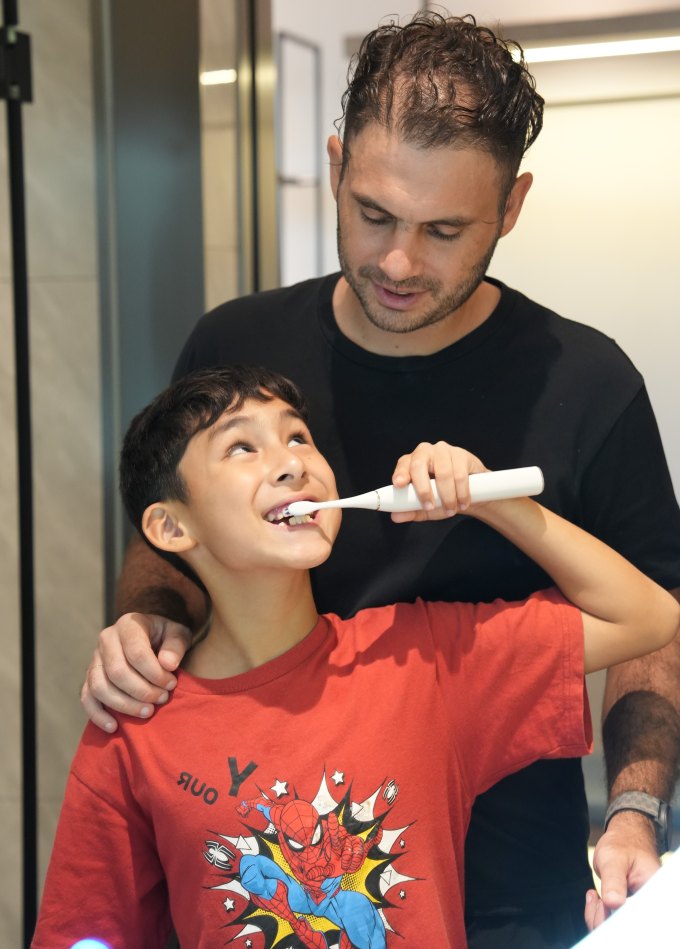
Children are more susceptible to cavities and early gum issues because their brushing technique is still developing. Learning proper brushing pressure, duration, and full-mouth coverage early on can prevent problems later in life. But getting there takes patience—and the right tools.
Kids respond best to positive reinforcement and engaging routines. Here’s how to make brushing more enjoyable:
• Zone tracking helps kids understand where they missed.
• Pressure sensors alert them gently if they’re brushing too hard.
• The BrushO app offers visual guides and progress charts, which turn brushing into a game with goals.
Set up a sticker chart or use BrushO’s digital rewards system to earn points. For example:
• 3 days of proper brushing = fun prize
• 10-day streak = free brush head (BrushO offers lifetime head rewards!)
Help kids memorize this simple brushing formula:
2 minutes, twice a day.
BrushO’s built-in timer and music integration can keep kids on track without nagging.
BrushO offers multiple modes, including Clean, Gum Care, and fully customizable settings. Let your child pick the one they like—it creates a sense of ownership and curiosity.
Routines are easier when parents lead by example. Brush alongside your child using your own BrushO brush, and compare brushing scores through the app. You can even make it a challenge:
“Let’s see who gets a better brushing report today!”
Celebrate small wins:
• “You brushed all 6 zones today—awesome!”
• “No pressure alerts! Great job being gentle.”
Positive feedback goes a long way in reinforcing long-term habits.
• Ages 3–6: Focus on guided brushing with parental supervision.
• Ages 7–10: Introduce app progress tracking and light challenges.
• Ages 11+: Allow independent app usage and reward tracking.
BrushO’s data visuals help kids grow more aware of their own routines and make informed decisions—even before they fully understand dental health.
BrushO is an AI-powered electric toothbrush brand that helps kids and adults build smart oral care habits. With zone-by-zone tracking, gentle feedback, customizable modes, and a fun rewards system, BrushO turns daily brushing into a healthy, interactive routine.
Nov 6
Nov 6

The xerostomia is the symptom that the patient describes as the dry mouth, and the Sjogren syndrome is the systemic autoimmune condition that the clinician identifies as one of the causes that the symptom reveals. The dry mouth that the patient reports may follow the medication, the radiation, th...

The sinus lift is the augmentation procedure that the clinician performs to create the bone height that the posterior maxilla requires for the implant, and the choice between the lateral window and the transcrestal approach determines the surgical trauma, the healing, and the implant that the sit...

Post-extraction bleeding is one of the most common and most distressing experiences after a tooth extraction. For most patients, a small amount of oozing from the extraction site for 24 to 48 hours after the procedure is completely normal. However, when bleeding becomes excessive, prolonged, or d...

The skeletal class III malocclusion is the condition that the clinician treats with the orthognathic surgery or the camouflage orthodontic treatment, and the decision between the two paths determines the function, the aesthetics, and the stability that the patient receives. The orthognathic surge...

Interproximal enamel reduction — commonly referred to as IPR, slenderizing, stripping, or contouring — is the controlled removal of small amounts of enamel from the proximal surfaces of teeth. Despite sounding more invasive than it is, IPR is one of the most widely used and clinically safe proced...

The gingival graft is the surgical procedure that the periodontist performs to restore the keratinized tissue and to cover the exposed root, and the choice between the free gingival graft and the connective tissue graft determines the outcome that the patient receives. The free gingival graft har...

Denture adhesives — commonly known as fixatives or denture creams — are among the most widely used adjuncts in prosthodontic care. Millions of complete and partial denture wearers use some form of adhesive daily, often without a clear understanding of what these products do, when they should be u...

When a young patient presents with an immature tooth that has lost its vitality — typically due to trauma or deep caries — the endodontist faces one of the most consequential decisions in paediatric endodontics. The permanent root has not finished forming, the apex remains open, and the tooth is ...

The ankyloglossia is the condition that the lingual frenulum restricts the movement of the tongue, and the release of the frenulum in the infant is the procedure that the clinician performs to restore the function that the feeding and the speech require. The assessment that the clinician performs...

Dental amalgam fillings have been in clinical use since the mid-19th century, making them one of the most historically established restorative materials. In 2026, the conversation around amalgam replacement has shifted from a simple material preference debate to a nuanced clinical assessment of w...

Construa uma rede de dados de saúde bucal rapidamente e com baixo custo de forma que todos possam construir.
Construa uma rede de dados de saúde bucal rapidamente e com baixo custo de forma que todos possam construir.


Address: RM 1427, 14/F RADIO CITY 505, HENNESSY RD CAUSEWAY BAY, HONG KONG
Code: 000000
Phone: +852-53758652
Email: customerservice@brusho.com