
Most people focus on brushing time or pressure—but rarely think about the angle. Yet, the angle of your toothbrush plays a crucial role in reaching plaque along the gumline, protecting your enamel, and preventing gum recession. This article explores the science behind brushing angles, the risks of getting it wrong, and how BrushO smart toothbrushes guide you toward perfect technique in every session.
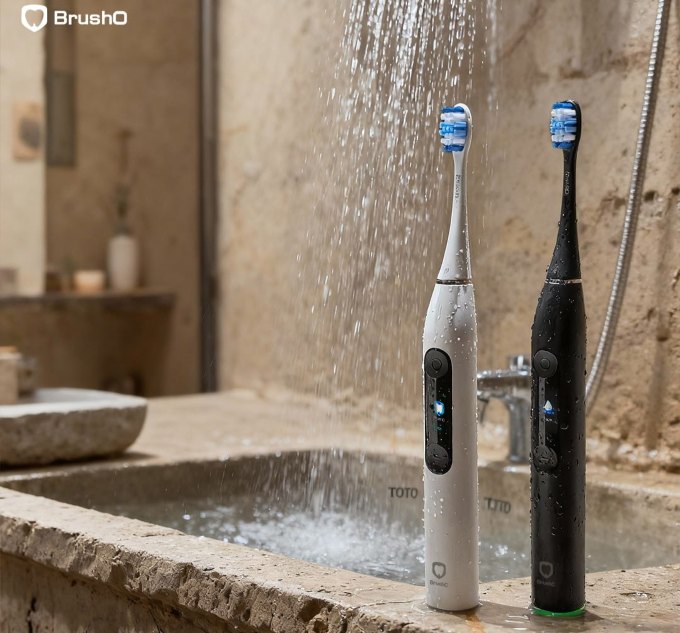
Brushing your teeth isn’t just about moving bristles across enamel. The angle of the brush head can significantly impact the effectiveness and oral health outcomes. The American Dental Association recommends a 45-degree angle toward the gumline. This angle allows the bristles to reach where plaque and bacteria tend to accumulate—right at the junction between your teeth and gums.
Many users brush horizontally or flat against the tooth surface, missing key zones like:
• The gumline, where inflammation starts
• Interdental areas, where plaque builds up
• Behind molars, often overlooked due to angle limitations
Incorrect brushing angles can lead to:
• Gum inflammation and bleeding
• Tartar buildup
• Tooth sensitivity due to exposed roots
• Ineffective plaque removal, even with long brushing time
Traditional toothbrushes offer no feedback on how you’re brushing. BrushO changes the game with real-time angle monitoring powered by smart sensors.
• 16-zone surface tracking ensures every section of your mouth is properly brushed.
• Angle-based AI analysis lets you know when your brushing is too flat or too vertical.
• On-handle light alerts and app feedback correct poor angles instantly, training you to build proper muscle memory.
Over time, this leads to:
• Healthier gums
• Less bleeding and irritation
• More thorough cleaning with less effort
A 45-degree angle is ideal because it allows bristles to gently sweep under the gumline without causing damage. Brushing too vertically misses plaque at the base. Brushing too flat wears enamel without disrupting plaque at the gum edge.
BrushO’s coaching system visually guides you to maintain this optimal angle with:
• LED feedback lights
• Daily brushing reports
• Angle-based scoring within the BrushO app
Without real-time guidance, most people never learn to:
• Hold the brush at the correct tilt
• Cover curved or difficult zones effectively
• Avoid brushing too hard while angling the brush
Even if you brush for 2 full minutes, poor angles result in missed plaque and wasted effort. BrushO ensures your technique is both effective and gentle—no guessing required.
With consistent smart guidance:
• Users reduce missed areas
• Pressure and angles stay in healthy ranges
• Brushing becomes intuitive, like second nature
The Brushprint AI system adapts to your habits, tracking your progress and rewarding improved performance.
BrushO is a next-gen smart toothbrush brand that uses AI-powered motion tracking and a smart feedback ecosystem to coach users toward perfect brushing. With 16-surface coverage tracking, pressure and angle sensors, and a reward system that lets users earn free brush heads, BrushO helps build smarter habits that lead to long-term oral health.

The uncontrolled hypertension is the condition that the dental practice meets in the patient who presents with the elevated pressure that the guideline does not permit for the elective treatment, and the management of this patient requires the deferral of the dental procedure and the referral to ...

The closure of the extraction space in the orthodontic treatment is the phase that demands the careful selection of the mechanics and the monitoring of the force that the appliance delivers. The sliding mechanics that rely on the continuous archwire and the power chain that connects the brackets ...

The transverse discrepancy of the maxilla is the problem that the crowding and the posterior crossbite often hide, and the maxillary expansion is the treatment that addresses the width of the arch rather than the position of the individual tooth. The clinician who diagnoses the constriction early...

The local anaesthesia is the daily procedure that the modern dentistry treats as the routine, and the complications that follow it range from the transient and the trivial to the permanent and the serious. The clinician who injects by the habit without the anatomy in the mind is the clinician who...

The hypertension is the condition that the dental practice meets in the every day, and the patient who carries the elevated pressure without the symptoms is the patient who presents the risk that the chair-side measurement reveals. The dental team occupies the position that no other profession ho...

The glass-ceramic crown has become the default restoration for the anterior and the many posterior teeth, and the material selection within the family is the decision that determines the strength, the aesthetics, and the longevity of the result. The lithium disilicate, the leucite, and the zircon...

The dental phobia is the extreme form of the dental fear that prevents the patient from attending the treatment that the oral health requires, and the management of the phobia demands the skill that extends beyond the routine behaviour guidance. The systematic desensitization, the exposure therap...

The dental fear of the child is the condition that shapes the attitude for the lifetime, and the clinician who manages the first visits with the skill builds the patient who attends the recall without the dread. The fear that the child develops follows the many sources, and the practice that reco...

The patient with controlled hypertension is the patient who requires the dental care that the oral health demands and the treatment that the blood pressure permits, and the clinician who manages the controlled case safely follows the guideline that the evidence supports. The controlled hypertensi...

The ceramic veneer is the restoration that the aesthetic dentistry depends on, and the bond that retains the veneer on the enamel is the critical link that determines whether the restoration survives the function or fractures and debonds. The clinical technique from the preparation to the cementa...

Construa uma rede de dados de saúde bucal rapidamente e com baixo custo de forma que todos possam construir.
Construa uma rede de dados de saúde bucal rapidamente e com baixo custo de forma que todos possam construir.


Address: RM 1427, 14/F RADIO CITY 505, HENNESSY RD CAUSEWAY BAY, HONG KONG
Code: 000000
Phone: +852-53758652
Email: customerservice@brusho.com