
Sleep bruxism, or involuntary teeth grinding during sleep, is a hidden enemy of oral health that affects millions—often without them even knowing. This silent condition can gradually wear down enamel, damage gums, and cause jaw pain that extends beyond oral concerns. In this article, we explore what causes sleep bruxism, how to detect it, and how to minimize its damage. We’ll also look at how smart toothbrushes like BrushO, with pressure detection and personalized guidance, can play a key role in protecting your teeth and improving your daily routine. Whether you’re grinding due to stress, misalignment, or sleep disorders, identifying and addressing bruxism early can save your smile.
Sleep bruxism is the medical term for unconscious grinding or clenching of the teeth during sleep. It differs from daytime bruxism, which is usually stress-related and occurs when awake. According to the American Dental Association, an estimated 10–15% of adults and a growing number of children suffer from sleep bruxism. This condition often goes unnoticed until symptoms—like jaw pain or tooth wear—begin to appear. Left untreated, bruxism can have long-term consequences on oral health.
Sleep bruxism doesn’t always present immediate signs, but common symptoms include:
• Flattened, chipped, or worn-down teeth
• Increased tooth sensitivity
• Jaw soreness or tightness upon waking
• Headaches, especially near the temples
• Clicking or popping in the jaw (TMJ disorders)
• Gum recession or inflammation due to excessive pressure
If you experience any of these, it may be time to evaluate your brushing routine and consult a dentist.
Understanding what leads to nighttime grinding is essential. The most common causes include:
• Stress and anxiety: Psychological tension is a leading trigger.
• Sleep disorders: Conditions like sleep apnea are closely linked to bruxism.
• Misaligned bite (malocclusion): Improper tooth alignment can cause grinding.
• Lifestyle factors: Alcohol, caffeine, and smoking can increase risk.
• Genetics: Bruxism often runs in families.
Bruxism wears away your smile from the inside out:
• Tooth enamel erosion reduces protection and leads to cavities.
• Gum trauma can accelerate periodontal disease.
• Jaw strain may cause long-term TMJ dysfunction.
• Cosmetic impact: Teeth may appear shorter or uneven.
These changes are gradual but irreversible without early intervention.
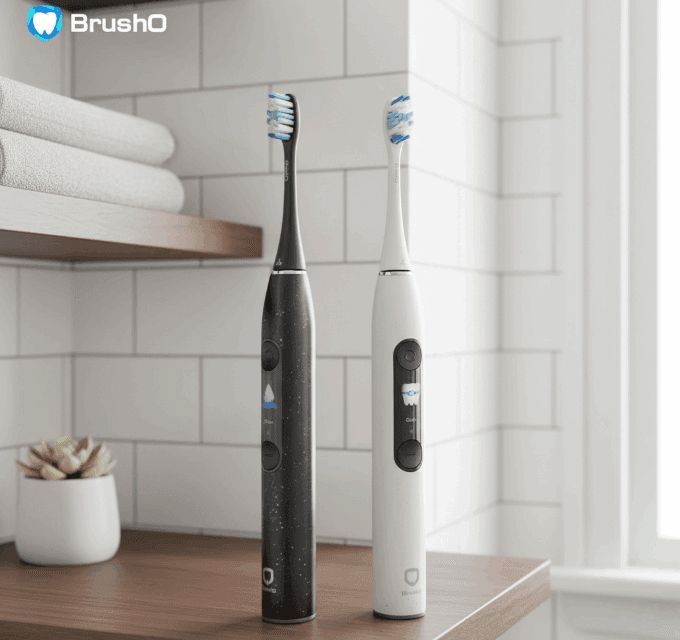
While toothbrushes can’t cure bruxism, AI-powered toothbrushes like BrushO are becoming valuable tools in oral care management by:
Bruxism can lead to overbrushing or uneven brushing due to sensitive areas. BrushO detects excessive pressure and gives real-time alerts, helping protect already weakened enamel and gum lines.
After each session, BrushO’s app shows detailed brushing reports, identifying areas where users may apply too much pressure—useful data for those trying to compensate for grinding-related soreness.
Through custom brushing modes such as “Sensitive Mode”, BrushO helps users develop gentler routines that are ideal for those with grinding-related enamel loss or gum inflammation.
Alongside smart tools, lifestyle and dental adjustments help manage bruxism effectively:
• Use a nightguard (ask your dentist for a custom-fitted one)
• Reduce stress through mindfulness, exercise, or therapy
• Limit alcohol and caffeine, especially before bed
• Maintain a consistent sleep schedule
• Track symptoms using oral health apps or wearables
If you suspect you’re grinding your teeth during sleep—or your smart toothbrush frequently alerts you of pressure spikes—book a dental appointment. Dentists can:
• Examine enamel wear
• Fit nightguards
• Suggest orthodontic or behavioral interventions
Smart brushing doesn’t stop bruxism, but it supports your recovery:
| Feature | Traditional Toothbrush | BrushO Smart Toothbrush |
| Pressure Alerts | ❌ | ✅ Real-time vibration warning |
| Custom Modes | ❌ | ✅ Sensitive & Gum Care Modes |
| Brushing Data | ❌ | ✅ AI-generated brushing reports |
| Gamified Routine | ❌ | ✅ Brush & Earn Reward System |
Sleep bruxism often flies under the radar until it causes permanent harm. Recognizing early symptoms and using smart technology to adapt your brushing habits can make all the difference. BrushO helps by offering not just brushing—it offers awareness, protection, and encouragement to build a smile that lasts. Your teeth rest while you do. Make sure your toothbrush is working while you sleep.
Jan 30
Jan 29

The posterior maxilla is the most demanding site in implant dentistry, because the pneumatized maxillary sinus frequently leaves the clinician with less bone than the implant requires. Maxillary sinus augmentation, the surgical procedure that raises the sinus floor to create vertical bone, has be...

The rubber dam is the oldest and still the most effective isolation device in restorative dentistry, and its reputation as an inconvenient extra step survives among practitioners who have never measured the time it actually saves. The dam isolates the field from the saliva, the tongue, and the ch...

The margin is the most vulnerable line in fixed prosthodontics, because it is the only boundary between the prepared tooth, the restoration, and the oral environment that the clinician cannot fully seal by effort alone. A restoration that fits seamlessly at the margin resists leakage, caries, and...

The masticatory system is built for function, yet much of its damage comes from habits that serve no purpose. Parafunctional habits, the clenching, the grinding, and the tongue pressing performed outside of normal function, sit behind much of the tooth wear, the temporomandibular pain, and the my...

Chronic mouth breathing in the growing child is seldom a dental problem in origin and almost always a facial one in consequence. The child who sleeps with the mouth open bypasses the physiologic benefits of nasal respiration, and the posture that the airway forces upon the tongue, the mandible, a...

The immediate denture is the prosthesis placed on the day the teeth are extracted, sparing the patient the edentulous interval the conventional denture imposes and preserving the occlusal vertical dimension, the facial support, and the appearance through the transition. The clinical literature ha...

The Class III malocclusion in the growing child carries a special urgency, because the maxillary deficiency that marks the pattern does not correct itself and the window for the growth-modifying treatment closes with the skeletal maturity. Elastic protraction, the orthopedic therapy that pulls th...

The denture is the only prosthetic device in medicine that its owner is expected to wear daily and to clean personally, yet it is also the device most commonly neglected until the signs of disease appear. A biofilm that forms on the acrylic base within hours is a reservoir of candida and bacteria...

The complete denture stands or falls on the impression, because the impression determines how well the base follows the mucous membrane and how evenly the occlusal load is distributed across the basal seat. For a century the profession has argued about whether the impression should record the muc...

The all-ceramic crown has moved from a niche product to the default restoration for the anterior single tooth in a single clinical generation, driven by patient demand for metal-free appearance and by materials that now survive functional loading as reliably as their metal-ceramic predecessors. A...

Construa uma rede de dados de saúde bucal rapidamente e com baixo custo de forma que todos possam construir.
Construa uma rede de dados de saúde bucal rapidamente e com baixo custo de forma que todos possam construir.


Address: RM 1427, 14/F RADIO CITY 505, HENNESSY RD CAUSEWAY BAY, HONG KONG
Code: 000000
Phone: +852-53758652
Email: customerservice@brusho.com