
As we age, our oral health needs evolve. Receding gums, increased sensitivity, dry mouth, and higher risks of cavities and gum disease become more common. Developing smart brushing habits is essential not only for maintaining a bright smile but also for preserving overall health and well-being. With aging populations facing unique oral challenges, this article explores dentist-backed techniques, age-friendly routines, and how AI-powered toothbrushes like BrushO can help seniors and adults protect their teeth and gums for the long run.
Aging affects multiple aspects of oral health, including:
• Gum recession, exposing tooth roots and increasing sensitivity.
• Dry mouth (xerostomia), often due to medications or reduced saliva production.
• Weakened enamel, making teeth more vulnerable to decay.
• Manual dexterity loss, making effective brushing harder.
Poor oral hygiene in later life has also been linked to systemic conditions like cardiovascular disease, diabetes, and even cognitive decline.
Maintaining good oral hygiene is about more than just your smile—it’s about healthy aging. Studies show:
• Gum disease is associated with increased risk of Alzheimer’s disease.
• Chronic inflammation from poor oral hygiene may lead to heart problems.
• Tooth loss is correlated with nutritional deficiencies in older adults.
This makes a smart, consistent brushing habit a key pillar of longevity and graceful aging.
Use a soft-bristled brush and light pressure to prevent gum damage and enamel erosion. Replace your brush head every 3 months.
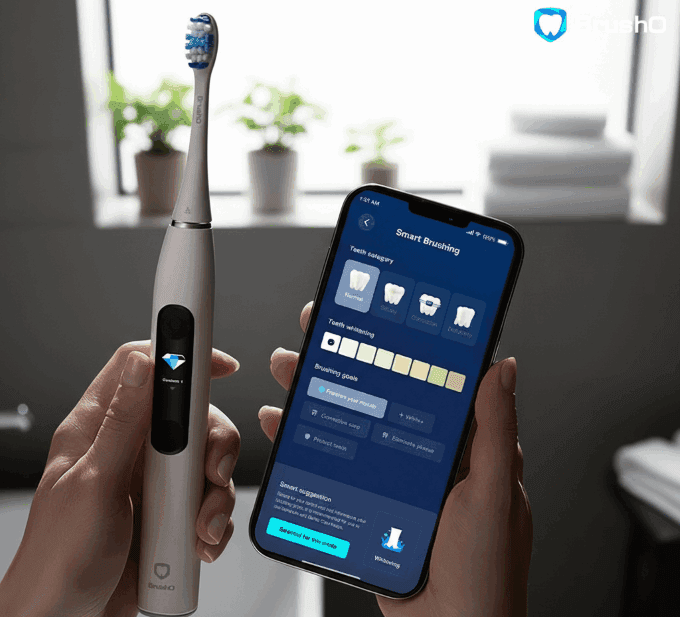
AI-powered brushes like BrushO help monitor brushing technique and ensure full coverage, especially important if your dexterity is declining. They:
• Track pressure to avoid gum damage
• Give real-time zone feedback
• Offer daily brushing scores and reports
Aim for at least 2 minutes, twice a day. Use a brush that provides timed intervals or section guidance to help stay consistent.
Older adults are prone to gum disease. Angle the bristles at 45 degrees to clean where plaque hides.
Halitosis (bad breath) can increase with age. Use a tongue scraper or BrushO’s tongue-care tips to keep your breath fresh.
Strengthen enamel with a fluoride rinse after brushing—especially if you’re experiencing dry mouth.
With BrushO’s app-based brushing history and personalized reminders, stay on top of your daily oral care—even as memory or routine adherence becomes harder.
BrushO is more than just a toothbrush—it’s a personalized oral health assistant, ideal for those entering midlife or retirement. Features include:
• AI-guided zone brushing (6 zones, 16 surfaces)
• Pressure monitoring to protect sensitive gums
• Routine scoring and smart habit feedback
• Gentle mode settings for those with enamel wear or gum sensitivity
• Visual brushing reports via app for tracking improvement
These features help users age with confidence, knowing their brushing habits are optimized for health.
Integrate brushing into your self-care rituals:
• Brush after stretching, yoga, or morning tea.
• Pair brushing with wellness practices like journaling or meditation.
• Use brushing time to practice mindfulness—slow down and breathe.
This mindset helps shift brushing from a chore into a self-care habit that supports graceful aging.
Healthy aging starts in the mouth. By developing smart brushing habits tailored to the needs of older adults—and embracing smart tools like BrushO—you can protect your oral health, preserve your smile, and age with confidence and vitality.

The posterior maxilla is the most demanding site in implant dentistry, because the pneumatized maxillary sinus frequently leaves the clinician with less bone than the implant requires. Maxillary sinus augmentation, the surgical procedure that raises the sinus floor to create vertical bone, has be...

The rubber dam is the oldest and still the most effective isolation device in restorative dentistry, and its reputation as an inconvenient extra step survives among practitioners who have never measured the time it actually saves. The dam isolates the field from the saliva, the tongue, and the ch...

The margin is the most vulnerable line in fixed prosthodontics, because it is the only boundary between the prepared tooth, the restoration, and the oral environment that the clinician cannot fully seal by effort alone. A restoration that fits seamlessly at the margin resists leakage, caries, and...

The masticatory system is built for function, yet much of its damage comes from habits that serve no purpose. Parafunctional habits, the clenching, the grinding, and the tongue pressing performed outside of normal function, sit behind much of the tooth wear, the temporomandibular pain, and the my...

Chronic mouth breathing in the growing child is seldom a dental problem in origin and almost always a facial one in consequence. The child who sleeps with the mouth open bypasses the physiologic benefits of nasal respiration, and the posture that the airway forces upon the tongue, the mandible, a...

The immediate denture is the prosthesis placed on the day the teeth are extracted, sparing the patient the edentulous interval the conventional denture imposes and preserving the occlusal vertical dimension, the facial support, and the appearance through the transition. The clinical literature ha...

The Class III malocclusion in the growing child carries a special urgency, because the maxillary deficiency that marks the pattern does not correct itself and the window for the growth-modifying treatment closes with the skeletal maturity. Elastic protraction, the orthopedic therapy that pulls th...

The denture is the only prosthetic device in medicine that its owner is expected to wear daily and to clean personally, yet it is also the device most commonly neglected until the signs of disease appear. A biofilm that forms on the acrylic base within hours is a reservoir of candida and bacteria...

The complete denture stands or falls on the impression, because the impression determines how well the base follows the mucous membrane and how evenly the occlusal load is distributed across the basal seat. For a century the profession has argued about whether the impression should record the muc...

The all-ceramic crown has moved from a niche product to the default restoration for the anterior single tooth in a single clinical generation, driven by patient demand for metal-free appearance and by materials that now survive functional loading as reliably as their metal-ceramic predecessors. A...

Construa uma rede de dados de saúde bucal rapidamente e com baixo custo de forma que todos possam construir.
Construa uma rede de dados de saúde bucal rapidamente e com baixo custo de forma que todos possam construir.


Address: RM 1427, 14/F RADIO CITY 505, HENNESSY RD CAUSEWAY BAY, HONG KONG
Code: 000000
Phone: +852-53758652
Email: customerservice@brusho.com