
You might think your toothbrush is just for cleaning your teeth—but a smart toothbrush knows a lot more about your daily habits than you might expect. With built-in sensors, app integration, and AI analysis, devices like BrushO monitor how long you brush, how much pressure you apply, which areas you miss, and whether your oral care is improving over time. This article explores exactly what your smart toothbrush knows about you, and why that information matters for your long-term dental health.
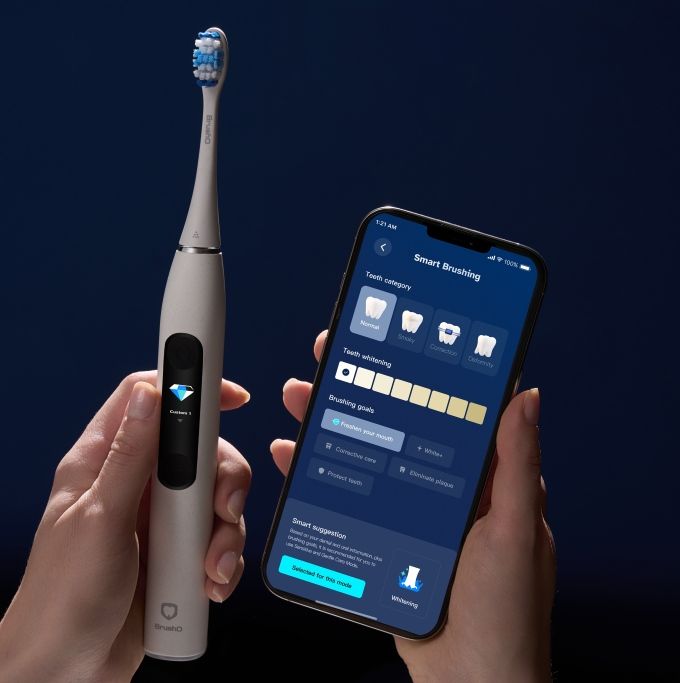
Modern electric toothbrushes do more than vibrate—they collect real-time information about your brushing behavior to provide personalized insights and prevent oral health issues. The goal is not just to make brushing smarter, but also to make it more effective, consistent, and preventative.
• Are you brushing for the full two minutes?
• Do you apply too much pressure to your gums?
• Are certain areas being missed every day?
• Are your brushing habits improving over time?
These insights allow you to go beyond guesswork and build routines that actually improve oral wellness.
Smart toothbrushes log:
• How many times you brush each day
• Whether you reach the recommended 2-minute duration
• If you’re skipping days or brushing less on weekends
Why it matters: Consistency is one of the strongest predictors of oral health. If you’re skipping evening sessions or rushing in the mornings, your smart toothbrush knows—and reminds you.
Thanks to pressure sensors, your smart toothbrush detects when you’re brushing too hard or too softly.
• Too hard = Gum recession, enamel wear, bleeding
• Too soft = Incomplete plaque removal
BrushO uses FSB (Fully Smart Brushing) tech to guide you in real time and protect both enamel and gums.
Many smart toothbrushes divide the mouth into zones (e.g., six zones or 16 surfaces). Your device knows:
• Which zones you frequently miss
• Where you brush too quickly
• Whether you brush all sides—front, back, and chewing surfaces
Coverage tracking helps you correct blind spots, ensuring plaque isn’t building up in neglected areas.
Through built-in accelerometers and gyroscopes, your smart brush tracks:
• Stroke direction
• Brushing motion (linear vs. circular)
• Orientation of the brush head
This ensures you’re angling the brush correctly—especially important for reaching gumlines and back molars.
Smart toothbrush apps like the BrushO App aggregate all data to show:
• Weekly or monthly brushing scores
• Areas improving vs. areas needing more attention
• Habit streaks and reward progress (e.g., earning $BRUSH tokens)
These insights gamify oral care, turning it into a measurable, trackable wellness routine.
While smart toothbrushes collect a lot of data, brands like BrushO prioritize user privacy and data security. Your brushing stats are used to improve your habits—not shared for advertising or third-party profiling.
If you’re using app-based features, always:
• Read the privacy policy
• Adjust permission settings
• Use encrypted devices or trusted platforms
Understanding what your toothbrush knows about you isn’t just cool—it’s clinically useful:
• It helps your dentist get a clearer picture of your routine
• It helps prevent future dental issues
• It promotes long-term behavioral change
• It offers customized care recommendations
With smart brushing, you shift from reactive dental visits to proactive prevention—protecting both your teeth and your wallet.
Your smart toothbrush is more than a gadget—it’s a personal oral health coach. By tracking pressure, time, coverage, and technique, it knows your brushing patterns better than you might realize. And with tools like BrushO, you can turn those insights into real improvements: fewer cavities, healthier gums, and a brighter smile.
Jan 21
Jan 20

Evidence-based dentistry (EBD) represents a fundamental paradigm shift in how dental professionals approach clinical decision making. Rather than relying solely on tradition, anecdotal experience, or expert opinion, EBD provides a systematic framework for integrating the best available scientific ev

Xerostomia, the subjective sensation of oral dryness, and hyposalivation, the objective reduction in salivary flow, represent one of the most common yet underrecognized complaints encountered in dental practice. Affecting an estimated 20-30% of the general population and up to 40% of older adults, t

Orofacial myofunctional therapy (OMT) has emerged as a critical adjunctive intervention in modern dentistry, bridging the gap between orthodontics, sleep medicine, and pediatric airway management. This therapeutic approach targets the neuromuscular re-education of the orofacial musculature, addressi

Evidence-based dentistry (EBD) represents a fundamental paradigm shift in how dental professionals approach clinical decision making. Rather than relying solely on tradition, anecdotal experience, or expert opinion, EBD provides a systematic framework for integrating the best available scientific ev

The contemporary dental practice operates at the intersection of healthcare delivery and small business management, requiring practitioners to master competencies far beyond clinical excellence. Success in today's competitive landscape demands sophisticated understanding of practice economics, strat

Cleft lip and palate (CLP) represents the most common congenital craniofacial anomaly, occurring in approximately 1 in 700 live births worldwide, with significant variation across ethnic groups. The condition results from failure of fusion of the facial processes during early embryogenesis, specific

The transition from metal-ceramic to all-ceramic restorations represents one of the most significant material shifts in restorative dentistry over the past three decades. Driven by aesthetic demands, concerns about metal hypersensitivity, and remarkable advances in ceramic materials and CAD/CAM tech

Tooth extraction initiates a cascade of biological events that inevitably results in alveolar ridge remodeling—a process characterized by dimensional changes in both the horizontal and vertical planes that can compromise subsequent implant placement. The clinical significance of post-extraction ridg

Infection control has always been fundamental to safe dental practice, but the COVID-19 pandemic brought unprecedented scrutiny to dental infection prevention protocols. The recognition that SARS-CoV-2 transmits primarily through respiratory droplets and aerosols—and that dental procedures generate

Forensic odontology occupies a unique position at the intersection of dentistry, forensic science, and the legal system. The discipline applies dental knowledge to the identification of human remains, the analysis of bite mark evidence, and the estimation of age in both living and deceased individua

Construa uma rede de dados de saúde bucal rapidamente e com baixo custo de forma que todos possam construir.
Construa uma rede de dados de saúde bucal rapidamente e com baixo custo de forma que todos possam construir.


Address: RM 1427, 14/F RADIO CITY 505, HENNESSY RD CAUSEWAY BAY, HONG KONG
Code: 000000
Phone: +852-53758652
Email: customerservice@brusho.com