
While many people assume they are brushing their teeth thoroughly, studies show that the inner surfaces of teeth—especially those facing the tongue and palate—are the most frequently neglected. This can lead to plaque buildup, cavities, and gum inflammation in hidden zones that are hard to detect without dental checkups. In this article, we’ll explore the importance of inner tooth surface hygiene, the risks of missing these spots, and how AI-powered smart toothbrushes like BrushO help users target all 6 zones and 16 surfaces for a comprehensive clean.
The inner surfaces of your teeth, often referred to as the lingual surfaces (facing the tongue) and palatal surfaces (facing the palate), play a vital role in your overall oral health:
• These surfaces come in direct contact with your saliva, which carries bacteria.
• They’re less visible during brushing, making it easy to skip over them unconsciously.
• Plaque buildup here can lead to hidden cavities, bad breath, and gingivitis, especially in lower front teeth and upper molars.
In fact, research suggests that over 60% of plaque is retained on inner and biting surfaces when people brush without guidance.
Many people do a quick flick of the brush on the inner sides without spending enough time. This removes only superficial debris.
The inner surfaces of lower front teeth are the most prone to tartar buildup due to proximity to salivary ducts.
Failing to angle the brush properly (45° towards the gumline) makes it harder to clean under the gumline on inner surfaces.
Right-handed users often do a poorer job on the inner left side, and vice versa.
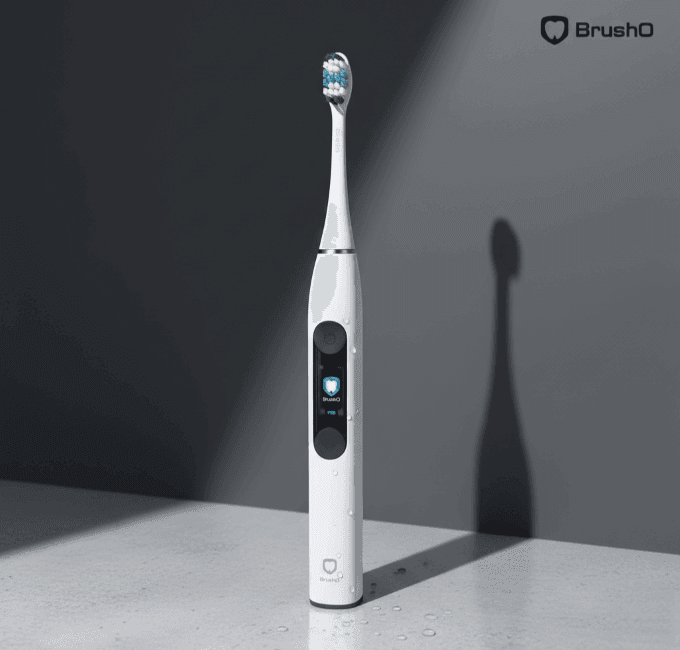
BrushO’s Fully Smart Brushing (FSB) technology is designed to eliminate blind spots during brushing. Here’s how:
BrushO divides your mouth into 6 zones and 16 surfaces (including all inner and chewing surfaces), giving real-time feedback when any area is missed.
The device provides alerts if you’re brushing too lightly or too aggressively, or not angling correctly—especially useful for those hard-to-reach inner zones.
After each session, you receive a detailed brushing report via the BrushO app that shows:
• Which areas were missed
• Time spent on each surface
• Pressure score
• Overall cleaning effectiveness score
Even without smart brushing, you can follow these expert-recommended tips:
• Tilt the brush vertically when cleaning the inside of front teeth; use up-and-down motions.
• Use a smaller brush head to reach tight spaces near molars.
• Spend 30 seconds per quadrant, and don’t rush the inner surfaces.
• Brush your tongue to reduce overall oral bacteria.
Failing to clean your inner surfaces can lead to:
• Cavities on lingual surfaces—harder to detect early
• Gum recession due to plaque near the gumline
• Tartar buildup requiring scaling at the dentist
• Bad breath, despite brushing regularly
Even the most diligent brushers often miss their inner tooth surfaces. But with the help of smart feedback from devices like BrushO, and improved awareness, you can achieve complete oral hygiene that goes beyond appearances.

PPM describes concentration, not the amount to put on the brush. Learn how to read fluoride information while keeping regional guidance and individual advice in view.

That forgotten tube deserves a label check. Learn what toothpaste shelf-life information refers to, why storage matters, and how to avoid guessing from appearance.

Clear gel or opaque paste? Texture is only one feature. Learn which label details matter when comparing toothpastes for your brushing routine.

Minty toothpaste can create a cooling sensation without being chilled. Explore what menthol does and why a fresh feeling is different from complete cleaning.

The sound of a powered brush comes with its moving mechanism. Learn how normal operating noise differs from alerts or an unexpected change that needs checking.

Toothpaste on the mirror? Check when you switch the brush on and off, how you position it, and how to pause without rushing your routine.

A whitening brushing program and a bleaching treatment are different things. Learn how to interpret mode names, surface-stain claims, and realistic expectations.

A tiny cluster of bristles serves a different purpose from a full-size head. Learn where a single-tuft brush may fit into an individually recommended cleaning routine.

Angled tufts, different bristle heights, and the angle of your hand are separate design questions. Learn how to read a toothbrush-head description clearly.

A larger head is not an automatic shortcut to cleaner teeth. Learn how head size affects access, positioning, and the fit of your daily brushing routine.

Быстро и недорого построить сеть данных о здоровье зубов, способную создавать каждый.


Address: RM 1427, 14/F RADIO CITY 505, HENNESSY RD CAUSEWAY BAY, HONG KONG
Code: 000000
Phone: +852-53758652
Email: customerservice@brusho.com