How to Control Brushing Pressure with a Smart Toothbrush
Jan 21

Jan 21
Brushing your teeth too hard can lead to gum recession and enamel damage, which makes controlling brushing pressure essential for long-term oral health. While regular toothbrushes provide no feedback, smart toothbrushes are equipped with advanced pressure sensors to monitor and adjust pressure in real time. These sensors offer guidance that helps users maintain the ideal brushing force for better oral care. In this article, we explore how smart toothbrushes can help control brushing pressure and protect your gums, teeth, and overall oral health. Learn how AI and sensor technology make it easier than ever to brush correctly and avoid harmful habits.


How to Control Brushing Pressure with a Smart Toothbrush

1. The Importance of Brushing Pressure for Oral Health

Brushing pressure plays a significant role in oral health. While brushing too softly can result in ineffective plaque removal, brushing too hard can cause more harm than good. Over time, excessive pressure can lead to gum recession, enamel erosion, and increased tooth sensitivity.
Smart toothbrushes are designed to help users find the right balance. They use advanced pressure sensors to monitor the force applied during brushing, providing real-time feedback to guide users toward a more optimal brushing experience. By alerting the user when pressure is too high, smart toothbrushes can prevent damage and ensure thorough yet gentle cleaning.

2. How Smart Toothbrushes Use Pressure Sensors to Improve Brushing Habits

Pressure sensors in smart toothbrushes detect how hard you’re pressing against your gums and teeth. When the applied pressure exceeds a safe threshold, the toothbrush provides immediate feedback, usually through a combination of visual indicators (like LED lights) or vibrations. This real-time response helps users adjust their brushing technique and reduce excessive force.
These sensors are calibrated to monitor the ideal pressure range for each user, ensuring that brushing is effective but not damaging. The feedback can be continuous or intermittent, depending on the model, but the goal remains the same: promoting healthy, consistent brushing habits.

3. The Benefits of Pressure Control for Gum and Enamel Health

One of the primary benefits of controlling brushing pressure is the protection of your gums and enamel. Excessive brushing force can lead to gum recession, where the gum tissue pulls away from the tooth, exposing the sensitive roots underneath. This can result in increased tooth sensitivity and higher susceptibility to cavities.
Additionally, too much pressure can wear down enamel, the tooth’s protective outer layer. Once enamel is gone, it doesn’t regenerate, leaving the teeth more vulnerable to decay. Smart toothbrushes with pressure control help reduce these risks by promoting gentle brushing and helping maintain the integrity of both gums and enamel.

4. Real-Time Feedback and Personalized Pressure Settings

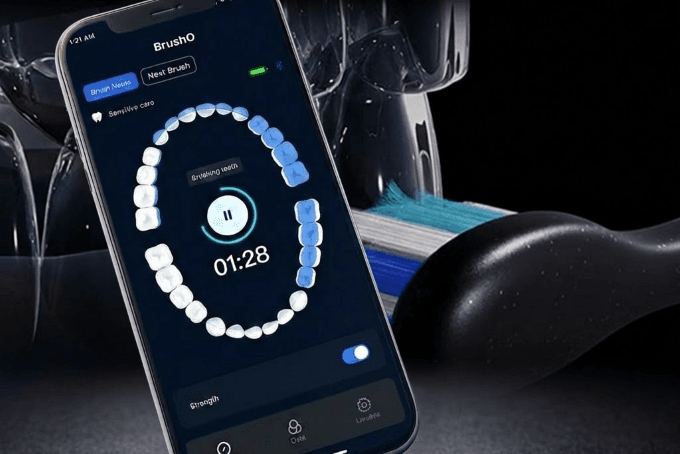
Advanced smart toothbrushes allow users to set personalized pressure preferences based on their oral health needs. Some models come with multiple pressure modes that can be customized for different users in the household. For example, users with sensitive gums can select a softer brushing mode, while those focused on plaque removal can opt for a stronger setting.
By providing personalized settings, smart toothbrushes can address individual needs, making brushing safer and more effective for everyone, from children to adults with specific oral health concerns.

5. How AI and Technology Optimize Pressure Control Over Time

Many smart toothbrushes are equipped with AI-powered algorithms that track brushing pressure over time. By analyzing your brushing habits, these algorithms can detect patterns and make real-time adjustments to the feedback provided. For example, if a user consistently applies too much pressure in a particular area of the mouth, the toothbrush can provide additional warnings or adjust the brushing mode accordingly.
These intelligent adjustments help users improve their brushing technique over time. AI-backed pressure control optimizes the experience and ensures that users aren’t just brushing more efficiently but also more safely.

6. Habit Formation: Learning the Right Pressure with Smart Toothbrushes

Consistently brushing with the right amount of pressure can be challenging for many people. While smart toothbrushes provide immediate feedback, they also play a key role in long-term habit formation. Over time, users become more aware of the correct pressure and develop muscle memory for proper brushing technique.
By incorporating a smart toothbrush into your routine, you’re not only improving your immediate brushing experience but also building better, healthier oral care habits for the future. The pressure control feature is just one of the many tools that can help you develop a more effective and sustainable brushing habit.

7. The Future of Pressure Control in Oral Care

As smart toothbrushes continue to evolve, the technology behind pressure control will become even more advanced. Future models may offer even more precise pressure feedback, incorporating more sensors for more detailed analysis of brushing technique. Additionally, as AI becomes more sophisticated, smart toothbrushes may offer deeper insights into brushing patterns, further personalizing the brushing experience for optimal gum and enamel protection.
With the continued integration of technology, smart toothbrushes will not only improve the brushing process but also contribute to the overall advancement of oral health technology.
 

Final Thoughts: A Smarter Approach to Brushing Pressure

Brushing pressure is a critical factor in maintaining healthy gums and enamel. By using a smart toothbrush with pressure sensors, users can control their brushing force, ensuring a more effective yet gentle cleaning experience. With real-time feedback, personalized settings, and AI-powered insights, smart toothbrushes help users maintain optimal pressure, leading to healthier teeth and gums in the long run.
By incorporating smart toothbrush technology into your daily routine, you’re taking a proactive step toward better oral health, and ultimately, a brighter, healthier smile.

Последние записи

What Weekly Brushing Data Reveals Before You Notice Any Progress

What Weekly Brushing Data Reveals Before You Notice Any Progress

How long does it take to change a habit? The popular answer is 21 days, but reality is often more subtle than that. Many changes show up in the data long before you actually feel them. AI-powered toothbrushes deliver weekly and monthly reports, and many people just swipe past them as if they were an

Why Tartar Picks on Certain Teeth — And How AI Toothbrushes Fight Back

Why Tartar Picks on Certain Teeth — And How AI Toothbrushes Fight Back

You are sitting in the dentist's chair, listening to the ultrasonic scaler buzz against your teeth, when the dentist says, "You have quite a bit of tartar buildup behind your lower front teeth." You think to yourself: I brush every day. Why does it always collect there? Tartar is not distributed eve

Your Mouth's pH Rollercoaster: The Daily Battle Between Demineralization and Remineralization

Your Mouth's pH Rollercoaster: The Daily Battle Between Demineralization and Remineralization

Have you ever thought about what your teeth go through every time you eat, drink, or even sleep? Inside your mouth, a silent tug-of-war is constantly playing out. On one side is demineralization, the process where acid dissolves minerals from your enamel. On the other side is remineralization, where

How AI Toothbrushes Can Spot Early Gum Recession Before You Do

How AI Toothbrushes Can Spot Early Gum Recession Before You Do

Have you ever looked in the mirror and noticed your gum line seems to have crept a little lower than before? Your teeth look slightly longer, and you can almost see the root peeking out. That is gum recession happening right in front of you. Many people think gum recession is something only older ad

Gingival Crevicular Fluid: Your Mouth's Silent Health Monitor

Gingival Crevicular Fluid: Your Mouth's Silent Health Monitor

You have probably never heard the term "gingival crevicular fluid," but it is working silently in your mouth every single day, like an invisible health sentinel. Gingival crevicular fluid, or GCF for short, is the fluid that seeps out of the tiny groove between your gums and your teeth. Most of the

Fluoride and Your Teeth: Protector or Double-Edged Sword?

Fluoride and Your Teeth: Protector or Double-Edged Sword?

When it comes to taking care of your teeth, fluoride might be one of the most debated topics out there. Dentists call it a cavity-fighting superhero and recommend fluoride toothpaste for the whole family. But you have also probably seen articles online warning about fluorosis and even broader health

Enamel Thickness Across Your Teeth: Not All Surfaces Are Created Equal

Enamel Thickness Across Your Teeth: Not All Surfaces Are Created Equal

Enamel is the hardest substance in the human body, but it is not spread evenly across every tooth. Different teeth, and even different surfaces on the same tooth, can have dramatically different enamel thickness. Some spots are armored like a fortress wall, while others are as thin as a sheet of pap

Brush Before or After Breakfast? What Science Says About Timing

Brush Before or After Breakfast? What Science Says About Timing

"Should I brush my teeth right after eating?" This question sparks debates at dinner tables and in group chats that rival the great culinary divides. Some people swear by brushing immediately after a meal so food particles do not sit in their mouth causing cavities. Others insist that brushing right

Why Baby Teeth Roots Dissolve Themselves: The Science Behind Losing Teeth

Why Baby Teeth Roots Dissolve Themselves: The Science Behind Losing Teeth

Every parent has been there: your child comes to you holding a wobbly baby tooth, eyes wide with a mix of excitement and nerves. You give it a gentle tug, it comes right out, and you notice something odd. The root looks almost completely gone, as if something dissolved it away. For a split second, y

How AI Toothbrushes Learn Your Mouth: The Science of Personalized Cleaning Modes

How AI Toothbrushes Learn Your Mouth: The Science of Personalized Cleaning Modes

In the age of regular toothbrushes, everyone essentially brushed the same way. One type of bristle, one vibration mode, and you just went by feel. But every mouth is different. Some people have wide gaps between teeth, others have crowded arches. Some have sensitive gums, others have naturally thin
