
Selecting toothpaste is often treated as a routine purchase, yet its formulation plays a measurable role in cavity prevention, enamel protection, and gum health. Toothpastes vary widely in active ingredients, abrasiveness, and therapeutic purpose, meaning a product that works well for one individual may not benefit another. Understanding how to evaluate ingredients, match formulas to oral conditions, and integrate toothpaste into an effective brushing routine allows consumers to make evidence-based decisions. This guide explains how to assess oral health priorities, decode ingredient labels, and optimize outcomes through consistent brushing practices supported by smart oral care tools.
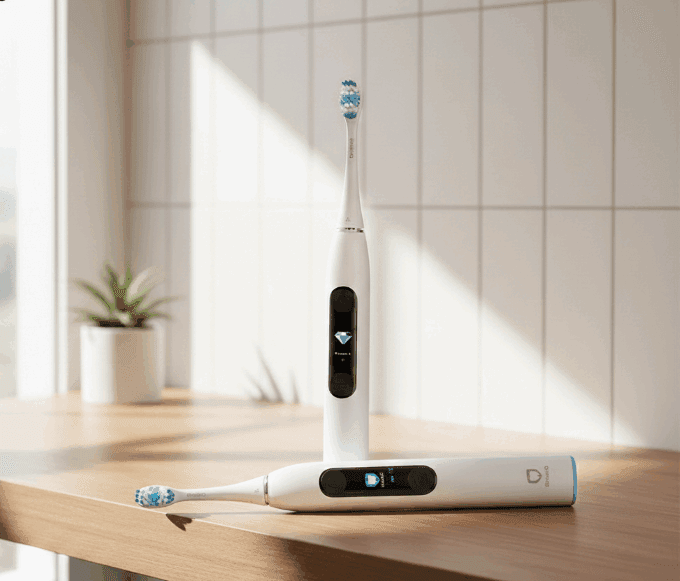
Selecting suitable toothpaste begins with identifying your primary oral concerns. Different formulations are designed to target specific conditions.
Cavity Prevention
Fluoride-containing toothpaste strengthens enamel and helps remineralize early decay, making it a cornerstone of preventive dentistry.
Formulas containing potassium nitrate or strontium salts help block nerve signals that cause discomfort when exposed to temperature changes.
Gum Protection
Anti-gingivitis formulations with antimicrobial agents reduce plaque accumulation and inflammation along the gumline.
Cosmetic Whitening
Whitening toothpastes remove surface stains through mild abrasives or polishing agents, though they do not alter intrinsic tooth color.
Clarifying your primary objective prevents unnecessary ingredient exposure and improves oral care outcomes.
Understanding ingredient function improves decision-making and ensures safety.
• Fluoride — Reinforces enamel and reduces cavity risk
• Hydrated Silica / Baking Soda — Gentle abrasives for stain removal
• Potassium Nitrate — Sensitivity reduction
• Antibacterial Compounds — Support gum health and breath freshness
• Avoid highly abrasive formulations if enamel thinning or recession exists
• Look for clinically validated actives rather than purely cosmetic additives
• Evaluate formulation balance between protection and comfort
Label literacy plays a major role in long-term oral wellness.
Toothpaste efficacy depends on delivery through proper brushing technique and duration.
• Brushing twice daily with consistent coverage
• Allowing active ingredients to remain on teeth briefly
• Avoiding aggressive rinsing immediately after brushing
Smart oral care tools such as BrushO enhance ingredient performance by ensuring even distribution across all tooth surfaces and gumline regions through guided coverage tracking and pressure control.
Use age-appropriate fluoride concentrations and palatable flavors that encourage habit formation.
Specialized plaque-control formulas support cleaning around brackets and aligners.
Individuals experiencing enamel erosion, chronic dry mouth, or periodontal disease should consult dental professionals before selecting toothpaste.
Personalization improves safety and therapeutic effectiveness.
Consumers can assess toothpaste suitability through structured observation.
• Maintain a trial period of several weeks
• Monitor changes in sensitivity, plaque feel, and breath freshness
• Avoid frequent product switching
• Combine with consistent brushing habits and appropriate tools
Evidence-based evaluation supports better long-term oral health decisions.
Choosing toothpaste is not a trivial decision but a personalized health choice shaped by biological needs, ingredient understanding, and brushing behavior. Matching formulation to oral condition enhances preventive protection, reduces discomfort, and supports gum stability. When paired with guided brushing technologies like BrushO, toothpaste effectiveness improves through optimized coverage, pressure balance, and routine consistency. Informed selection combined with structured oral care habits forms the foundation of lasting dental wellness.
Feb 20
Feb 20

Hyperdontia is the presence of one or more teeth in excess of the normal dental formula, and the resulting teeth are described as supernumerary. The condition is common enough to appear in routine practice but variable enough in presentation that the decision to intervene is rarely straightforwar...

Few patients complete orthodontic treatment without asking whether their teeth will move back. The honest answer is that they will, to some degree, in the majority of cases. Relapse is not a failure of treatment but a predictable biological response, and understanding why it happens is the basis ...

The mandible is the largest and most frequently fractured bone of the facial skeleton, and its management sits at the interface between trauma surgery and restorative dentistry. Treatment has shifted over four decades from prolonged maxillomandibular fixation towards rigid internal fixation with ...

Chronic liver disease affects hundreds of millions of people worldwide, and its prevalence continues to rise with the epidemic of metabolic liver disease. The liver is central to haemostasis, drug metabolism and immune competence, and its failure therefore alters the risk profile of almost every ...

Excessive gingival display, commonly described as a gummy smile, is one of the most frequent aesthetic concerns presented to dental practitioners. The condition is not a single entity but a clinical presentation that can arise from skeletal, gingival, muscular or dental factors, and the treatment...

Drug-induced gingival overgrowth is a well-recognised adverse effect of several widely prescribed medications, and it remains one of the most common drug-related findings in periodontal practice. The condition produces firm, fibrous enlargement of the gingiva that can interfere with speech, masti...

Denture stomatitis is an inflammatory condition of the denture-bearing mucosa that affects a large proportion of removable prosthesis wearers, yet it is frequently dismissed as a cosmetic annoyance. The condition is driven by a Candida biofilm on the fitting surface of the prosthesis, and it is m...

Chronic kidney disease affects an estimated 850 million people worldwide, and the number of patients surviving on dialysis or with a renal transplant continues to rise. These patients carry an oral disease burden that is substantially higher than that of the general population, and their medical ...

Angular cheilitis is an inflammatory lesion of the labial commissures that presents with erythema, fissuring and crusting at the corners of the mouth. It is one of the most common conditions encountered in general dental practice, yet it is frequently treated as a simple fungal infection and allo...

Adverse reactions to dental materials are uncommon but they are not rare, and they are frequently misdiagnosed because the oral mucosa responds to allergens in a limited number of ways. A burning sensation, a persistent ulcer or an unexplained area of erythema may all represent a hypersensitivity...

Быстро и недорого построить сеть данных о здоровье зубов, способную создавать каждый.


Address: RM 1427, 14/F RADIO CITY 505, HENNESSY RD CAUSEWAY BAY, HONG KONG
Code: 000000
Phone: +852-53758652
Email: customerservice@brusho.com