
Whiter teeth have become a symbol of beauty, confidence, and cleanliness. From over-the-counter strips to professional gels and light treatments, whitening products are everywhere. But is daily use too much? While these products may deliver cosmetic benefits, overuse can harm your enamel, irritate your gums, and create long-term sensitivity. Here’s what you need to know before reaching for that next whitening strip.
Many people confuse “whiter” with “healthier.” But:
• Whitening only affects surface stains, not underlying oral health.
• Even teeth with cavities or gum disease can appear white.
• Prioritizing color over complete hygiene can lead to neglected issues.
🧠 The key is to treat whitening as cosmetic maintenance, not as a substitute for oral care.
| Product Type | Risk of Overuse |
| Whitening Strips | Can cause enamel thinning and gum irritation |
| Whitening Toothpaste | Often abrasive; can wear down enamel with daily use |
| LED Whitening Kits | Risk of burning soft tissue if used improperly |
| Charcoal Toothpaste | Highly abrasive; not recommended for daily brushing |
⚠️ Many of these are safe in moderation, but not intended for continuous, aggressive use.
You might be overdoing it if you experience:
• Increased tooth sensitivity, especially with hot/cold drinks
• Gum inflammation or burning sensation
• Teeth that look translucent or gray over time
• Rough or uneven surfaces on your enamel
These are warning signs your enamel is suffering—and enamel doesn’t grow back.
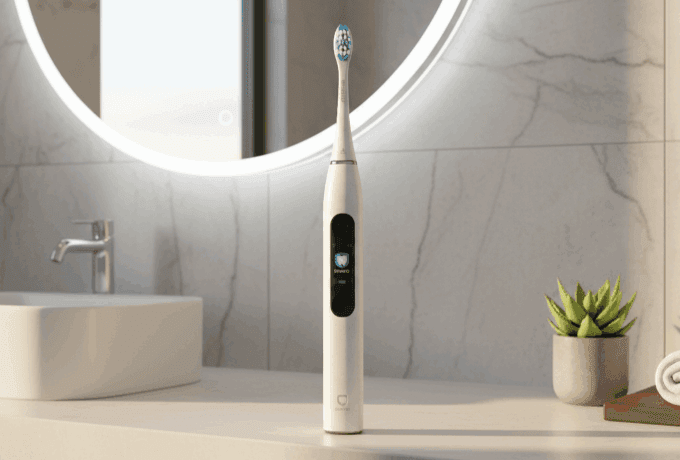
Instead of chasing white teeth alone, focus on consistent and complete cleaning. Smart toothbrushes like BrushO ensure:
• Even brushing coverage across all 6 zones and 16 surfaces
• Pressure feedback to prevent abrasion from over-scrubbing
• Habit tracking for long-term consistency, not just aesthetic fixes
📱 BrushO helps you build habits that protect your enamel, not damage it.
Here’s how to whiten responsibly:
• Limit whitening strip use to once every 3–6 months
• Use whitening toothpaste only once per day, or alternate days
• Avoid acidic foods immediately after whitening sessions
• Talk to your dentist before starting any whitening regimen, especially if you have sensitive teeth
A healthy routine always beats short-term shine.
Lasting brightness comes from:
• Brushing twice daily with proper technique
• Flossing and tongue cleaning to prevent discoloration from bacteria
• Staying hydrated to keep saliva flowing (saliva naturally cleans your teeth)
• Using smart tech like BrushO to avoid damaging mistakes
🦷 Whitening can enhance, but only daily care can preserve.
Yes, whitening products work—but they’re not magic, and they’re not risk-free. Overuse can silently erode your teeth’s protective layers and cause long-term problems. Focus on balance: safe whitening, supported by smart daily brushing and regular dental visits. Your smile will thank you.
BrushO is an AI-powered smart toothbrush that helps users maintain healthy smiles through:
• Real-time brushing zone detection
• Pressure-sensitive guidance
• Custom cleaning modes (e.g., whitening, sensitive, deep clean)
• App-based brushing reports and habit rewards with $BRUSH tokens
✨ With BrushO, you can whiten responsibly—without sacrificing your enamel.

The uncontrolled hypertension is the condition that the dental practice meets in the patient who presents with the elevated pressure that the guideline does not permit for the elective treatment, and the management of this patient requires the deferral of the dental procedure and the referral to ...

The closure of the extraction space in the orthodontic treatment is the phase that demands the careful selection of the mechanics and the monitoring of the force that the appliance delivers. The sliding mechanics that rely on the continuous archwire and the power chain that connects the brackets ...

The transverse discrepancy of the maxilla is the problem that the crowding and the posterior crossbite often hide, and the maxillary expansion is the treatment that addresses the width of the arch rather than the position of the individual tooth. The clinician who diagnoses the constriction early...

The local anaesthesia is the daily procedure that the modern dentistry treats as the routine, and the complications that follow it range from the transient and the trivial to the permanent and the serious. The clinician who injects by the habit without the anatomy in the mind is the clinician who...

The hypertension is the condition that the dental practice meets in the every day, and the patient who carries the elevated pressure without the symptoms is the patient who presents the risk that the chair-side measurement reveals. The dental team occupies the position that no other profession ho...

The glass-ceramic crown has become the default restoration for the anterior and the many posterior teeth, and the material selection within the family is the decision that determines the strength, the aesthetics, and the longevity of the result. The lithium disilicate, the leucite, and the zircon...

The dental phobia is the extreme form of the dental fear that prevents the patient from attending the treatment that the oral health requires, and the management of the phobia demands the skill that extends beyond the routine behaviour guidance. The systematic desensitization, the exposure therap...

The dental fear of the child is the condition that shapes the attitude for the lifetime, and the clinician who manages the first visits with the skill builds the patient who attends the recall without the dread. The fear that the child develops follows the many sources, and the practice that reco...

The patient with controlled hypertension is the patient who requires the dental care that the oral health demands and the treatment that the blood pressure permits, and the clinician who manages the controlled case safely follows the guideline that the evidence supports. The controlled hypertensi...

The ceramic veneer is the restoration that the aesthetic dentistry depends on, and the bond that retains the veneer on the enamel is the critical link that determines whether the restoration survives the function or fractures and debonds. The clinical technique from the preparation to the cementa...

สร้างเครือข่ายข้อมูลสุขภาพช่องปากอย่างรวดเร็วและต้นทุนต่ำในวิธีที่ทุกคนสามารถสร้างได้


Address: RM 1427, 14/F RADIO CITY 505, HENNESSY RD CAUSEWAY BAY, HONG KONG
Code: 000000
Phone: +852-53758652
Email: customerservice@brusho.com