
Your smile is one of the first things people notice—and it speaks volumes before you say a word. While many people focus on cosmetic solutions for a better smile, the truth is: real aesthetics start with consistent, effective oral care. From enamel clarity to gum contour, brushing habits play a direct role in how radiant your smile appears. In this article, we explore how daily oral hygiene shapes your smile’s visual impact and how AI-powered tools like BrushO enhance both your technique and your look.
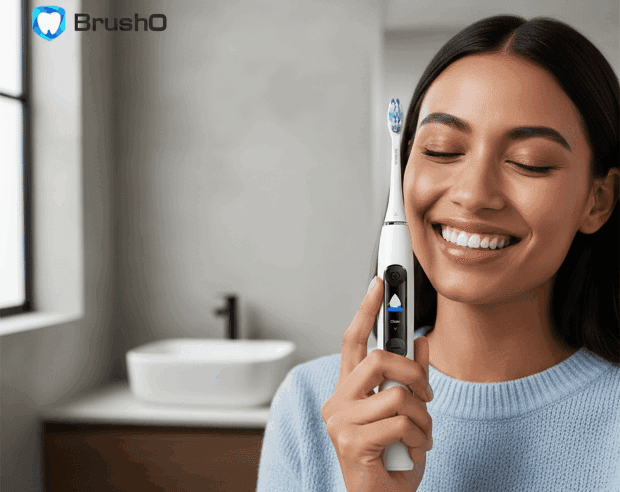
A healthy, beautiful smile isn’t just about vanity—it influences confidence, social impressions, and even perceived success. Research shows people with whiter, well-maintained teeth are often seen as more approachable, trustworthy, and even more successful in professional settings. Your oral care habits are the foundation of this perception.
Stains from coffee, wine, or tobacco accumulate gradually. Poor brushing allows these pigments to linger on the enamel. Regular, guided brushing helps minimize stain buildup—maintaining a naturally brighter smile.
Aggressive brushing or neglect can cause enamel erosion or uneven edges, altering the shape of your teeth. Smart toothbrushes like BrushO use pressure sensors to prevent overbrushing and preserve tooth structure.
Gums that are inflamed, receding, or irregular detract from an otherwise attractive smile. Daily brushing, flossing, and feedback from AI toothbrushes ensure gums stay pink, symmetrical, and tight around the teeth.
Plaque buildup dulls enamel and creates yellowish edges. Consistent full-mouth cleaning—especially of hard-to-reach molars and gumlines—helps maintain a smooth, polished appearance.
Many people brush unevenly, neglecting back molars or inner surfaces. BrushO’s 16-surface mapping ensures every tooth surface is cleaned evenly, preventing yellow spots and buildup.
Brushing too hard can strip enamel or irritate gums. BrushO warns users in real-time if pressure is too high—preserving enamel shine and gum shape.
With every brushing session, BrushO logs data into an app report. Users can monitor trends like discoloration zones or areas of plaque retention—empowering preventive adjustments.
BrushO offers gentle, whitening, and polishing modes tailored to tooth sensitivity and surface needs. This ensures both comfort and cosmetic enhancement.
• Avoid acidic foods before brushing. Wait 30 minutes after citrus or soda to protect enamel.
• Use AI brushing feedback. Let technology correct blind spots or excess force.
• Hydrate frequently. Saliva is your mouth’s natural cleanser and prevents dry mouth discoloration.
• Avoid quick brushing. Stick to 2 minutes minimum with guided coverage.
• Switch your brush head regularly. Worn-out bristles decrease cleaning efficiency—BrushO’s reward system helps you earn free replacements.
Smile aesthetics are not just about whitening strips or filters—they begin with everyday brushing habits. The condition of your teeth and gums directly affects how radiant your smile looks. BrushO transforms brushing into a high-precision self-care ritual, offering smart guidance and real results. Whether you’re prepping for a big interview or just want to smile brighter in selfies, investing in better oral care pays off—visibly and confidently.

Saliva has moved from the byproduct of the examination to the fluid that the modern practice can read, and the diagnostics that the salivary sample supports now reach from the caries risk to the periodontal inflammation and beyond. The fluid is easy to collect, safe to handle, and rich in the pro...

The narrow alveolar ridge is the common obstacle that the implant plan meets in the healed posterior site, and the ridge split technique is the approach that widens the crest without the block graft and the second surgical site. The technique uses the viscoelastic property of the bone, and the co...

The resin-bonded bridge is the conservative alternative to the conventional fixed prosthesis, and its place in the modern practice has widened as the adhesive dentistry matured. The prosthesis replaces the missing tooth with the minimal removal of the enamel from the abutment, and the retention i...

The systemic antibiotic has a defined and a narrow place in the periodontal therapy, and the clinician who respects its limits uses it well while the clinician who reaches for it routinely erodes both the result and the antibiotic stewardship. The mechanical debridement remains the foundation of ...

The bond failure of the bracket is the interruption that the fixed orthodontic treatment can tolerate in the small number but not in the pattern, and the clinician who understands the cause reduces the frequency that the repeated rebonding records. The failure that recurs on the single tooth poin...

The prescription pad is one of the most common sources of the oral complaint that the patient brings to the dental office, and the clinician who does not think of the medication may spend the appointment treating the symptom that the drug created. The list of the agents that affect the mouth grow...

The intraoral scanner has moved from the novelty of the early adopters to the standard equipment of the modern prosthodontic practice, and the comparison with the conventional impression has become a daily question rather than an academic one. The scanner captures the surface of the teeth and the...

The endodontic retreatment is the second chance that the tooth receives when the initial treatment fails to resolve the infection or the symptoms, and the procedure is both more demanding and more rewarding than the primary treatment. The clinician who retreats the tooth encounters the filling ma...

The access preparation is the gateway of every root canal treatment, and it is the step at which the outcome of the case is most often decided, for good or for ill. A well-designed access straightens the canal system, removes the coronal obstruction, and allows the instruments and the irrigants t...

The restoration that the laboratory returns is only as good as the information that the clinician sends, and the communication between the dentist and the technician is the step that determines whether the crown, the veneer, or the bridge meets the expectation of the patient. The shade, the form,...

สร้างเครือข่ายข้อมูลสุขภาพช่องปากอย่างรวดเร็วและต้นทุนต่ำในวิธีที่ทุกคนสามารถสร้างได้


Address: RM 1427, 14/F RADIO CITY 505, HENNESSY RD CAUSEWAY BAY, HONG KONG
Code: 000000
Phone: +852-53758652
Email: customerservice@brusho.com