
Aging brings new challenges for oral hygiene — from dry mouth to gum recession and limited dexterity. This guide offers practical, age-appropriate tips for elderly adults to maintain a healthy mouth, including how smart toothbrushes like BrushO make brushing easier, safer, and more effective.
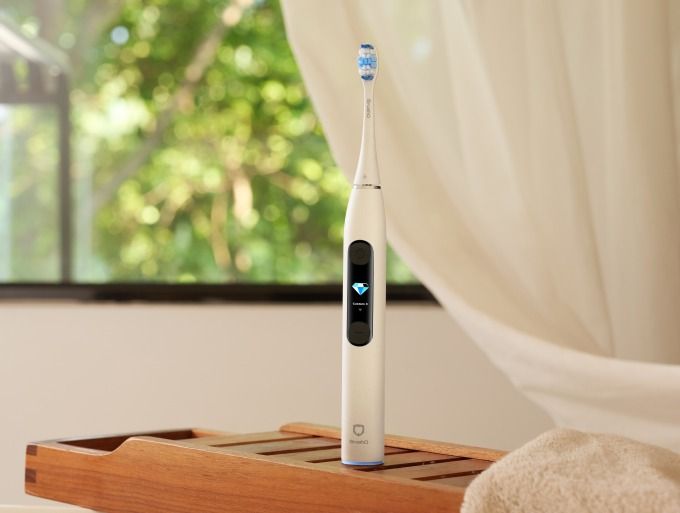
As we grow older, our bodies change — and that includes the mouth. Seniors face unique oral health risks due to:
• Reduced saliva production (dry mouth)
• Gum recession exposing tooth roots
• Tooth sensitivity and wear
• Arthritis or limited mobility affecting brushing technique
• Medication side effects impacting the oral environment
Without proper care, these changes can lead to increased plaque, tooth decay, gum disease, and even systemic health issues like cardiovascular disease.
Understanding what to watch for helps with early prevention:
Caused by age or medications, dry mouth increases the risk of cavities and infections. Saliva is critical for washing away food and neutralizing acids.
Tip: Stay hydrated and talk to your dentist about saliva substitutes.
Gums tend to pull back with age, exposing sensitive areas and increasing the risk of root decay.
Tip: Use a soft-bristled or pressure-sensitive brush like BrushO, which adapts to avoid harming the gums.
Thinner enamel, exposed dentin, and receding gums can cause discomfort during brushing or eating.
Tip: Use desensitizing toothpaste and brush with gentle, guided pressure — something BrushO can monitor in real time.
Conditions like arthritis or Parkinson’s may affect the ability to hold a toothbrush or apply the correct technique.
Tip: A larger-handled, AI-powered electric toothbrush like BrushO can ease brushing by doing the work for you and providing easy-to-read brushing reports.
BrushO is more than just a toothbrush — it’s a smart health companion for elderly users:
• Pressure Control: Prevents brushing too hard, which can damage enamel and gums.
• Smart Zone Feedback: Ensures no area is missed, even with limited hand movement.
• Daily Reports: Offers visual feedback and scores for easy tracking.
• Customizable Modes: Seniors can choose “Gentle Clean” or “Gum Care” based on comfort and dental advice.
For those with caregivers, the BrushO App can also share brushing data to ensure routines are followed consistently.
• Visit the dentist at least twice a year — and more often if managing chronic illnesses.
• Clean dentures daily and remove them at night.
• Floss regularly or use a water flosser if dexterity is limited.
• Watch for signs of oral cancer, such as lumps, sores, or persistent pain.
• Use fluoride toothpaste to strengthen aging enamel.
Oral care doesn’t stop with age — in fact, it becomes even more important. With proper routines and the help of tools like BrushO, seniors can protect their oral health well into their golden years. Technology empowers independence and improves quality of life, one brush at a time.

Hyperdontia is the presence of one or more teeth in excess of the normal dental formula, and the resulting teeth are described as supernumerary. The condition is common enough to appear in routine practice but variable enough in presentation that the decision to intervene is rarely straightforwar...

Few patients complete orthodontic treatment without asking whether their teeth will move back. The honest answer is that they will, to some degree, in the majority of cases. Relapse is not a failure of treatment but a predictable biological response, and understanding why it happens is the basis ...

The mandible is the largest and most frequently fractured bone of the facial skeleton, and its management sits at the interface between trauma surgery and restorative dentistry. Treatment has shifted over four decades from prolonged maxillomandibular fixation towards rigid internal fixation with ...

Chronic liver disease affects hundreds of millions of people worldwide, and its prevalence continues to rise with the epidemic of metabolic liver disease. The liver is central to haemostasis, drug metabolism and immune competence, and its failure therefore alters the risk profile of almost every ...

Excessive gingival display, commonly described as a gummy smile, is one of the most frequent aesthetic concerns presented to dental practitioners. The condition is not a single entity but a clinical presentation that can arise from skeletal, gingival, muscular or dental factors, and the treatment...

Drug-induced gingival overgrowth is a well-recognised adverse effect of several widely prescribed medications, and it remains one of the most common drug-related findings in periodontal practice. The condition produces firm, fibrous enlargement of the gingiva that can interfere with speech, masti...

Denture stomatitis is an inflammatory condition of the denture-bearing mucosa that affects a large proportion of removable prosthesis wearers, yet it is frequently dismissed as a cosmetic annoyance. The condition is driven by a Candida biofilm on the fitting surface of the prosthesis, and it is m...

Chronic kidney disease affects an estimated 850 million people worldwide, and the number of patients surviving on dialysis or with a renal transplant continues to rise. These patients carry an oral disease burden that is substantially higher than that of the general population, and their medical ...

Angular cheilitis is an inflammatory lesion of the labial commissures that presents with erythema, fissuring and crusting at the corners of the mouth. It is one of the most common conditions encountered in general dental practice, yet it is frequently treated as a simple fungal infection and allo...

Adverse reactions to dental materials are uncommon but they are not rare, and they are frequently misdiagnosed because the oral mucosa responds to allergens in a limited number of ways. A burning sensation, a persistent ulcer or an unexplained area of erythema may all represent a hypersensitivity...

สร้างเครือข่ายข้อมูลสุขภาพช่องปากอย่างรวดเร็วและต้นทุนต่ำในวิธีที่ทุกคนสามารถสร้างได้


Address: RM 1427, 14/F RADIO CITY 505, HENNESSY RD CAUSEWAY BAY, HONG KONG
Code: 000000
Phone: +852-53758652
Email: customerservice@brusho.com