
Unlike cavities caused by bacteria, tooth erosion is a chemical process that wears away the enamel due to acid exposure. It’s common, progressive, and often painless until it’s too late. If left unchecked, tooth erosion can lead to sensitivity, discoloration, and even tooth loss. This article explores what tooth erosion is, what causes it, and most importantly, how you can prevent it through daily habits, dietary changes, and smart brushing with tools like BrushO. Don’t let acid steal your smile—learn how to protect your enamel starting today.
Tooth erosion refers to the gradual loss of tooth enamel, the hard, protective outer layer of your teeth, due to chemical (acidic) attacks rather than bacterial decay. When the enamel wears away, the softer dentin underneath is exposed, making teeth more vulnerable to damage, discoloration, and sensitivity. Unlike tooth decay, erosion doesn’t involve bacteria, but it can have similarly damaging long-term effects on your oral health.
• Soft drinks, citrus fruits, wine, sports drinks, and even vinegar-based dressings all contain acids that weaken enamel.
• “Healthy” smoothies or juices may also be highly acidic.
• Acid reflux or conditions like bulimia expose teeth to gastric acid, one of the most potent enamel eroders.
• Constant grazing or sipping acidic drinks prevents saliva from neutralizing acid, increasing erosion risk.
• Reduced saliva levels make it harder to wash away acids and repair enamel naturally.
• Increased tooth sensitivity, especially to hot, cold, or sweet foods.
• Teeth that appear thinner or translucent at the edges.
• A yellow tint as dentin becomes more visible.
• Rounded or cupped tooth surfaces.
• Cracking or small indentations on the chewing surfaces.
If you notice any of these, it’s time to take preventive action.
Avoid brushing immediately after eating or drinking acidic foods. Acid softens enamel, and brushing too soon can accelerate wear. Wait 30–60 minutes after meals.
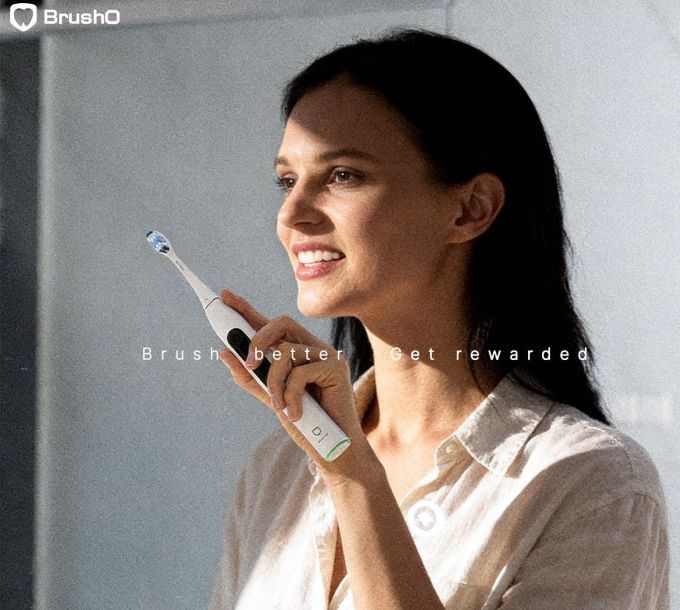
Traditional brushing may not account for pressure, angle, or coverage. BrushO uses AI to:
• Detect overbrushing or brushing too hard—common causes of enamel wear.
• Guide you with zone-specific instructions to avoid repeatedly brushing the same area.
• Offer customizable modes like “Gentle” or “Enamel Care” for sensitive or at-risk users.
BrushO ensures effective yet safe brushing, critical for those dealing with erosion.
• Cut back on soda, citrus, wine, and vinegar-based foods.
• Use a straw when drinking acidic beverages to limit tooth contact.
After acidic meals or drinks, rinse with water or a fluoride mouthwash to neutralize acid before brushing.
• Cheese, milk, nuts, and fibrous vegetables help neutralize acids.
• These foods also stimulate saliva and provide minerals to help remineralize enamel.
Fluoride strengthens enamel and helps reverse early erosion. Use toothpaste designed for enamel repair.
BrushO isn’t just a toothbrush—it’s a precision oral care assistant:
• AI Feedback: Know if you’re brushing too hard or skipping zones.
• Routine Tracker: Keep your brushing habits on schedule for consistent enamel protection.
• Brush & Earn: Earn $BRUSH tokens by sticking to healthy brushing routines—rewards that make oral care fun and consistent.
• Gentle Bristles + Smart Pressure Sensors: Protect enamel with the perfect balance of cleaning and care.
With BrushO, even those at high risk of enamel erosion can maintain clean, safe, and healthy teeth every day.
Tooth erosion may happen silently, but its consequences are serious and often irreversible. By understanding the causes and acting early—with lifestyle changes and smart tools like BrushO—you can protect your enamel, reduce sensitivity, and keep your teeth stronger for longer. Make your daily brushing work smarter, not harder, and defend your smile against erosion.

Fluoride in drinking water is the most cost-effective caries preventive measure in public health, and it is also the source of most avoidable fluoride exposure in young children. The balance between benefit and risk depends on concentration, on total intake from all sources and on the age of the ...

A mouthguard is the only piece of protective equipment that a dentist can prescribe, and the difference between the cheapest and the best version is often less than the cost of a single repair. This guide explains what each type of mouthguard actually protects, how to judge fit, and what to check...

Distinguishing reversible from irreversible pulpitis is the single most consequential decision in endodontic diagnosis, because one leads to a restoration and the other to root canal treatment or extraction. The distinction rests on symptoms and pulp testing rather than on radiographs alone, and ...

A pregnancy epulis is a benign overgrowth of gum tissue that appears during pregnancy, most often in the second or third trimester. It can alarm patients because it grows quickly and bleeds easily, yet in most cases it needs no surgery and settles after delivery. Understanding what drives the gro...

When several teeth are missing, the choice usually narrows to a removable partial denture or a fixed implant-supported restoration, and cost is the factor patients raise first. Upfront price is only part of the comparison, because the two options differ in maintenance, comfort, effects on neighbo...

Most root canal failures are not caused by inadequate cleaning of canals that were found, but by canals that were never located. Molar anatomy varies widely, and the variation is not random: specific teeth in specific populations have predictable additional canals. Knowing where they hide is the ...

Gum massage is one of the oldest recommendations in oral care and one of the least understood. It has been described as a treatment for bleeding gums, a route to firmer tissue and, more recently, a way to reduce brushing force. This article separates the mechanisms that are supported by physiolog...

Interdental cleaning is the part of oral hygiene most people abandon first, and the choice between a floss pick and a length of string floss is often made on convenience. Convenience matters, because a tool that is used daily outperforms a superior tool that stays in the drawer, but the two devic...

Dementia changes the way a denture is worn, cleaned and tolerated, and the people who notice the change first are usually family carers rather than clinicians. Poor denture hygiene in this group is associated with mucosal infection, reduced food intake and, in frail patients, respiratory complica...

Chewing tobacco keeps nicotine and plant irritants in prolonged contact with a small area of mucosa, and the damage that results is concentrated exactly where the quid is held. The lesions that develop are often painless, which is why they are discovered during routine examination rather than bec...

สร้างเครือข่ายข้อมูลสุขภาพช่องปากอย่างรวดเร็วและต้นทุนต่ำในวิธีที่ทุกคนสามารถสร้างได้


Address: RM 1427, 14/F RADIO CITY 505, HENNESSY RD CAUSEWAY BAY, HONG KONG
Code: 000000
Phone: +852-53758652
Email: customerservice@brusho.com