
Oral care is no longer limited to manual routines or guesswork. With the rise of smart technology, data-driven brushing is transforming how we clean our teeth — bringing science, precision, and personalization into our daily habits. Devices like BrushO go beyond cleaning; they track, analyze, and coach your brushing in real time. This article explains how data integration leads to healthier teeth, better brushing habits, and why AI-powered oral care is the future of preventive dentistry.
| Traditional Brushing | Data-Driven Brushing |
| Relies on user habit | Relies on real-time AI guidance |
| No feedback | Continuous feedback via sensors |
| Misses key areas | Tracks and maps coverage zones |
| Lacks motivation | Offers scores, reminders, rewards |
| Pressure inconsistency | Pressure sensors ensure safety |
Most people believe brushing for two minutes is enough — but without guidance, pressure control, or full coverage tracking, up to 40% of your mouth can be missed, especially molars, gumlines, and inner surfaces.
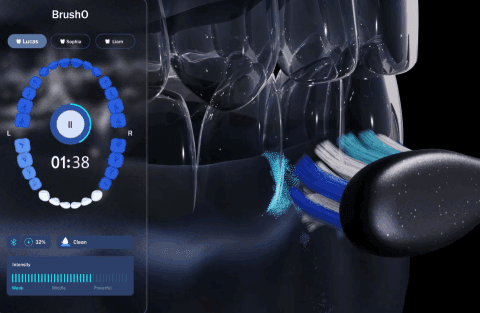
BrushO isn’t just an electric toothbrush — it’s an oral care assistant. Here’s how it collects and uses data to optimize your routine:
Divides your mouth into manageable zones. Every brushing session is analyzed and mapped to ensure you cover all areas.
Advanced sensors detect if you’re pressing too hard or too softly and adjust feedback to prevent gum damage or plaque buildup.
Each session is scored based on coverage, pressure, and consistency — building a brushing diary that promotes accountability.
Data-driven preferences create personalized routines:
• Gum Care for sensitive gums
• Deep Clean for plaque-prone users
• Ultra-Gentle for kids and elderly users
Heatmaps help users correct missed zones over time, increasing overall cleanliness.
Gamified scoring, brushing streaks, and the Brush & Earn system motivate users to maintain good routines.
Early signs of brushing issues like abrasion, poor coverage, or gum pressure are flagged — reducing the risk of cavities, bleeding gums, and long-term enamel erosion.
With the BrushO app, parents can monitor children’s brushing behavior. Multiple users can track their performance within one ecosystem.
In modern healthcare, personalized care is the gold standard — and oral hygiene is no different. BrushO’s data system ensures:
• Brushing aligns with your unique mouth shape and sensitivity
• Recommendations evolve with your brushing trends
• Your toothbrush becomes smarter the more you use it
Dentistry is moving from repairing problems to preventing them. Data-driven toothbrushes like BrushO act as your daily dental coach, reducing the need for intervention.
🦷 Future-ready features in development may include:
• Early cavity risk detection via brushing pattern changes
• Saliva pH sensing to assess the oral environment
• Integration with dentist reports and remote monitoring
In a world where your watch tracks your sleep and your phone tracks your steps, why shouldn’t your toothbrush track your brushing behavior?
BrushO represents the future of oral care — one where data, personalization, and smart design come together to create a healthier, more confident you. By making each session intelligent, measurable, and habit-forming, BrushO doesn’t just clean teeth — it transforms lives.

Hyperdontia is the presence of one or more teeth in excess of the normal dental formula, and the resulting teeth are described as supernumerary. The condition is common enough to appear in routine practice but variable enough in presentation that the decision to intervene is rarely straightforwar...

Few patients complete orthodontic treatment without asking whether their teeth will move back. The honest answer is that they will, to some degree, in the majority of cases. Relapse is not a failure of treatment but a predictable biological response, and understanding why it happens is the basis ...

The mandible is the largest and most frequently fractured bone of the facial skeleton, and its management sits at the interface between trauma surgery and restorative dentistry. Treatment has shifted over four decades from prolonged maxillomandibular fixation towards rigid internal fixation with ...

Chronic liver disease affects hundreds of millions of people worldwide, and its prevalence continues to rise with the epidemic of metabolic liver disease. The liver is central to haemostasis, drug metabolism and immune competence, and its failure therefore alters the risk profile of almost every ...

Excessive gingival display, commonly described as a gummy smile, is one of the most frequent aesthetic concerns presented to dental practitioners. The condition is not a single entity but a clinical presentation that can arise from skeletal, gingival, muscular or dental factors, and the treatment...

Drug-induced gingival overgrowth is a well-recognised adverse effect of several widely prescribed medications, and it remains one of the most common drug-related findings in periodontal practice. The condition produces firm, fibrous enlargement of the gingiva that can interfere with speech, masti...

Denture stomatitis is an inflammatory condition of the denture-bearing mucosa that affects a large proportion of removable prosthesis wearers, yet it is frequently dismissed as a cosmetic annoyance. The condition is driven by a Candida biofilm on the fitting surface of the prosthesis, and it is m...

Chronic kidney disease affects an estimated 850 million people worldwide, and the number of patients surviving on dialysis or with a renal transplant continues to rise. These patients carry an oral disease burden that is substantially higher than that of the general population, and their medical ...

Angular cheilitis is an inflammatory lesion of the labial commissures that presents with erythema, fissuring and crusting at the corners of the mouth. It is one of the most common conditions encountered in general dental practice, yet it is frequently treated as a simple fungal infection and allo...

Adverse reactions to dental materials are uncommon but they are not rare, and they are frequently misdiagnosed because the oral mucosa responds to allergens in a limited number of ways. A burning sensation, a persistent ulcer or an unexplained area of erythema may all represent a hypersensitivity...

สร้างเครือข่ายข้อมูลสุขภาพช่องปากอย่างรวดเร็วและต้นทุนต่ำในวิธีที่ทุกคนสามารถสร้างได้


Address: RM 1427, 14/F RADIO CITY 505, HENNESSY RD CAUSEWAY BAY, HONG KONG
Code: 000000
Phone: +852-53758652
Email: customerservice@brusho.com